
Gianna’s Gem - Small Talk is Canceled
Hi there!
As you know from my past Gianna’s Gems, I've used conversation cards everywhere - corporate events, team offsites, family dinners, date nights, birthday parties, you name it. Every time, the same thing happens: people put their phones down, lean in, engage, and the conversation goes somewhere different and might I say…delightful.
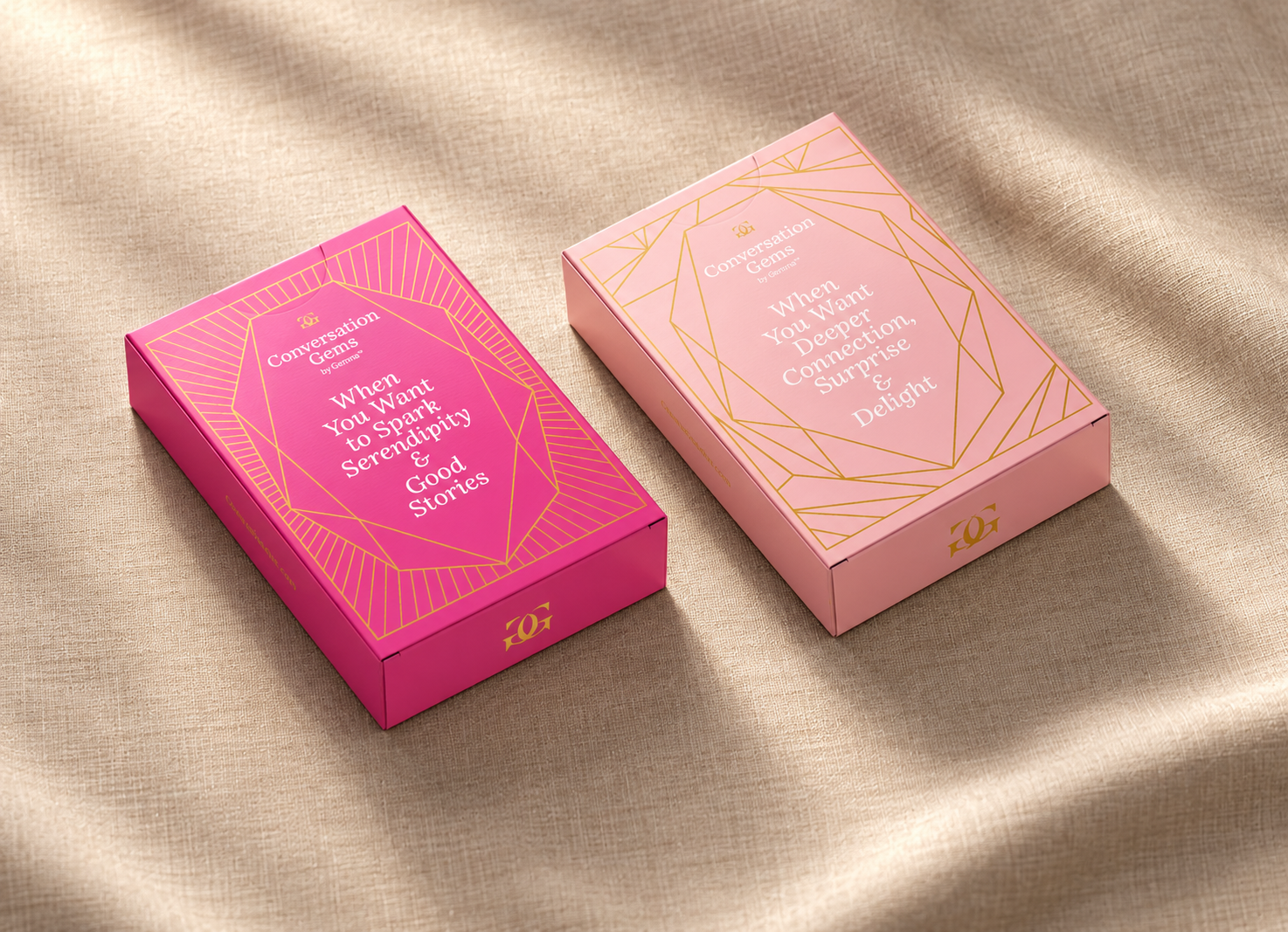
So to accompany my upcoming TED Talk in 2027, “Your Life is The Event, Make Sure it’s Worth Attending”, I decided to create my own set: Conversation Gems. These color-coded cards designed for specific situations to spark the kind of conversations you actually remember, wherever you are and whoever you're with.
Whether you're meeting someone new or catching up with someone you've known forever, these cards help you skip the small talk and get straight to the good stuff. Shuffle and pick at random, let each person choose their own card, or flip through until one catches your eye - there's no wrong way to use them. Each card is color-coded by theme on the back, so you can always find the right question for the moment.
There are two decks to choose from:
Deck 1 - Spark Serendipity & Good Stories (60 cards)
For meeting someone new, breaking the ice, telling a great story, or keeping dinner conversation going.
Deck 2 - Deeper Connection, Surprise & Delight (50 cards)
For the conversations that go a little deeper - emotional connection, presence, and small daily moments of delight.
I keep a deck in my bag for dinners and parties, and another in my carry-on for flights. I’ve found some of the best conversations happen when you least expect them, and I wanted these cards to be ready for that. Heck, sometimes I even sign my name on them and they make a memorable takeaway that’s more unique than a traditional business card.
Pre-order now and get:
Discounted pre-order pricing
A free bonus deck - for the first 100 people to order
Grab yours now or email me for bulk order requests for your fall events and gifting.
Can't wait for you to try them!
XX,
Gianna
Need to Chat? Here's how to get started:
👉 Book a 30-minute discovery call with me: Request here.
👉 Request an Event or Experience Audit (limited spots per quarter): Request here.
👉 Book a 15 - 60 minute consulting call here on INTRO: intro.co/GiannaGaudini
Gianna's Glimmer: What An Evil Latin Teacher's Memorable Approach Can Teach Us About Planning Events
Hi there,
Quick one this week (that's what a Glimmer is - a smaller sparkle of a Gem that provides a glimmer of inspiration!).
I'm deep in prep for my upcoming TED talk, "Your Life is The Event - Make Sure It's Worth Attending," and between now and the stage, I'll be sharing little tidbits and real-life examples of what it looks like to plan your life as intentionally as you'd plan an event. Today's proof point came from my kid’s mouth at my own kitchen table…on a regular Monday.
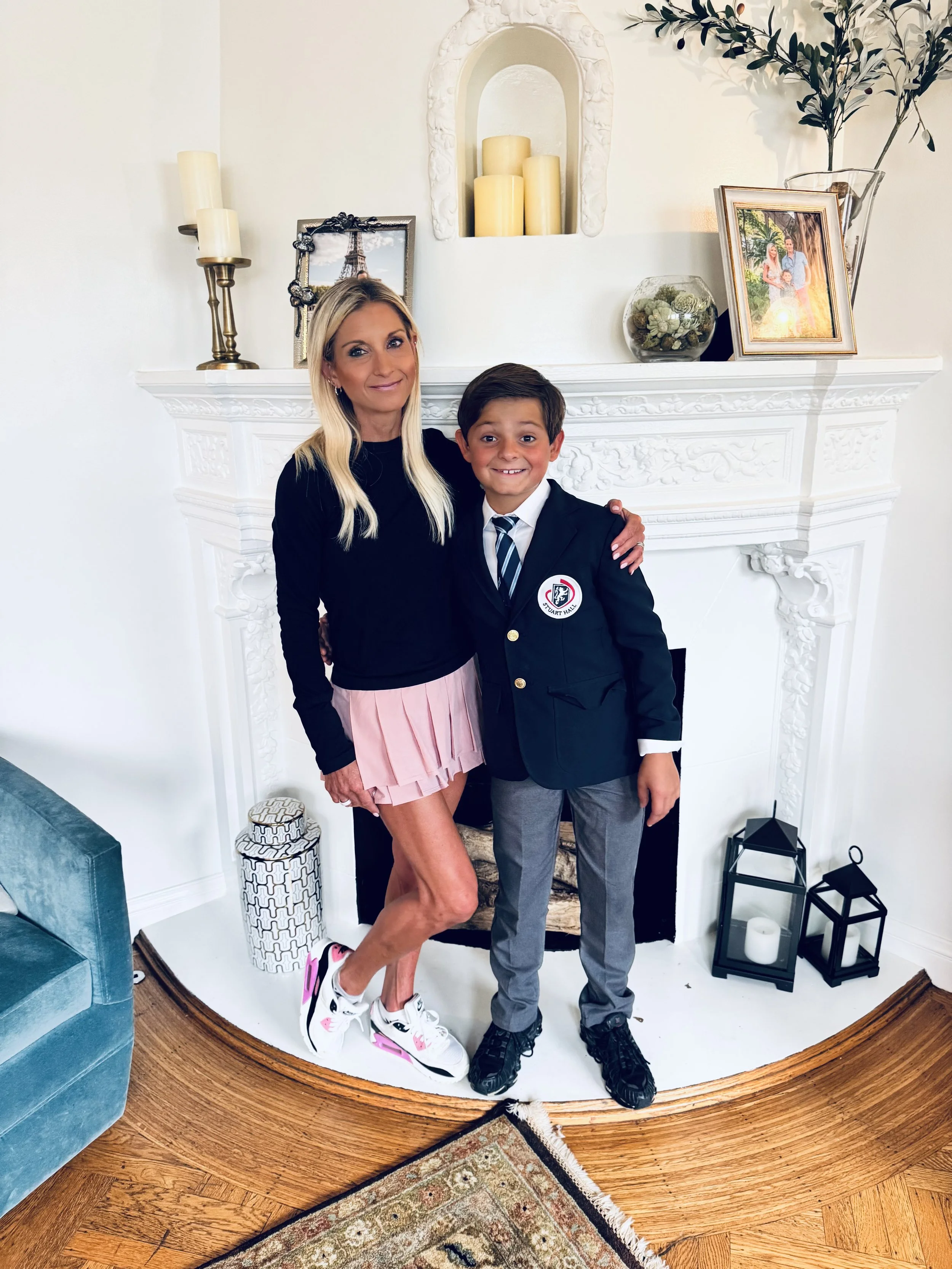
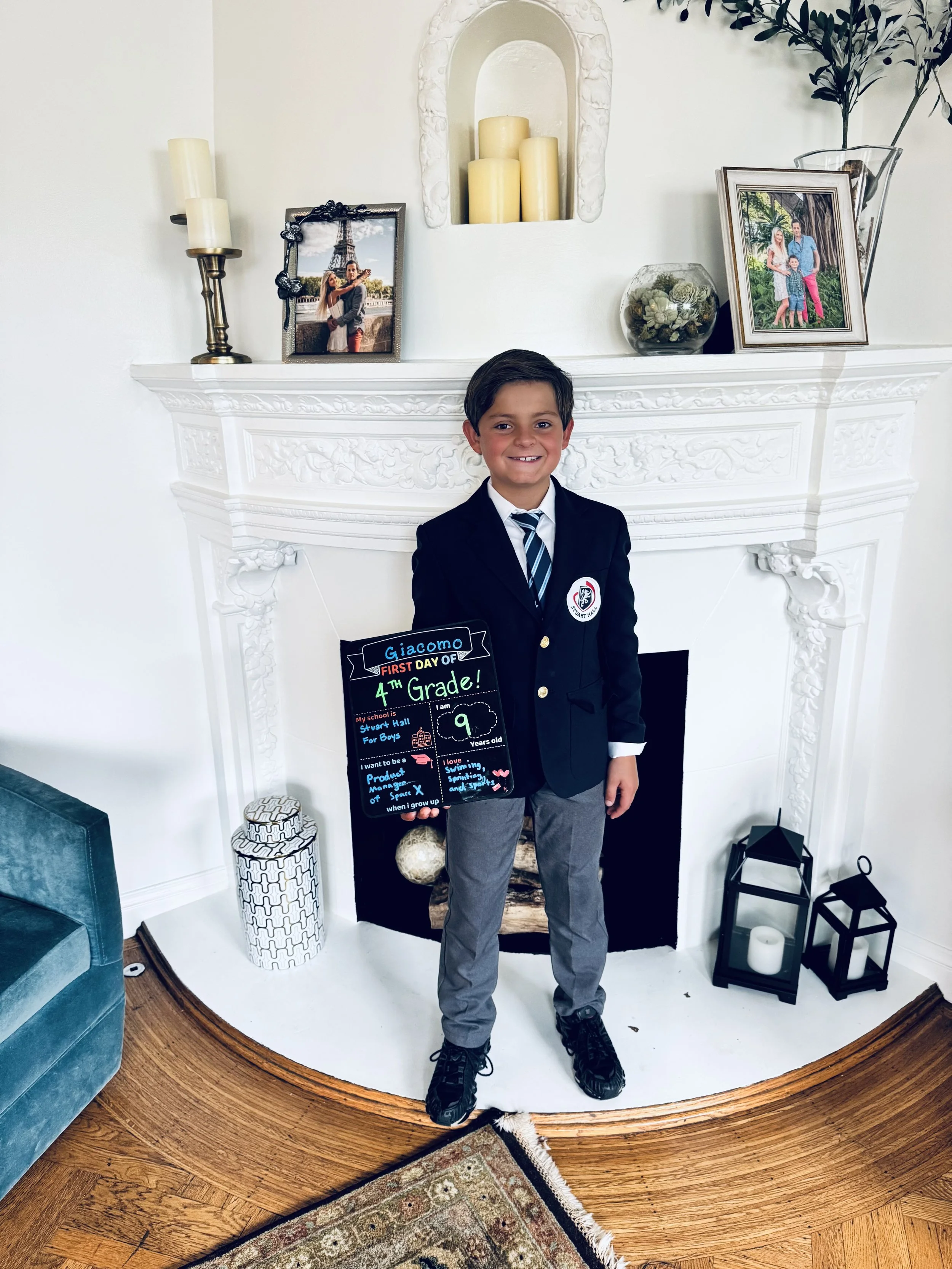
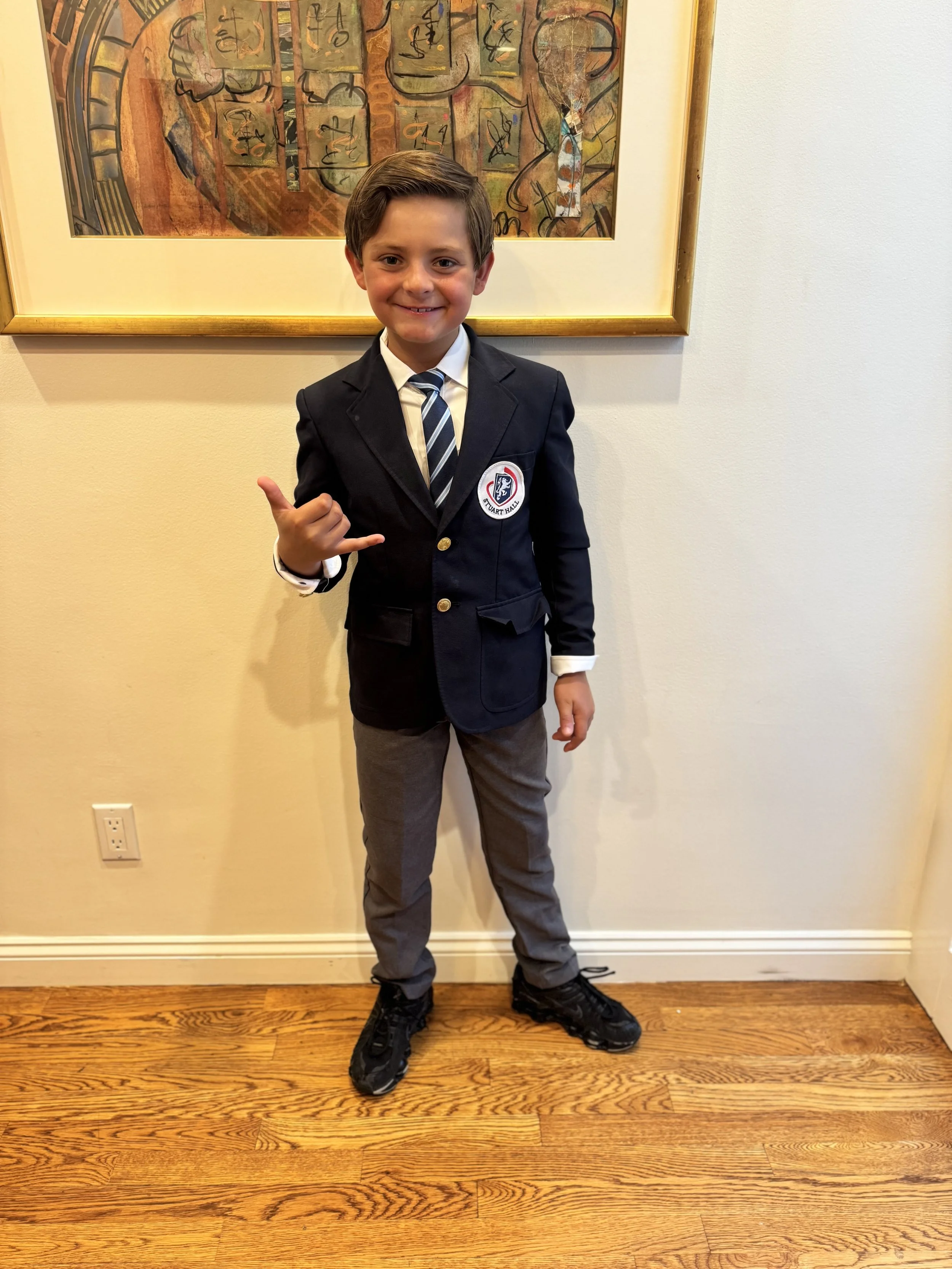
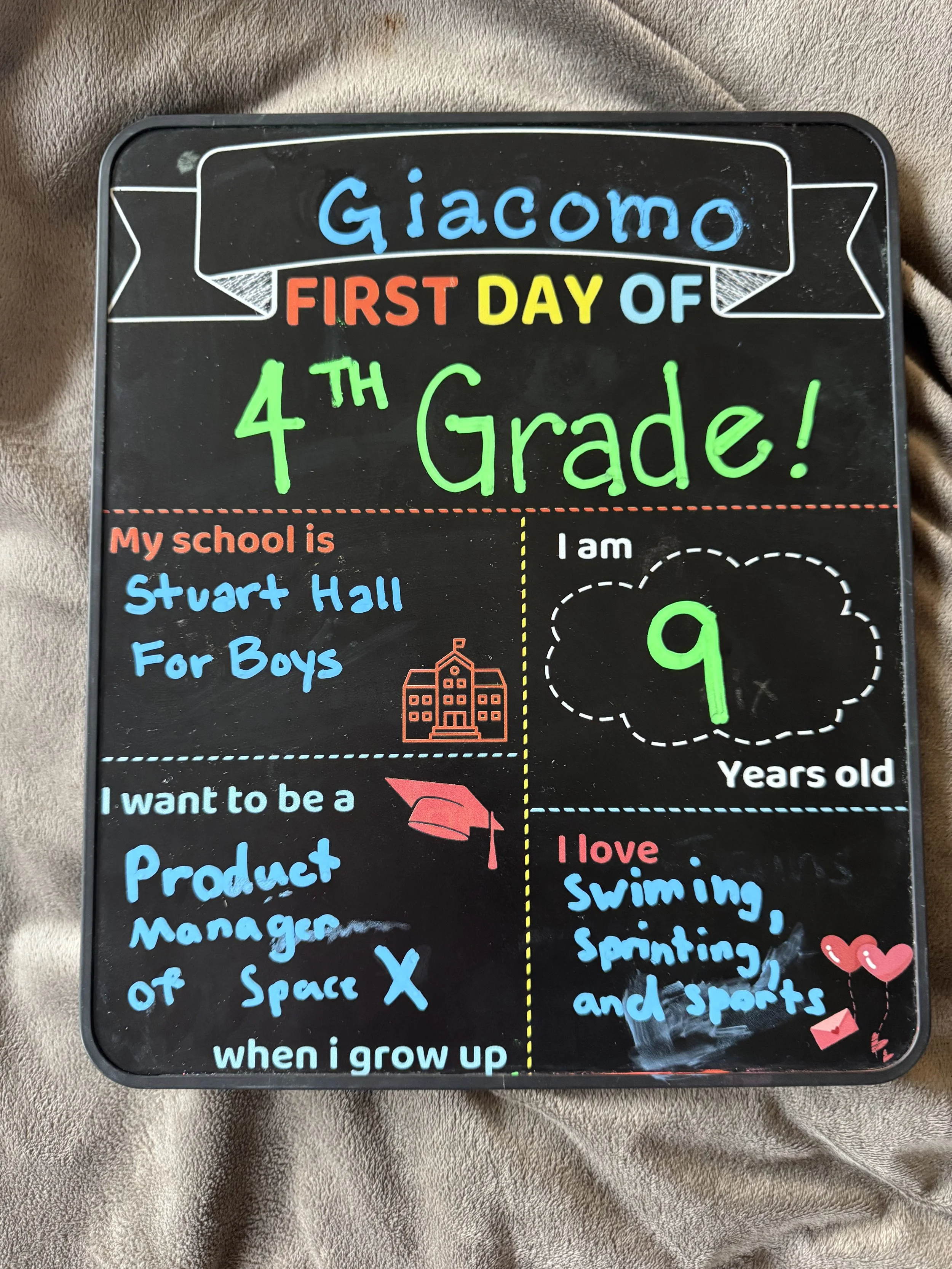
My son just started 4th grade at Stuart Hall for Boys here in San Francisco, and I asked him the question I always ask: what was your most memorable class this week? Without hesitating, he said Latin. (Latin. Huge shock, I know.)
So I did what I do - I probed with my favorite W-ord… “why”? And here was his surprising answer:
She calls herself "the evil Latin teacher." Unexpected, a little provocative, and it works — it grabs attention immediately and keeps kids (and apparently me, since I remembered her from our pre-K school tour years ago) wondering what "evil" even means. In an otherwise conservative Catholic school, she stood out as refreshingly different.
The chairs. They spin, they recline, they're actually comfortable. My son raved about furniture - which made me laugh, because it's exactly the instinct behind custom chairs I've built for events with chargers built right into them, or bringing in truckloads of soft-seating, throw pillows and even blankets to create an “oversize living room feel” rather than a sterile general session. Small physical comfort details signal "we thought about you," and people notice, relax and engage more deeply.
Study breaks built around curiosity. Her classroom is full of interesting objects, and when kids ask about them, it always leads to a story. This is basically my pro tip in miniature: story is what makes an experience stick, not the facts around it.
Everyone gets a job. Scribe, zookeeper, timekeeper, and other roles I'm sure I haven't heard about yet but will learn at back to school night. This is co-creation 101 - when people have a role in the experience, they're invested in it, and engaged not just attending it as a passive audience member.
They write everything by hand. No shortcuts, no typing. When I asked if she has some special teaching method to make Latin stick, my son said no - she just makes them handwrite it all. Which lines up exactly with what I tell people about reading analog books and journaling by hand: the friction is the point. It's what makes memory and intention actually take hold. And anyone who knows me knows I give away a logo’d moleskin journal at every event for those handwritten notes.
Gianna's Glimmer: The most memorable experiences rarely come from the subject matter itself - they come from the details, the story, the comfort, and the sense that everyone has a role to play. In other words - you remember the experience and how it made you feel.
More on this (and the TED talk) soon!
Keep shining,
Gianna
If Events Overwhelm You…Try This Solution
If you've talked to me for more than five minutes about events, you've probably asked me some version of these questions: What even is a Fractional Head of Events? Who actually needs one? What stage should a company be at before hiring one? And how is this different from just hiring a contractor, an agency, or a full-time employee?
Fair questions - and ones I get asked constantly. So let's settle it once and for all. Here's the overview, the downlow, the whole deal.
Let’s start with some #realtalk: events aren't just a brand moment. They're one of the most powerful tools in your marketing mix to build trust, drive pipeline, and deepen customer loyalty.
In fact, they're the #1 marketing channel for both ROI and building trust. But they're also high stakes, and without the right strategy, "events" quietly becomes "expensive guesswork."
The solution is a fractional event leader to curate the inputs and guide your decisions so you approach your events with relief rather than risk.
Here's what I’ve observed most companies are missing: a fractional head of events does something no AI, freelancer, or junior planner, producer or ops team member can do.
They curate the overwhelming amount of advice and information out there and actually make the calls:
Which agencies deserve a seat at the table and when to RFP new ones
What your event portfolio strategy should look like split between owned and third party hosted events
Where to spend and where to cut budget
When it's the right moment to host a user conference and what to do before that to build your event muscle as a company
They can tap into relationships and experience built over decades that open doors and get senior attendees in the room. That's not a prompt you can write. That's not a job you can post for $28/hour. That's judgment that comes from years of anecdotal experience.
Gianna’s Gem: You wouldn't hand your CFO position to an intern. Why trust your brand's biggest external moments to anyone but an expert?
What's a Fractional Executive Anyways?
By now, most business leaders know the model. Senior-level experts who plug into your business part-time to fill high-impact roles. Think Fractional CMO, CFO, COO, Head of People. You get C-suite strategy without the full-time cost or the long ramp-up.
As many as 70% of early stage companies now have a fractional team member.
Fractional leaders get brought in when:
You need experienced leadership without adding another headcount
You're scaling fast and need expertise now
You've got a high-priority initiative and need someone to own it
But somehow, events, despite being one of the largest line items in many marketing budgets, often 35% or more, have rarely had a seat at that same strategic table.
That's a mistake. And it's costing companies time, budget, and business.
Enter the Fractional Head of Events:
In 2023, I launched a service I had rarely seen offered: Fractional Head of Events. I built it because I kept observing the same problem. Companies were investing six and seven figures in events without any senior strategic leadership in the mix...and then coming to me to fix everything when they weren’t performing.
Either a junior coordinator was expected to figure it out, or an already-slammed marketing lead was moonlighting as an event expert. There was too much to do, no strategic direction, no way to measure what was working and no brand consistency.
Spoiler: that doesn't work.
A Fractional Head of Events is a senior event executive who joins your team part-time or project-based, bringing decades of lived expertise, executive-level thinking, and a real strategy lens without adding a full-time salary of a C-Suite member and benefits to your org chart.
Why Companies Are Cluing into the Fractional Head of Events
1. Events are your #1 trust and ROI builder. Since 2022, events have ranked as the top-performing marketing channel for both return on investment and building trust with customers (Freeman Trends Report, 2023). If you're investing in them, they need to deliver measurable impact, not just good vibes and instagram photos.
2. The experience gap is real. 70% of live events industry jobs have turned over in the last 3–4 years (Julius Solaris Research, 2024). That means most of the people running your events are new to their company, new to the role, new to events, or all three. A fractional leader brings steady leadership, mentorship, and structure so nothing gets dropped and your brand doesn't take the hit.
3. Strategy and execution/logistics are not the same thing. Anyone can book a ballroom and plan a menu with reasonable success. Aligning your events to pipeline goals, sales cycles, brand experience, and complex brand goals? That takes real expertise. A fractional event leader brings both the vision and the execution.
4. You've got a high-stakes event and zero margin for error. Launching a customer conference, a product launch, an executive dinner? These aren't "learn as you go" moments. A fractional event leader steps in fast, builds the plan, leads the team, and protects the outcome.
5. You're growing, but not ready for a full-time head. Not every org is ready to add a VP or Head of Events. Fractional gets you executive-level leadership, scaled to your stage and budget.
Gianna’s Gem: The value of a fractional leader isn't just strategy on paper it's decades of relationships that get the right people in the room. Anyone can send an invite. Not everyone can get a senior exec to actually show up.
Who Should Be Hiring a Fractional Head of Events?
You'll benefit from one if you're:
A marketing leader drowning in demand gen while also being asked to run events
A founder or CEO who wants to create a major moment for customers, partners, or prospects, but doesn't have the internal bandwidth to pull it off
A lean event team that needs seasoned backup, mentorship, and air cover
A VC- or PE-backed brand that needs to scale experiential quickly and smartly
A company in healthcare, fintech, or SaaS, where compliance, trust, and reputation are mission-critical
A company who is ready to grow their events function but doesn’t know how to build a proper event portfolio, or secure the right agency partners, budget and cross-functional team structure
But Does It Work?
Yes. Here's one example: an ai client brought me on with just one event on their calendar (AWS reInvent) to execute that flawlessly and build out the rest if the year’s event portfolio. During that engagement, we:
Had a 200% ROI from the first event, closing over ten major deals
Improved client retention rates from 75% to 95%
Landed a $100K deal out of one curated customer dinner
Cut waste while elevating the experience for top-tier customers
Grew new logos by 150%
Landed the most premiere lounge space to activate at Google Cloud Next
Launched out own User Conference for 1000 people within 7 months
Got acquired by Google just 9 months after I started there.
Their words, not mine: "This was not just an event. This was an EXPERIENCE that they will never remember, and serves as an extension of how we’ll treat them as a client" Their Chief Growth Officer got it.
So…what’s stopping you?
The Fractional Head of Events model is still new, but it's taking off. Events are too important to be led by someone without experience, and too expensive to get wrong..
Ready to explore? Here's how to get started:
👉 Book a 30-minute discovery call with me: Request here.
👉 Request a discounted Event Audit (limited spots per quarter): Request here.
Things I'm Loving This Week: The Essence Experience
I’m obsessed with an event I attended last week at The Battery called The Essence Experience: The Power of Perspective, a workshop led by Michael Tertes. It was unlike anything I've experienced there before.
I've been a founding member at The Battery for 11 years, and in that time I've been to more events than I can count. It takes a lot to genuinely pull me in these days. This one did, even though I admit I was a bit terrified about what to expect. I was so engaged, so captivated, so deeply moved, that I reached out to Michael directly afterward. We met for coffee at The Battery to keep the conversation going, and it was an absolute delight.
What made this event so different? It wasn’t the budget, or any “sizzle”.
Most "know yourself" work asks us to look inward - to examine our intentions, our efforts, our hopes, the stories we tell ourselves. Michael flips that. He asks: how are we experienced by others, and how do we experience others? And then he holds that question up against our inner beliefs about ourselves - and about each other.
Here's the line that's stayed with me since the workshop:
Every person you've ever met knows something about you that you don't - not because they know you better, but because they know what it's like to be with you.
Most of us spend our lives asking:
Why have I been successful?
What makes me different?
What don't I know about myself that's important to know?
We tend to search for those answers inward. But there's another force shaping every relationship, every conversation, every opportunity we've ever had: the experience other people have of us.
The Essence Experience starts from a different place entirely: what if understanding ourselves begins with how we're experienced by others?
Through a series of thoughtfully designed exercises, we practiced receiving observations with curiosity, noticed the patterns across different people's perspectives, and learned the qualities that have been shaping our lives all along. It was deeply powerful and left me with so many insights and also a newfound curiosity about everyone I encounter.
If this resonates and you'd love to bring this experience to your own organization, let me know - I'd be happy to personally make an introduction to Michael.
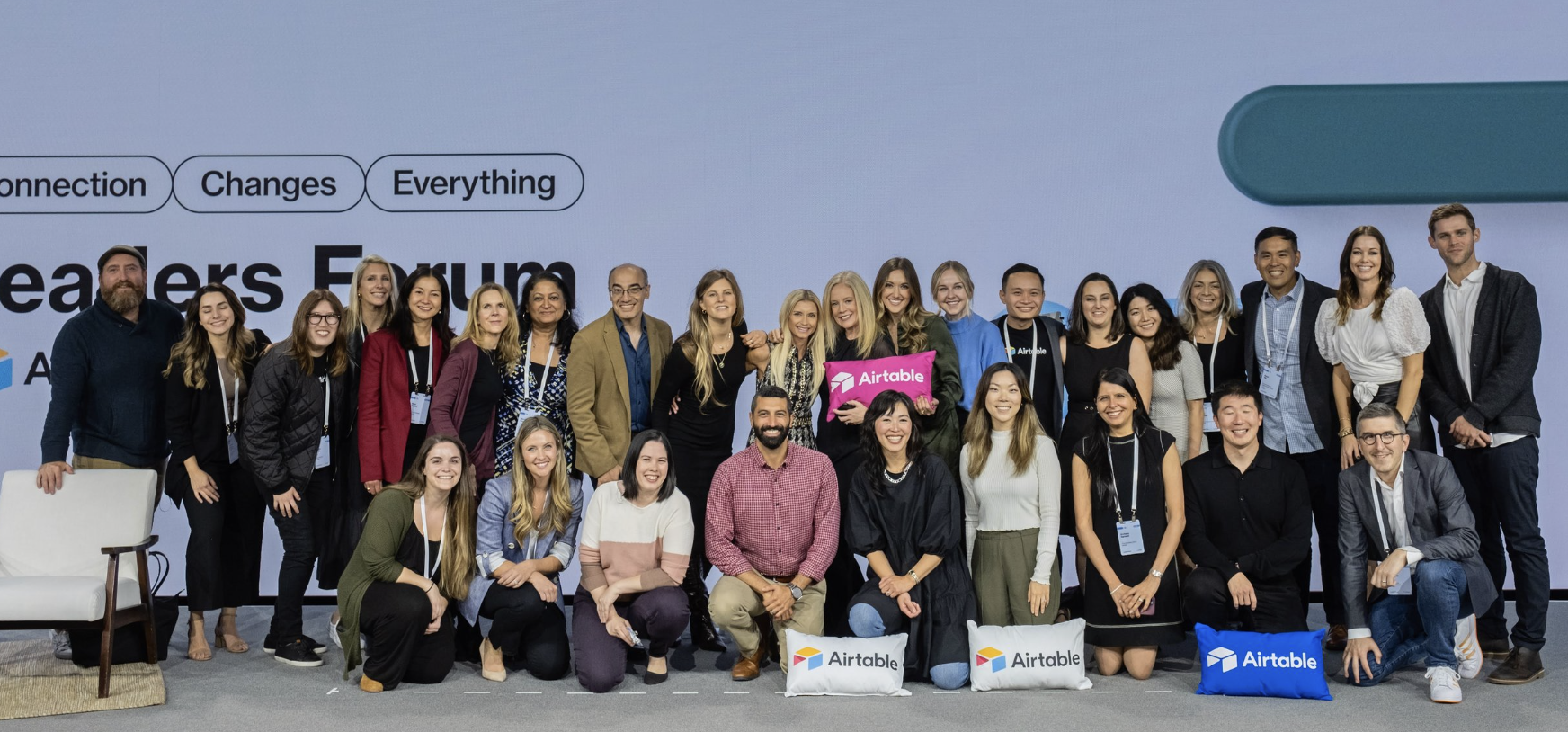
Gianna's Gem: F-It, Ship It. Lessons from Running Events at Airtable and Windsurf
Hi there,
Last week, Airtable sold to Bending Spoons in an all-cash deal valuing the company at a little over a billion dollars, with an equity value of roughly $2.25 billion once you factor in cash on hand. Airtable was valued at over $11 billion at its 2021 peak. Do the math on that, and you'll understand why the news stopped me mid-scroll.
I was Airtable's first Global Head of Events, hired at the golden moment the company was scaling fast, pivoting from product-led growth into selling to big Enterprise, and launching an entirely new category: the connected apps platform. I fully expected pivots. I expected delayed approvals on our first major externally hosted events. That's the nature of hypergrowth, and I signed up for it with my eyes open and loved and respected every minute of the grind alongside my colleagues and leaders.
What I didn't expect, and what I still think about, is how much overthinking and conservative rather than bold decision-making crept into the approval process for initiatives like events. This apprehensiveness became deeply embedded in the culture and company’s ability to operate and execute with courage and audacity. Not because anyone was lazy or careless -quite the opposite; these were the brightest colleagues I’ve ever worked with (and I’d worked at Google, Amazon and SoftBank Vision Fund)...everyone cared enormously, which is often exactly the problem. But overanalyzing too much about avoiding a wrong move can sometimes cost you the right one. I can't help but wonder whether some of that hesitation cost us opportunities, and in the case of events the “signaling” we needed to strengthen our brand as we scaled and to have a more successful exit.
Gianna's Gem: Fear can be masked inside a company as "prudence” or "vigilance." But "let's revisit next quarter” slowness has a price tag too, and nobody puts it on the leger.
Contrast that with Windsurf (now Cognition).
I came in as fractional events lead with exactly one event on the calendar: AWS re:Invent. Within four months, we had secured the best location right in front of registration at Google Cloud Next for a bespoke Windsurf Lounge and within six months, we were designing and building our own 1,000-person user conference from scratch. No decades of institutional caution. No fifteen rounds of approvals. Just a clear-eyed, level-headed approach to taking calculated bets based on data and sentiment that the moment called for boldness, and the willingness to move. Fast. I loved the bold culture!
Open Ai announced that they were going to acquire us, but…that event didn’t happen, and neither did our Conference. But that’s because before it could happen, Google acquired the majority of Windsurf in the tech story of July 2025, and Cognition swiftly acquired the remainder within 48 hours.
Is that a coincidence? I don't think so, and I don't think it should surprise you either. A team that moves at that speed on something as visible and vulnerable as a first-ever conference is a team that's operating with conviction across the board. That kind of energy and bold audacity gets noticed. It gets acquired.
Gianna's Gem: The companies that win aren't the ones with the fewest mistakes. They're the ones with the shortest distance between "we should do this" and "we did this."
Here's my philosophy, and it's not reckless, it's disciplined, but bold and action-oriented:
Do your research. Budget responsibly. Get crystal clear on the ROI or output you actually want from your event and what absolutely cannot happen. And then, f-it, ship it already.
Gianna’s Gem: With events, there is no bad data.
You either crush it, or you learn something you couldn't have learned any other way. Both outcomes beat the alternative: losing the opportunity entirely because you were too afraid to take the swing, and spending the next year regretting it.
Because here's what a great event actually does for your business:
It’s a Signal: hosting an event at scale tells customers, industry influencers, press, analysts, and investors that your company is serious, and it builds pride internally in the company's growth trajectory.
It’s a thought leadership driver: the physical environment to show what leadership means to your company and your community.
It’s a brand personality exemplifier: the place where your brand comes alive IRL, where attendees immerse themselves in the community in a relaxed environment, and where brand impact and social sharing happen organically.
It’s an morale and momentum booster: it builds momentum heading into the year ahead.
It’s a pipeline accelerator: it can dramatically expand and accelerate customer and investment pipeline through the new ideas an event generates.
It’s a relationship builder: a demonstration of what your company stands for, built through the relationships forged between leadership, customers, partners, press, analysts, and investors.
It’s an appreciator: a genuine thank-you to the employees, customers, and champions who support the company.
It’s a feedback collector: a live feedback mechanism for needs, challenges, and honest conversation you won't get from a survey.
That's a lot of value sitting on the other side of a "yes." And the cost of not doing the event is just as real, it's just harder to see on a spreadsheet. In today's environment, agility isn't a nice-to-have. It's often the whole ballgame.
Your Challenge This Week:
Find the event (or other initiative) that's been sitting in "let's revisit it" parking lot purgatory. Get honest about what's actually driving the delay: is it a real resourcing constraint, or is it fear wearing a prudent-sounding costume? If it's the latter, do the research, set your budget, get clear on your ROI, and then give yourself permission to ship it.
If you need help overcoming your fear of hosting an event, let's talk. I'm happy to coach you through it or step in as your fractional head of events to take you to the finish line.
You've got this.
XX,
Gianna.
BONUS: I will offer one 45-minute coaching call with one reader. To be entered to be selected, email me with 1-2 sentences about where you’re stuck and what you need my help with. gianna@gaudini.com
P.s. Want to work learn more frameworks for creating the gold standard in events and experiences, negotiating, or creating better content for your events? New individual modules from my masterclass are now available at: giannagaudini.com/learn-from-me
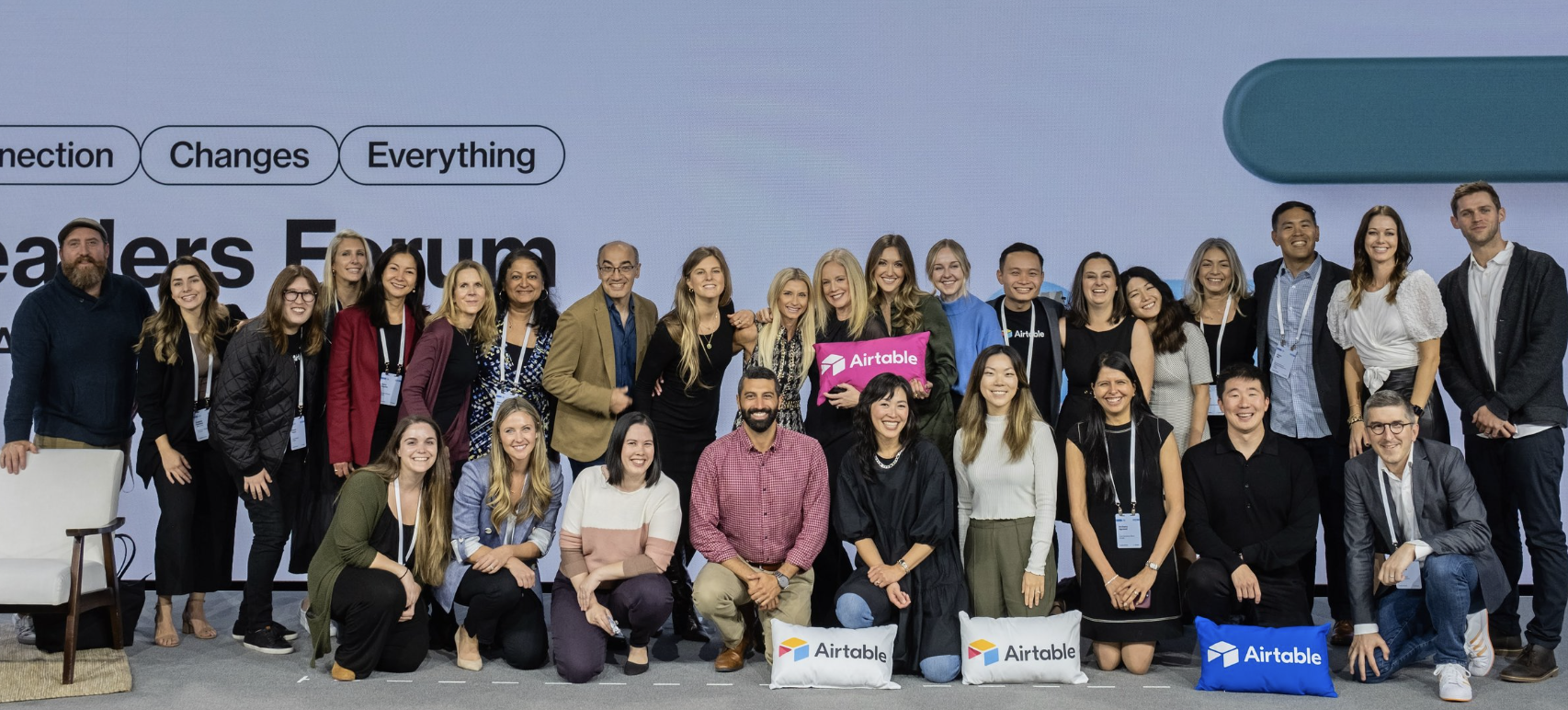
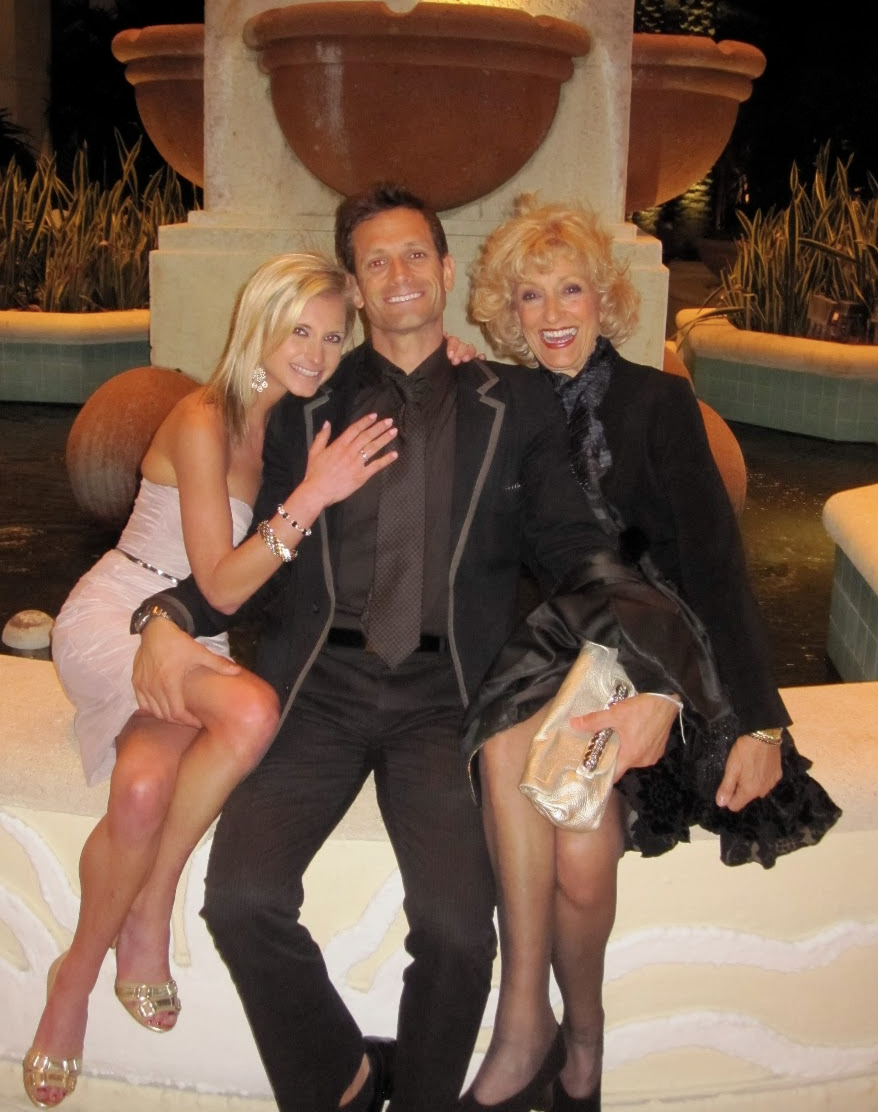
You Can’t take it With You…and other Lessons Pat Would Have Shared with Giacomo
I am always highly intentional with how I personalize everything, and the why behind my intentions and actions. When my mother-in-law passed away on July 11, I wanted to eulogize her in a way that was unique to our relationship, and also in a way that I could share with my 9-year-old son as I shared the news with him. Reading it this past weekend to a room full of people wasn't easy - I was shaking like a leaf (and I never shake while speaking), but afterward, so many of them shared how touching it was, and that they wished more people could hear the lessons and live like Pat.
So in homage to my amazing, strong, beautiful, larger-than-life mother-in-law, Pat Gaudini, here are her lessons for a life well lived. Please pass them on to anyone who might benefit from a dose of her sunshine.
Lessons Pat Would Have Shared With Giacomo
My son, Giacomo, was too young for Pat to impart her life lessons on him while she still lived in California. So today, here are some lessons I want to pass down to him the way I'd envision her sharing it… and with some Patti-isms… because I think you'll recognize her in every line.
ON first impressions. Your smile is your best accessory — but whatever the occasion, you can never, ever be overdressed.
ON people. You catch more bees with honey. Simple as that. Pat never met a stranger, only a friend she hadn't yet charmed. And it doesn't cost a thing to be kind.
ON the benefit of the doubt. Make the charitable assumption. You never know what someone's carrying — so assume the best, and hand them a little grace. You might be the only sunshine in someone's whole day. Pat handed hers out like she had an endless supply. Turns out she did.
ON money. Don't be too tight with money, always carry cash, and tip generously and then some. Invest in experiences, not things. As Pat would say, "Honey, you can't take it with you."
ON who you bring home. If possible, use your mom as your wingwoman. Pat met me first, thank you very much. Not because she was nosy, but because she could sense a good partner for her son. A word of advice — maybe don't wait quite as long as your dad did, but better late than never.
ON hard work and perseverance. Look up the word grit and you'll find something like: courage and resolve; strength of character. Look up tact and you'll find: the ability to handle a difficult situation, or people, with grace. Pat had both in spades. She looked at the fur industry, decided she could do it better than the men running it, and borrowed the money to prove it. According to my sources, many of Pat's clients had this saying: "You don't ask, you don't get…" Well, she learned to be bold, and she asked and received! She ran that business for over three decades through market swings and times others would have folded. But she never did — she trusted her gut, and worked like it was nobody's business. The entrepreneur in me is inspired and motivated by her every day, and I have a feeling that hustle and grit is in Giacomo's genes too.
ON being a gentleman. Learn her favorite flower. Notice the little things, and then act on them — because thoughtfulness without action is just a nice thought. Pat was incredibly thoughtful, and passed that on to your dad. He once conspired with Pat to have a custom monogrammed Loro Piana fur coat made when we were dating. That's the bar now, Giacomo. Sorry. She set it.
ON love. Love with your whole heart. Not halfway. All the way in, every time. It's the only way Pat knew how to do it, and it's why an entire room full of people are here today, all a little heartbroken, because she loved every single one of us like we were the only person in the room.
ON your mother. Call her (that's me). Every day, if you can — even if it's just thirty seconds. Pat did, without fail. Not because there was always news, but because there's always love, and love likes to check in.
ON living la dolce vita. Spend as much time as you can in the places you love, with the people you love. Don't save it for someday. Someday is not guaranteed — but Wednesday, at lunch, with the right people, absolutely is.
ON wandering. Pick a place that calls to you, and go spend a whole month there, every single year, if you can manage it. Roots are lovely. So is knowing exactly which restaurant in Yountville has your favorite bread and chardonnay.
ON eating well. On that note — eat well: salmon, steel-cut oats, the sensible things. But never forget that wine is a food group too. Pat was healthy but had the occasional dessert. Sometimes, if it was really good, she'd whisper, "This is so good, it's a mortal sin."
ON disappointment. Don't dwell on life's little letdowns. Shrug it off, and go find the next good thing. As far as Pat was concerned, if the Eagles lost, "they were just a bunch of fugazi's"… I admit, I still don't get what that means!
ON walking into a room. Light it up like everyone in it has been waiting all day just to talk with you. Pat never entered a room quietly in her life, and every room was better and much more fun because of it.
So, Giacomo — that's the playbook. I'll do my best to fill in for her. But I hope that somewhere down the road, when you meet your wife because your smile drew her in, take a trip even though you're not sure about the cost, or call your mother just to say "I love you," you'll feel her in your heart.
She's not here to say it herself anymore. So I will, on her behalf, one last time:
"You can't take it with you, sweetheart."
So spend your life well.
In loving memory of Pat Gaudini.
https://www.danjolell.com/obituary/patricia-a-burdo-gaudini/
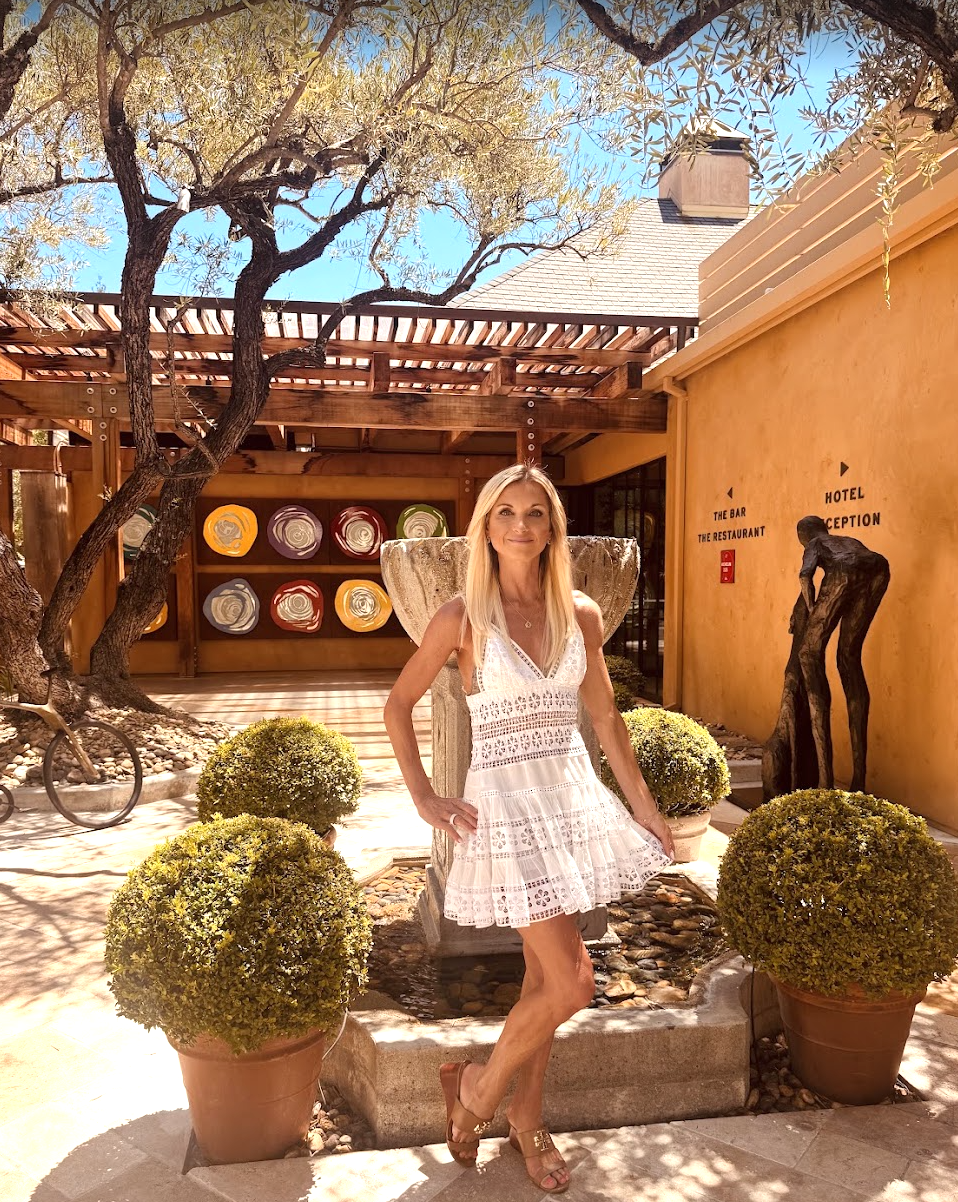
Giannas Gems Sexy Property Spotlight - Auberge du Soleil Napa
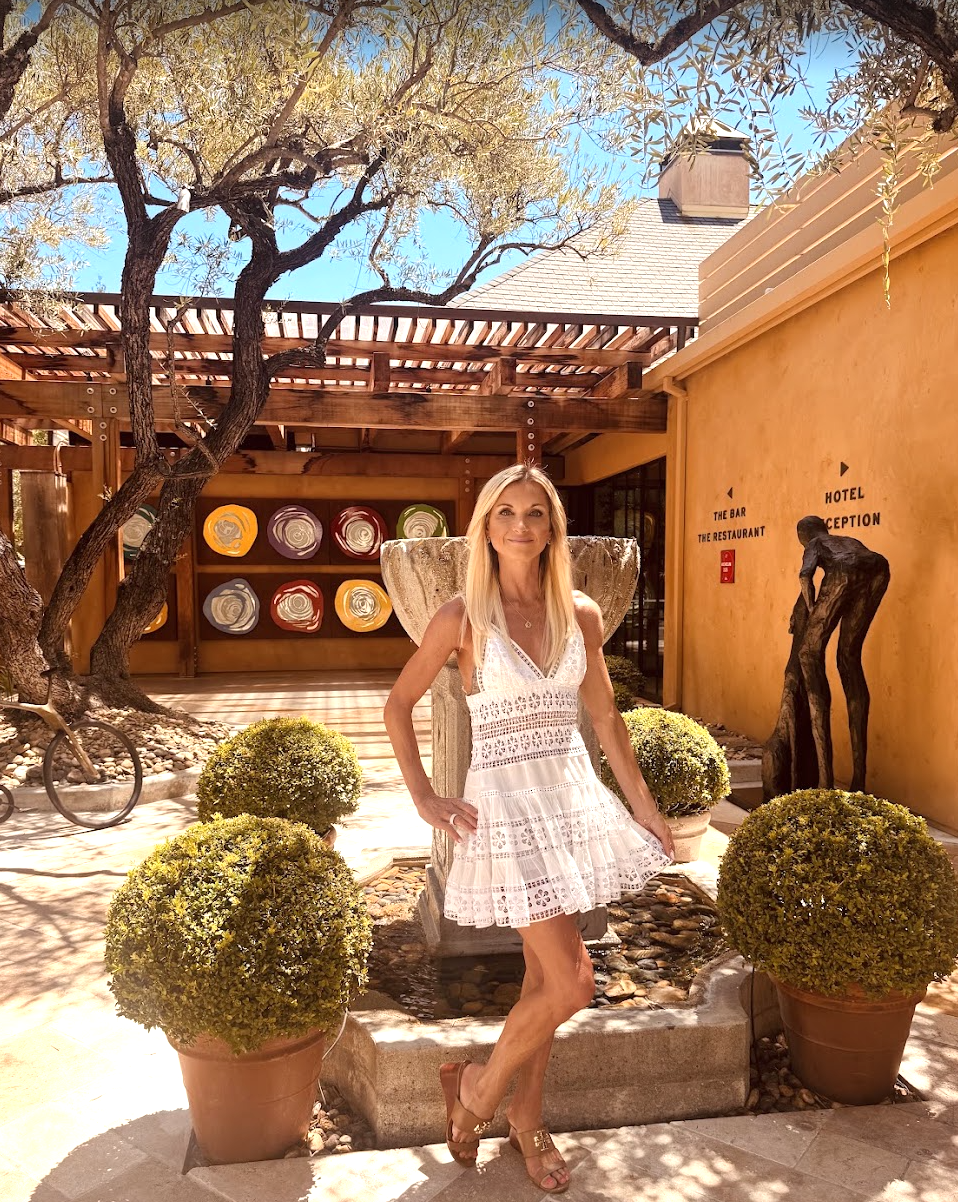
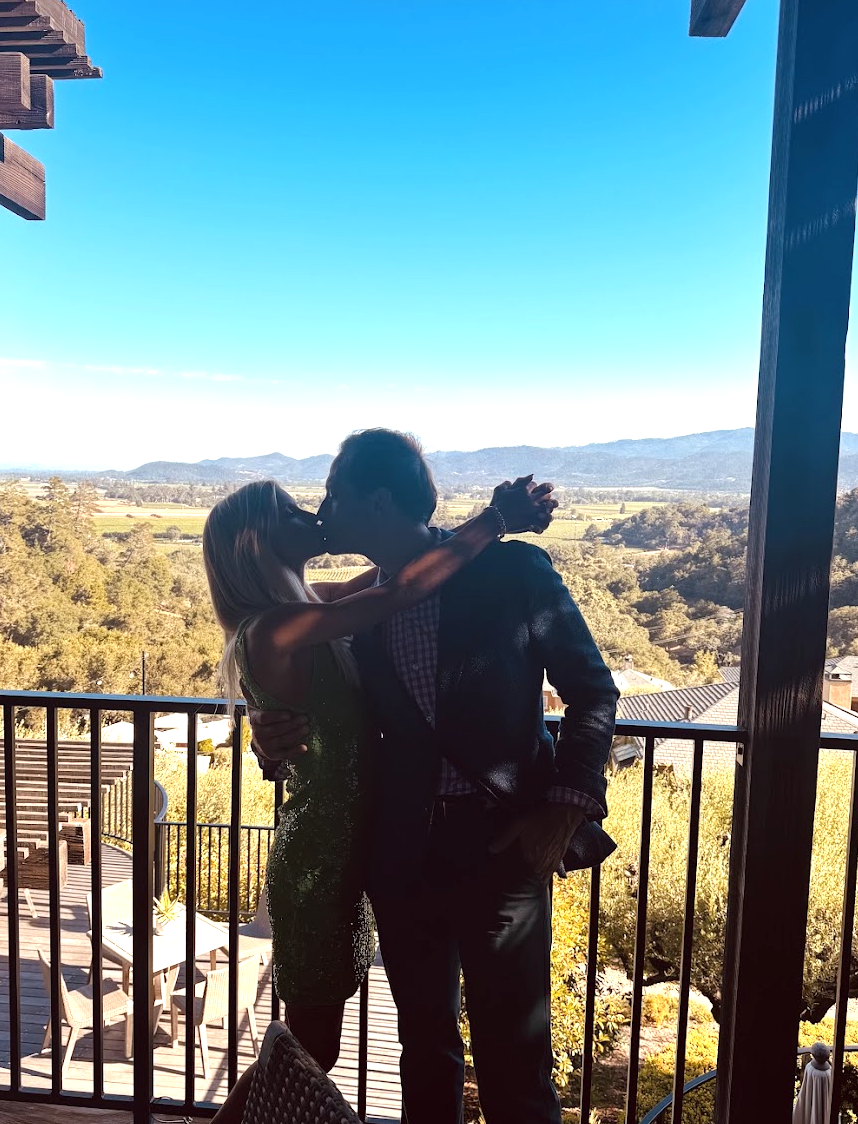
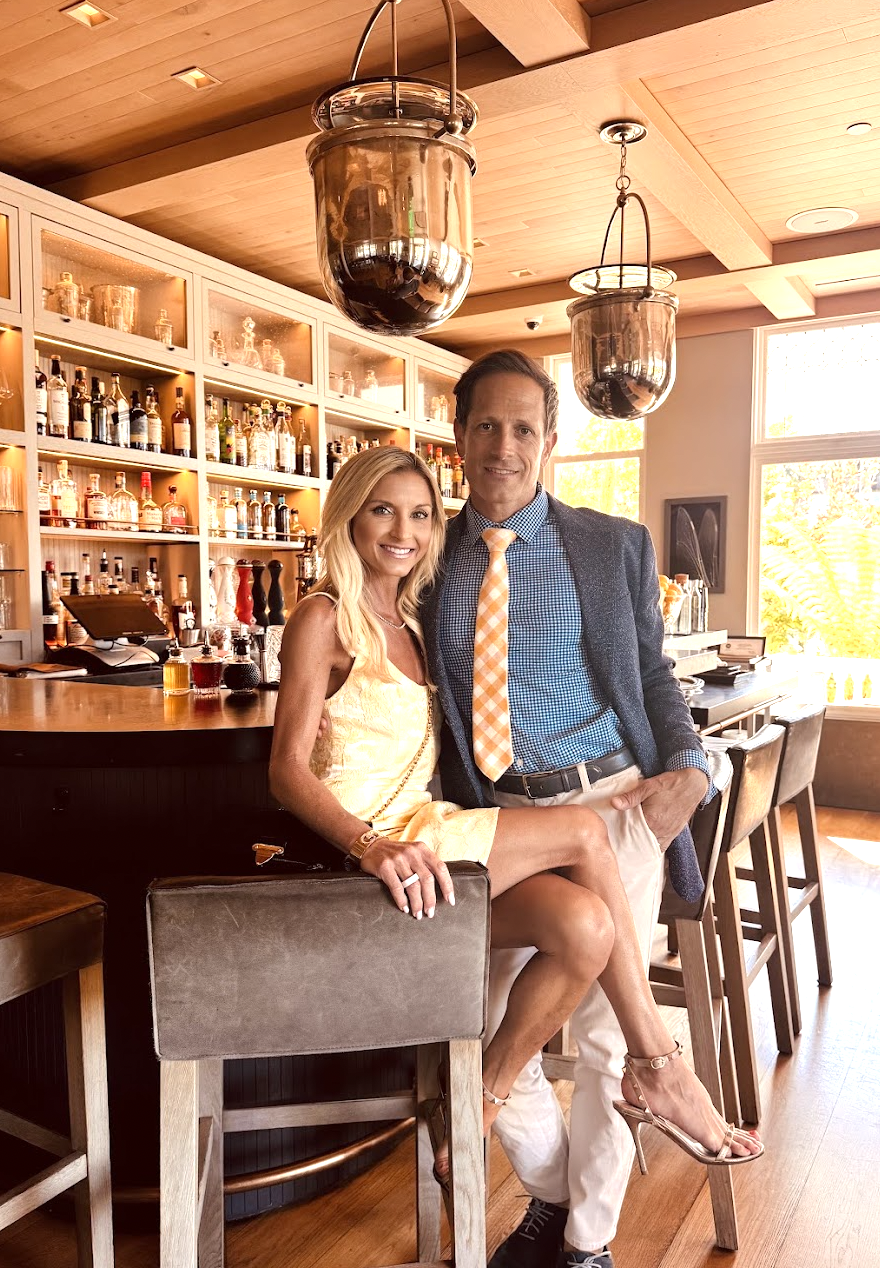
I said "I do" with my husband at Auberge du Soleil on 9/10/11…an auspiciously symmetrical date for what has turned out to be a marriage as enduring as the property itself. So when I went back this July to celebrate my birthday, I expected a nostalgic weekend where more than once, I caught myself saying out loud…how did I not experience this when I was here for the wedding?
That's the thing about Auberge du Soleil. It rewards you more the closer you look, wedding day or fifteen years later. And thoughtful details are everywhere. I smiled when I saw conversation cards near the pool (you all know how much I love them),the pink rafts to float on for even deeper relaxation, and a whole library of books in our hotel suite…it’s these little details, anticipating what guests may need or may not even know they’ll delight in, and then letting the splendor of the property and its surroundings unfold to deliver surprise, delight and awe…this is what makes Auberge du Soleil truly timeless.
The View That Started It All
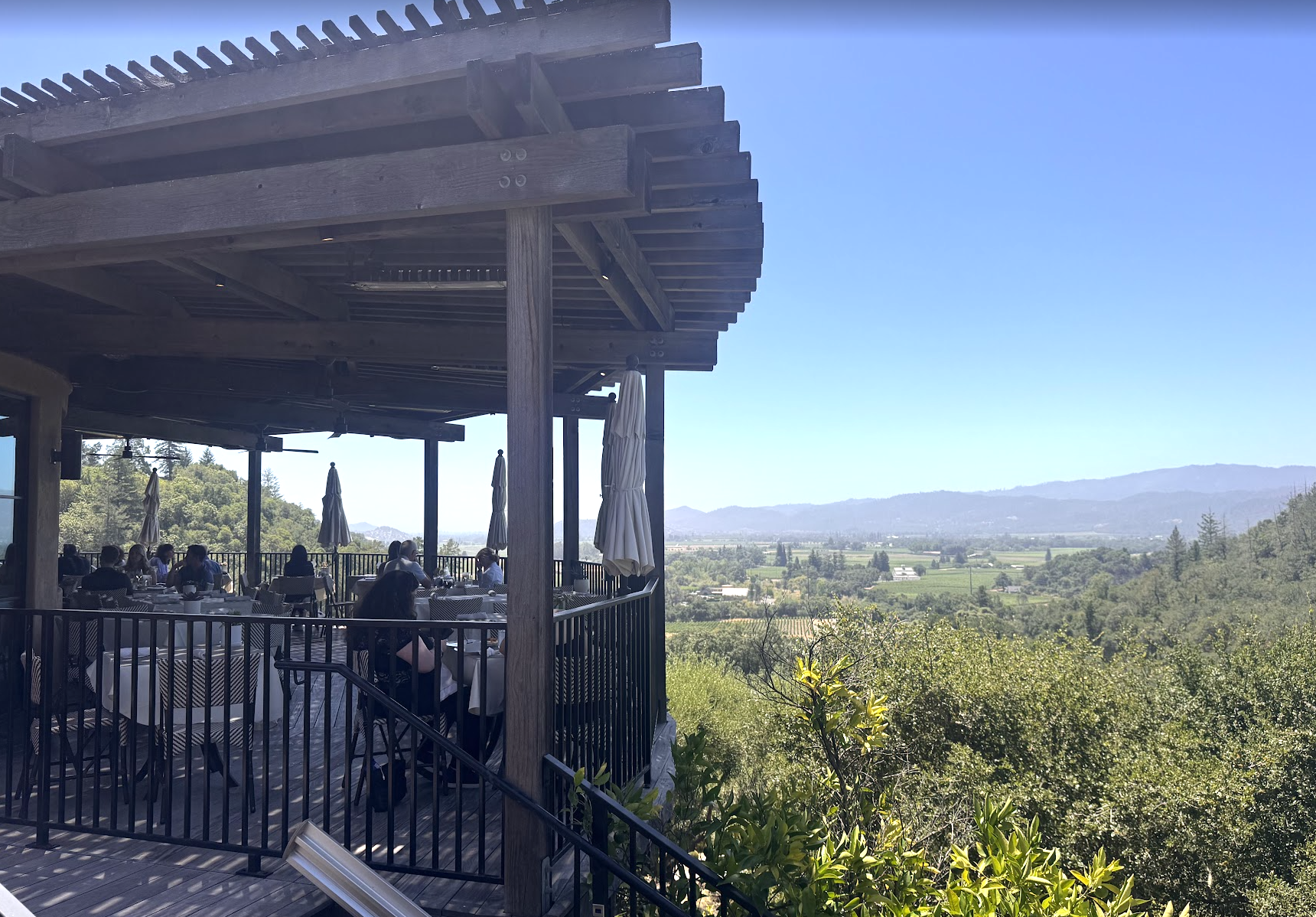
Let's start with what everyone comes for: the view. It was the single biggest reason my husband and I chose this property for our wedding, and it's the same reason travelers from all over seek it out for a destination lunch or dinner while they're in Napa. The property sits atop a breathtaking canyon in Rutherford, and looking out you get a sweeping view of vineyards, hawks circling majestically overhead, and on still mornings, hot air balloons drifting in the distance. It is the kind of view that makes you stop mid-sentence, every single time and one we wanted to share with our friends. It didn’t disappoint then and I was still just as breathtaken by the stunning natural beauty on this visit.
The pool shares that same vista, and lounging beside it is a genuinely majestic experience…the closest I've come to feeling like I was floating atop a fairytale castle somewhere in Europe, if that castle happened to overlook Napa Valley instead of the Rhine. Lunch is served pool side on trays with proper linen and silver, and as you dine, you can hear the laughter and wine glasses clinking from world travelers who are enjoying duck fat fries, burgers and perfectly pan seared salmon from the restaurant on the balcony above. Heaven will have a hard time competing with this.
The Casitas: Every Room Its Own World
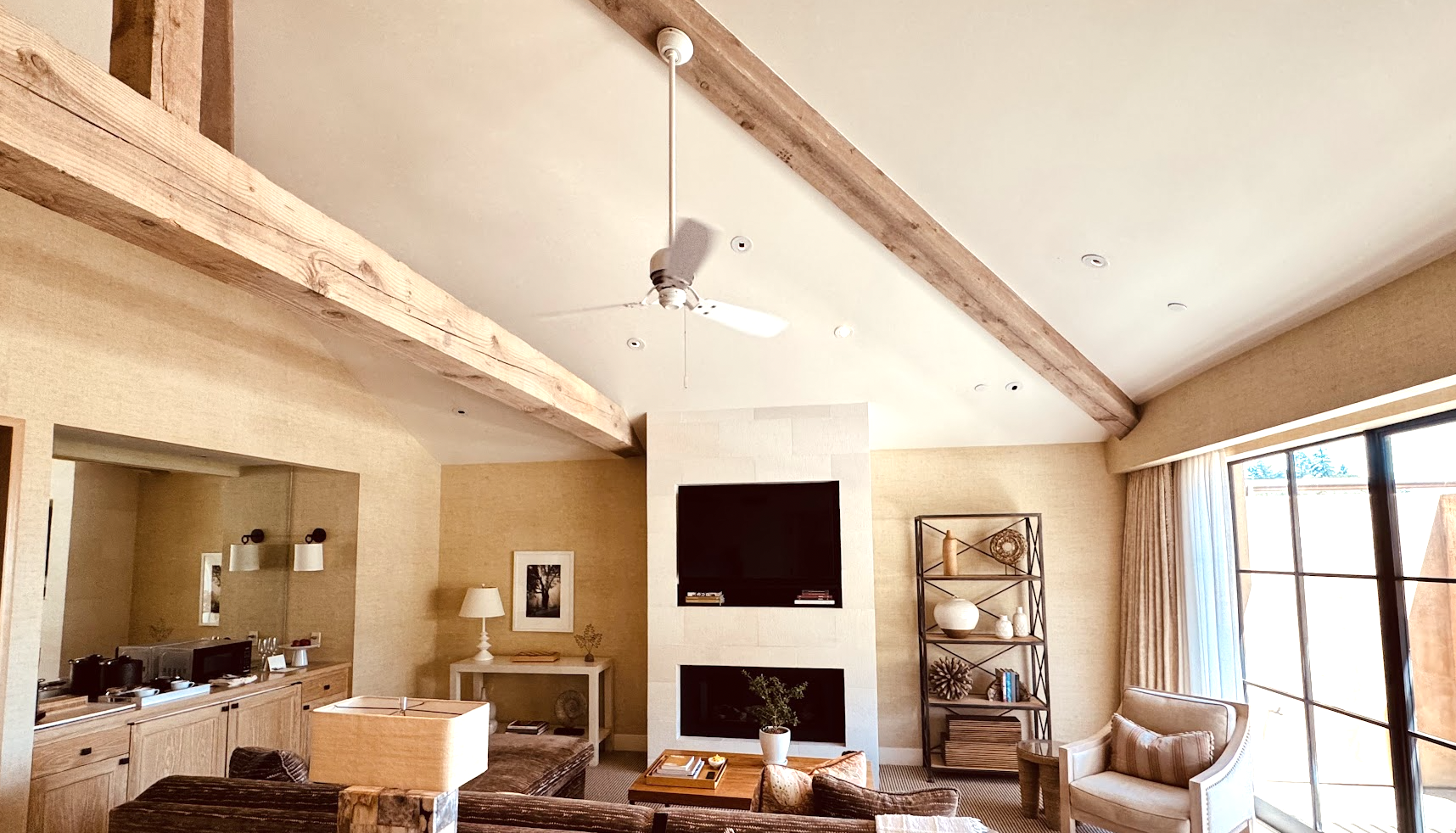
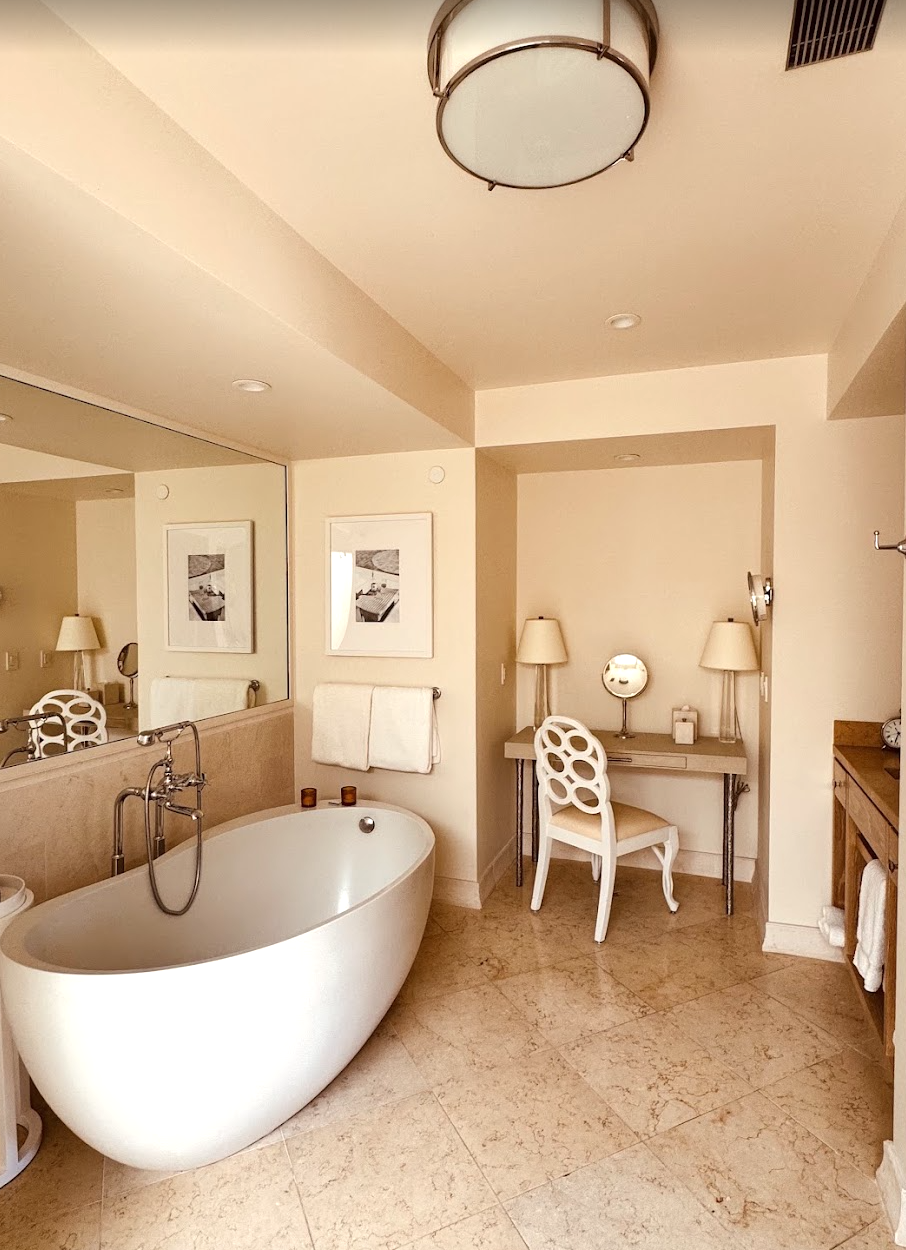
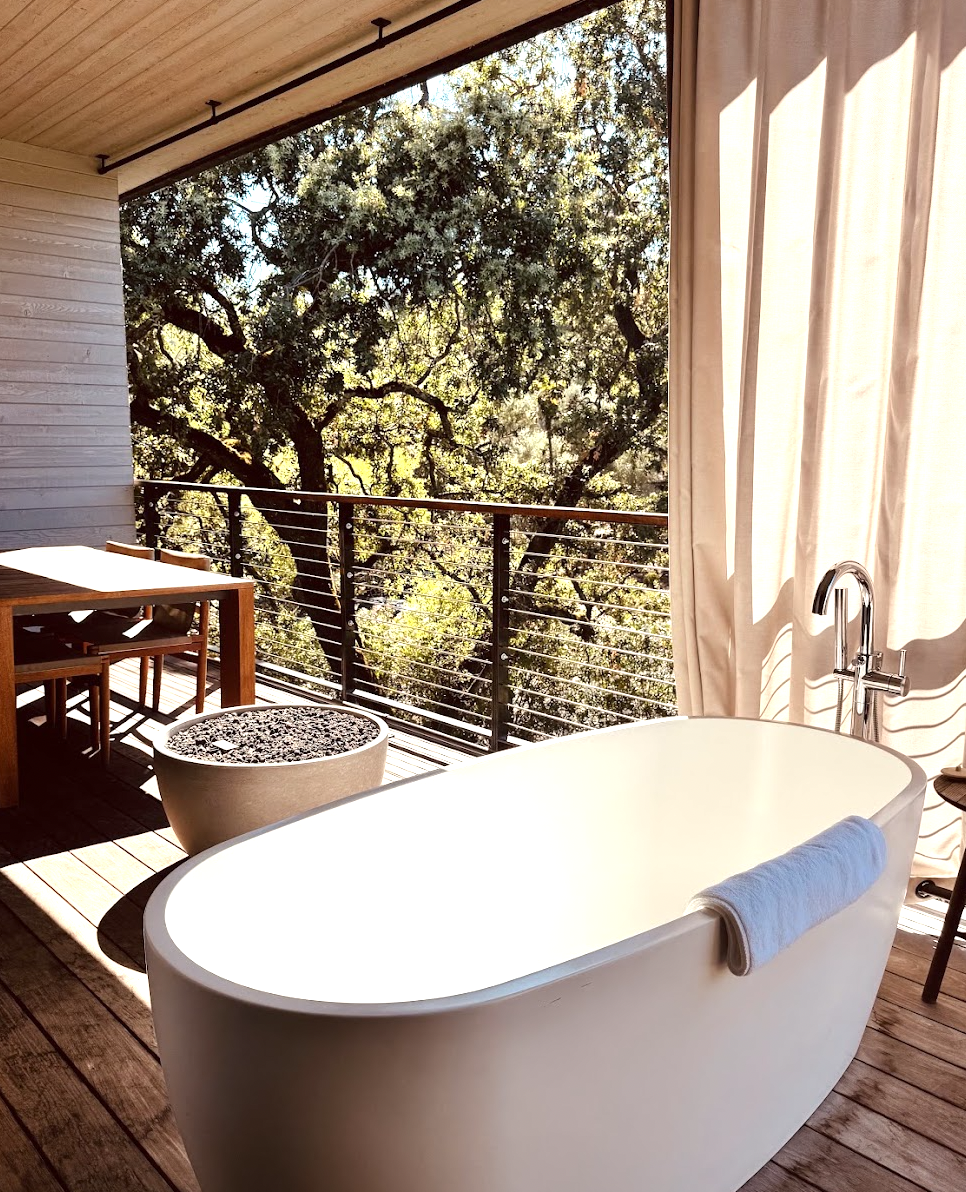
Every room here is its own private casita, with high beamed ceilings and a signature scent I can only describe as smoke, leather, and the herbal essence of the earth itself…the kind of detail that instantly transports you the moment you walk in and that I would buy for my own home if it was available. Each room comes well appointed with assorted beverages, books, and magazines, and a soaking tub with bath salts and candles.
The property has just 50 guest rooms and suites in total, spread across five accommodation types: Classic Rooms, Classic Suites, Deluxe Rooms, Deluxe Suites, and the Private Maisons. Every category is housed in its own maison, each named for a town in the south of France, which is exactly the design ethos here: Provence, transplanted onto a Napa hillside. The suites unfold into a separate living room behind French doors that open onto an oversized private terrace, while the two-bedroom Private Maisons take it a full step further with roughly 1,800 square feet of indoor-outdoor living and their own trellised terrace, complete with an outdoor sculptural soaking tub and rain shower framed by unobstructed valley views. It is, without question, one of the most romantic ways to spend a night in wine country.
The beds are, without exaggeration, like sleeping on a cloud. And after a day of sunbathing, there's no better way to transition into evening than lighting a candle beside the sunken tub before dinner.
Dining That Earns Its Michelin Star
The Restaurant at Auberge du Soleil is outstanding, both in the quality of the food and the caliber of the service…and the accolades back it up. Opened in 1981 by French restaurateur Claude Rouas as Napa Valley's very first fine-dining restaurant, it has now held a Michelin star for 18 consecutive years, alongside Forbes Travel Guide Five-Star and Michelin Three Key distinctions. Executive Chef Robert Curry, who has led the kitchen since 2005 after stints working under Alain Ducasse in Monaco and Philippe Jeanty in Yountville, sources ingredients from local purveyors at their peak of flavor for a menu that leans French-inspired California cuisine. On the Terrace, you can choose a two- or three-course prix fixe for lunch, or a three-, four-, or six-course tasting menu for dinner, each paired if you like from the hotel's roughly 15,000-bottle wine cellar, one of the most extensive in the valley. For something more casual, The Bar next door serves continuous dining from 11:30 a.m. to 11 p.m., a favorite mid-valley stop for locals and visitors alike. I used to stop here for lunch while writing my wine blog, Decantress Wine Diary, and it was always a welcome destination in and of itself that often delighted my guests more than the wineries themselves.
Wellness, Done the Auberge Way
The property is true to form when it comes to wellness offerings: an indoor/outdoor gym overlooking the beauty of the valley, a pagoda in the middle of the sculpture garden for meditation and yoga, tennis courts set majestically amid a sculpture garden, and a full spa to round things out. Or, you can do a hike up and down the hill the property is on, like my husband and I did the day after our wedding, and work up an appetite for those duck fat fries.
The Property's Best-Kept Secret
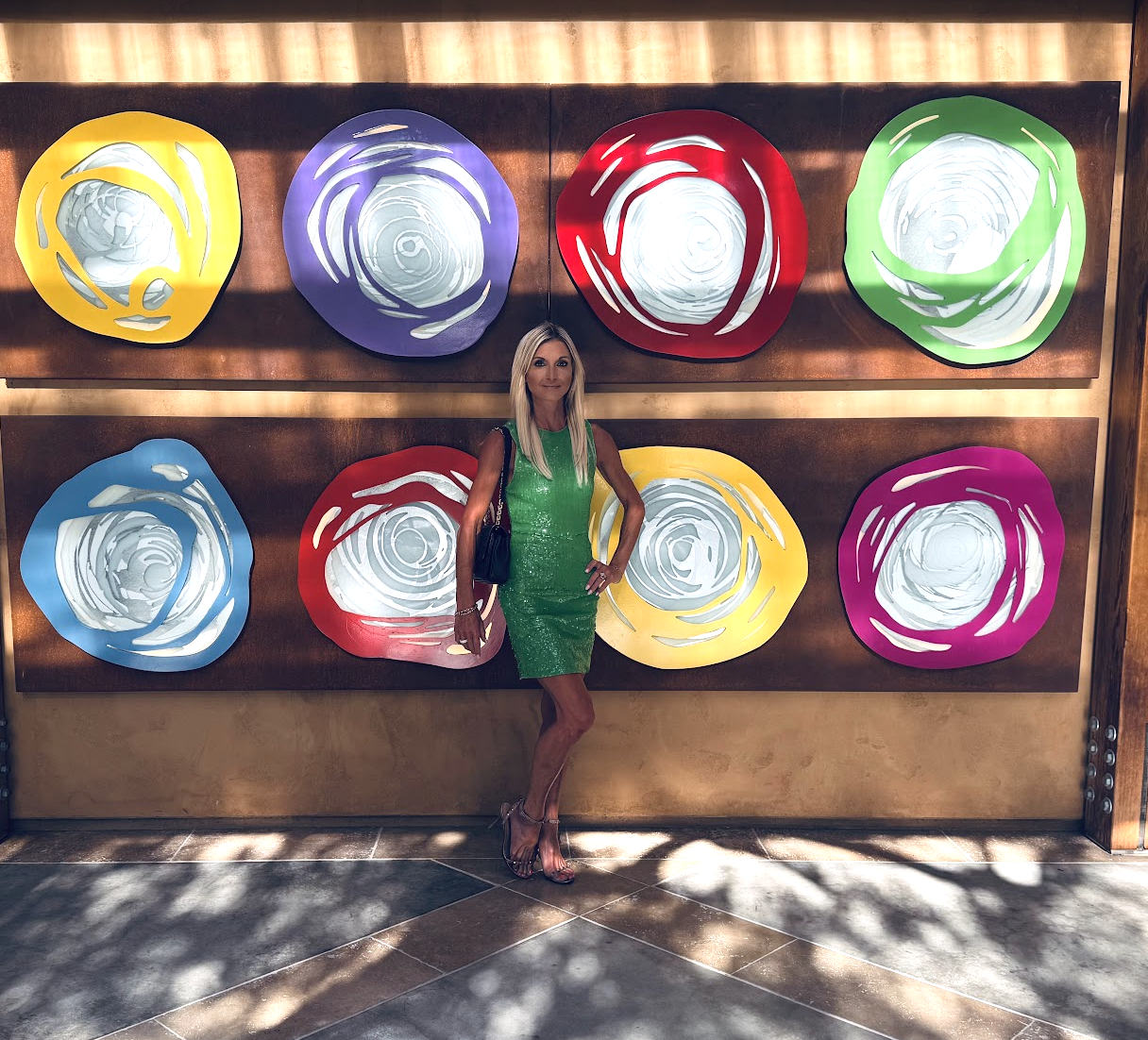
If I had to pick the one feature that surprised me most on this visit, it would be the sculpture garden. It's filled with so many delightful works of art, which I learned (after my visit) is curated by Aerena Galleries, founded and directed by my friend Michael Polenske’. The real magic is in its hidden corners…spaces where intimate lunches or gatherings can be arranged. Picture a wisteria-covered clearing ringed with lavender, surrounded by forrest and vineyards…set for a private lunch. It's the kind of detail that makes you understand why people fall in love with this place long after the honeymoon ends. The grounds also boast three varieties of olive trees, imported from Spain and France alongside some native to California, woven throughout the property.
A Word on Weddings and Events
The venue space sits between the restaurant/bar and the pool. The largest of the event spaces, Bellevue I and II, combines into a nearly 1,900-square-foot reception and dining room with floor-to-ceiling bronze-framed doors that open onto a private terrace with the same panoramic valley views you get everywhere else on property, and it seats up to 120 for a dinner. Smaller spaces like La Rotonde, Maison d'Arbre, and the garden setting of Le Jardin round out the offering for more intimate gatherings, and Le Salon, tucked inside The Restaurant itself, offers a private fine-dining experience for up to 20 guests surrounded by the property's champagne and Cabernet cellars.
Because of noise considerations, Auberge no longer hosts weddings unless it's a full property buyout…a policy that says everything about how much they care about the guest experience, for the couple and for everyone else staying there.
If you are lucky enough to host your wedding here, take a page from my husband's and my playbook: saber the champagne off the terrace. It's a festive, unforgettable moment your guests will never forget…ours certainly still bring it up! And definitely invest in a world class photographer and videographer because you’ll want to remember these views and moments forever.
The Bottom Line
Auberge du Soleil isn't just a place to celebrate a milestone once. It's a place that keeps giving you new reasons to fall for it, whether you're standing on that terrace as a bride or coming back over a decade later for a birthday and finding it more magical than you remembered.
Would I recommend it for a wedding, an anniversary trip, or simply a destination dinner while you're in Napa? Without a single hesitation - it’s worth every penny as the most priceless hotel in Napa.
Gianna's Gem Rating: 11/10
For more information about Auberge du Soleil and to be put in touch with their team, contact me for a direct intro.
In Memory of Pat Gaudini
We checked out of Auberge du Soleil on the morning my beautiful mother-in-law, Pat Gaudini, passed away, after a fifteen-year battle with Alzheimer's. The sunrise was pink that morning, one of her favorite colors. I could feel her surrounding us with the same love we felt on our wedding day, as though she were reassuring us that she was finally at peace.
As you know, I try to be highly intentional about creating personalized moments. When I began thinking about how to remember her, and how to write a eulogy that felt like her, here is where I landed.
Her roses. Pat loved roses, and we were in Napa, just minutes from her home in Yountville. I cut as many as were still fresh from her garden, pressed them, and built a framed memory box for her partner — her roses alongside photographs and small pieces of her life. From what was left, I made little envelopes labeled Pat's Petals to bring to the funeral, so that every family member could carry something of hers home.
Lessons for Giacomo. To tell my son the news, and to eulogize her in a way that belonged only to the two of us, I wrote down the lessons I believe she would have wanted to give him. They're stitched together from things she actually said, with a few bits of her humor woven in, because she would have insisted on the levity.
She lived in a way I can only describe as universally beautiful, sunshine embodied. If you would like me to share her lessons with you, please message me directly. It would be an honor to pass along her wisdom and her light.
Gianna's Sexy Property Spotlight: Alila Napa Valley, St. Helena, California
There are Napa hotels, and then there is Alila Napa Valley - an escape, a retreat, an adults-only luxury that is Napa’s best kept luxury secret.
Tucked into the heart of St. Helena, arguably the most charming of Napa's small towns, where the Mayacamas Mountains fold into rows of vineyards and the historic downtown has the best shopping and art in all of Napa Valley. Cobblestone-chic storefronts with everything from home-goods to jewelry to fashion, wineries that have been pouring since the 1800s, high-end tasting rooms, bakeries people line up for and restaurants worth the trip alone… all a ten-minute stroll from the property. But you may not want to leave, and you don’t need to - they’ve thought of everything if you want to stay put and still get the full Napa experience.
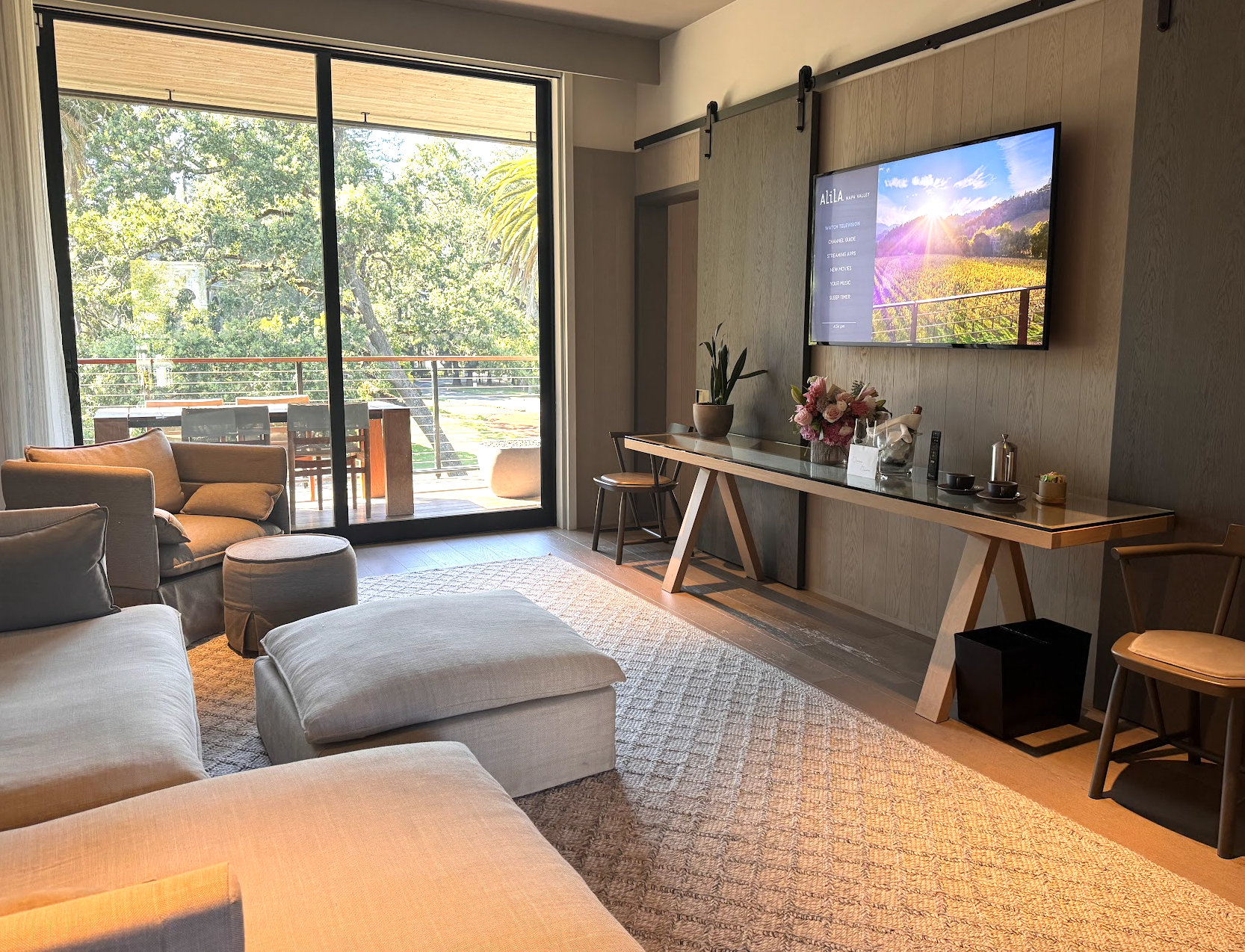
Alila is adults-only and intentionally intimate with just 64 guest rooms, so it never feels like a crowded resort. It feels like your getaway. This makes it perfect for an intimate retreat, milestone birthday celebration, wedding, or a corporate buyout for smaller group programs. You can’t lose when it comes to the guest room selection - each either looks out onto the vineyard or onto the creek and the storied Beringer Winery next door (the two properties are connected by a private bridge), and every single room delights you with either an outdoor soaking tub or a fire pit and deck. You feel your shoulders drop the moment you walk in and your body thanks you after a blissful night sleep.
For those who want to stay put, Alila brings everything you need in a Napa experience or a retreat to you on property. My favorite offerings include the partnership with Beringer to do an in-suite tasting of library wines, the afternoon tea on the veranda - perfect for women’s spa weekend, blind tasting classes or complimentary daily wine tasting, even a custom scent making wellness experience.
The Spa: A Ritual, Not a Treatment
The Spa Alila is a destination in and of itself. Spa Alila doesn't just pamper you, it invites you to truly release what is weighing you down or holding you back - true transformation…and isn’t that why we really go to a spa? They have thought through the guest experience and offer ceremonious welcome and closing moments that instantly snap you out of your worries and into the present with intention.
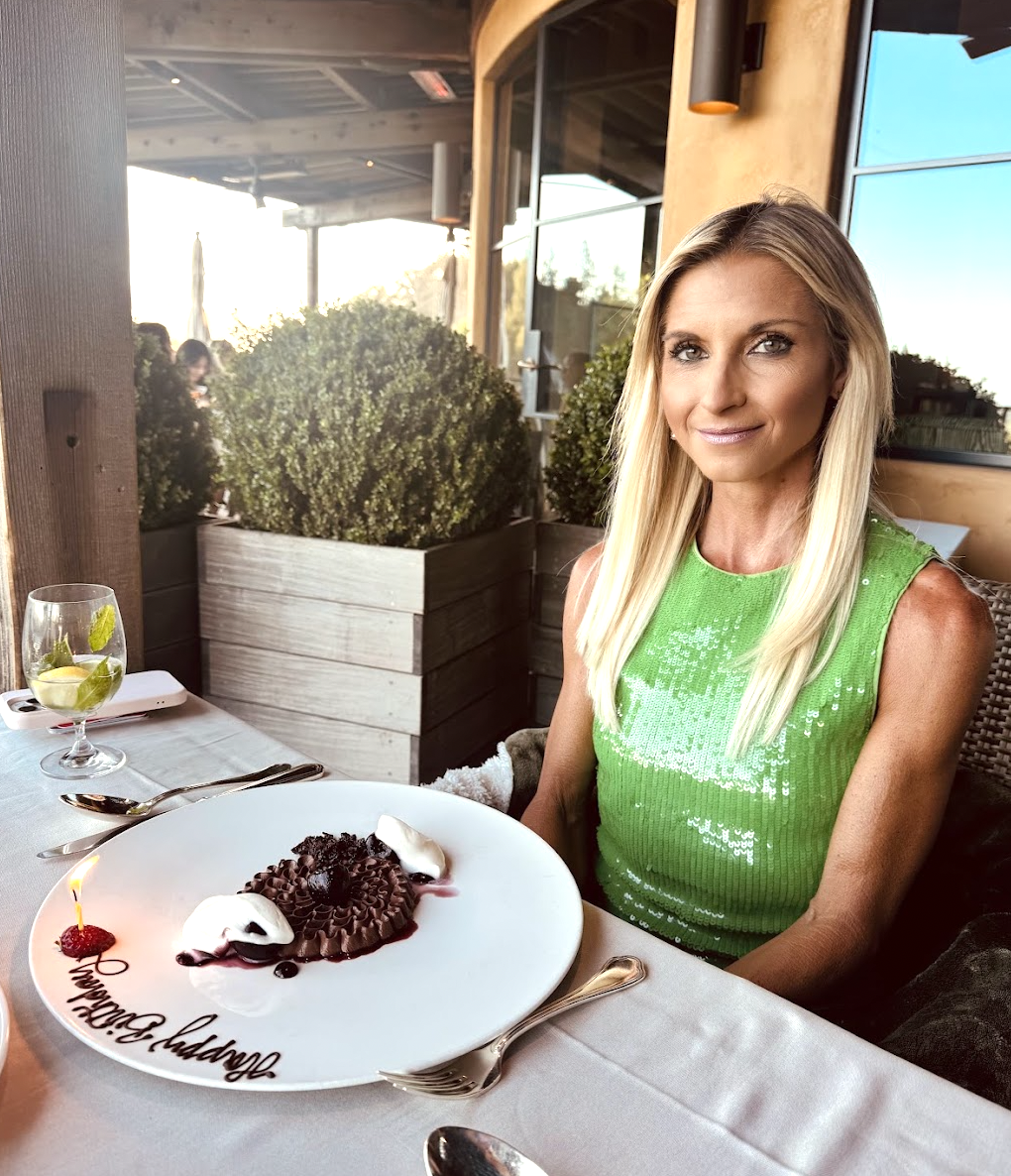
On arrival, you’re welcome to select specific herbs to build your own "Burden Bundle," which is then steeped while you're getting your massage or facial, and then used at the end to soak your feet and shoulders; a literal, physical symbol of release and transformation. They also have little blessings you’re invited to select and take with you as a reminder of your visit (while indulging in hunks of dark chocolate that resemble brown glaciers and gourmet teas and nuts). I had a birthday facial there and walked out glowing, not spa-glowing, different-glowing and was grateful for the practitioner who was empathetic and helpful with recommendations but also let me meditate undisturbed during my treatment.
Violetto: Dinner With a Point of View
The resort's flagship restaurant, Violetto, blends the elegance of French culinary techniques with the warmth of Italian flavors. Situated inside a beautifully restored 1907 Georgian farmhouse it’s led by executive chef Mark Shoemaker, whose storied path here wound from his grandmother's kitchen through Michelin-starred restaurants in Chicago to a Washington farm where he deepened his connection to land and seasonality, a throughline you can taste in every course. The prix fixe menu features handmade pasta and signature fine dining dishes like braised Rabbit Violetti.
What makes it memorable is the hyper-local ingredient sourcing: everything is local and seasonal and you can taste the difference. Everything from honey to herbs used is pulled straight from the region. The moment you walk in, you feel serene in a room that is elegant yet down to earth in tones of lavender and organic touches. The second you sit down, you’re approached with a welcome cocktail of sweet vermouth and lavender honey that sets the tone completely. You’re welcome to select the four or eight course tasting menu, or dine a la carte in the less formal but striking bar or outdoor historic patio overlooking the estate. Every option is a delight and unique in its own right.
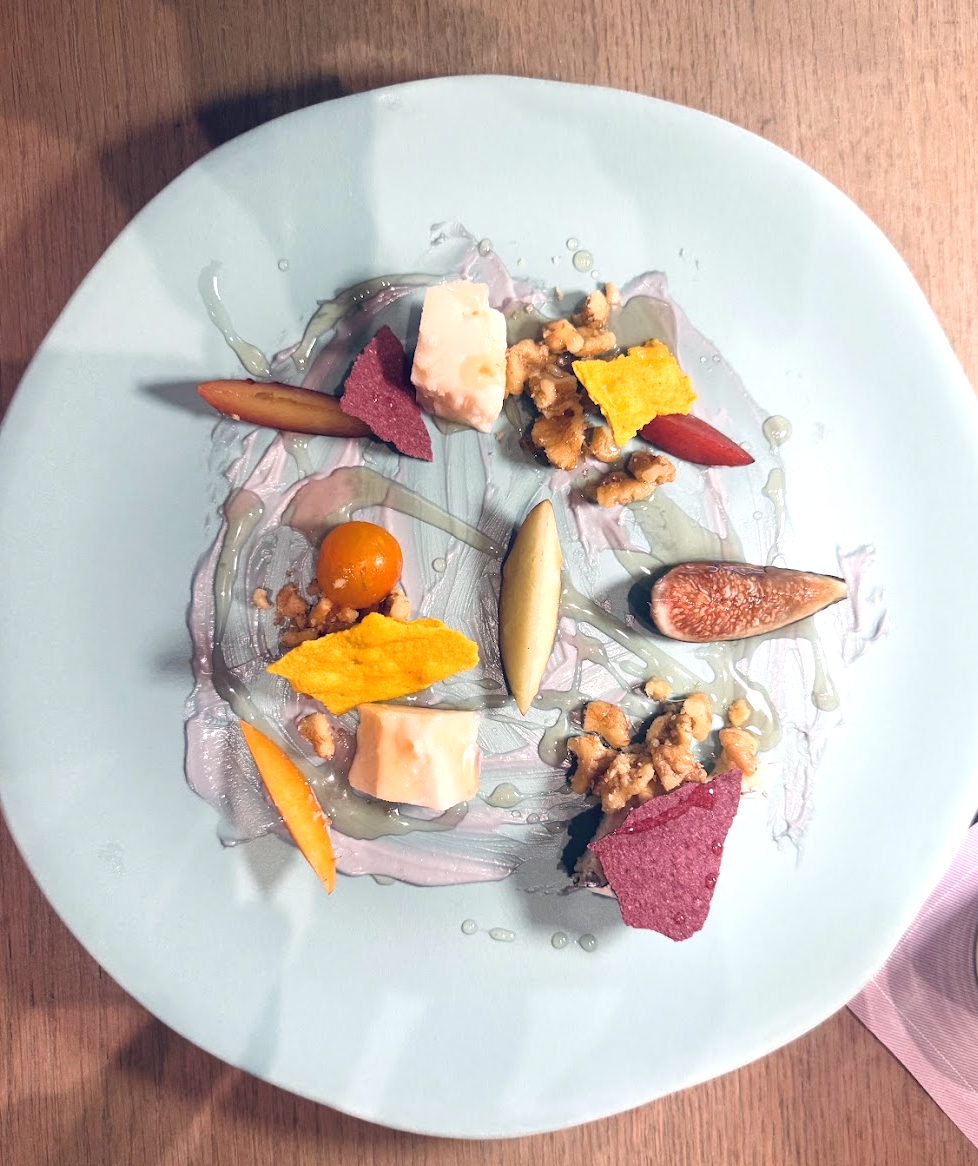
Customization: Not only does Alila offer many opportunities to customize your experience (i.e. pre-select what will show up in your mini bar or book an “explore your birth chart reading” but they go above and beyond to make sure your visit suits your needs. As it was my birthday, my husband called their restaurant in advance to request a gluten free dessert with chocolate for me (how thoughtful is that? He’s clearly been trained in the art of thoughtfulness). The chef presented a gluten free tiramisu with about 50 layers that was so delicious, I never would have imagined it was hypo-allergenic and took the time to connect with me persoally. They also accommodated my other dietary requests so that I could feel great and still enjoy the tasting menu - that is true hospitality and something I am grateful for.
The New Brunch: Salvia Terrace & Bar
If Violetto is the destination dinner, Salvia Terrace & Bar is the property's newest reason to linger over a lazy weekend morning in wine country. Chef Shoemaker now oversees the entire food and beverage program, and it shows here too: weekend brunch (Saturday and Sunday, 10:30am–2pm) leans into shareable plates, seasonal salads, and produce harvested straight from the on-site culinary garden and local farmers' markets. Think grilled vegetables and elevated avocado toast alongside craft cocktails and Napa Valley wines. You can take it indoors in the lounge, enjoy it at the bar, or out on the veranda with those iconic mountain-skyline views. It's easy, unhurried, and exactly the right register for a morning after a long dinner the night before with the hominess of a wine country B&B but the elevated cuisine of a Michelin star restaurant.
Rooms and Grounds
The rooms, designed by Yabu Pushelberg, are the kind of quiet-luxury you feel more than notice: oversized balconies or wraparound terraces, floor-to-ceiling glass, Italian linens, marble bathrooms, and those fire pits and soaking tubs that make you actually use your outdoor space instead of just admiring it through a window.
The pool is adults-only, too, and looks straight out over the vineyard. There is genuinely nothing like sipping a cocktail poolside and watching the grapes ripen in real time. It's one of those details that sounds small until you're enjoying it.
The Kind of Place You Bring People To
Beyond the rooms, Alila's social spaces, the outdoor bar, cornhole, scattered fire pits and pop up experience carts, give the property an easy, unfussy intimacy that makes it a genuinely great choice for hosting events of all types or meeting new friends. And the event infrastructure backs that up: at roughly 5,500 square feet, Alila has the largest event space in St. Helena, anchored by the Acacia Barn (a beautifully designed 2,200-square-foot venue built for weddings), the Acacia Lawn (2,640 square feet of open-air space with vineyard and Mayacamas mountain views as the backdrop), and the Violetto Private Dining Patio (an 820-square-foot al fresco spot right off the historic estate house, perfect for a golden-hour dinner).
For something smaller and more private, the Violetto Loft seats 10–16 for an intimate celebration or executive dinner, and the light-filled Boardroom handles more traditional corporate meetings. Altogether, the property can host up to 120 guests indoors and 200 outdoors, or you can go all in and buy out the entire 64-room resort for a true private-estate experience. Whether it's a corporate retreat, a wedding, or a milestone gathering, it's small enough to feel exclusive and just social enough to bring people together. I always recommend the Alila for a private corporate retreat, a wedding, a milestone gathering for a group that wants peace, real luxury, and something different from the usual Napa playbook.
The Real Differentiator: The Hospitality
Here's the final thing that actually sets Alila apart, more than any single amenity: the staff. Every person on property, from the online concierge team, to the valet to the servers, the room service staff and housekeeping team, to the spa therapists to the front desk… is genuinely engaged, not just going through the motions. Requests get met with a yes and a smile, not a "let me check." Cords get wrapped up with a note. Special occasions get noticed and celebrated and accommodations delivered above and beyond. It's the kind of hospitality that can't be manufactured through training alone; it comes from a team that actually loves where they work, and it's the thread that ties every other beautiful detail of this property together.
Rating: 10/10.
Overall Take: Alila Napa Valley isn't trying to be loud, it isn’t trying to be everything, but it is creating a sense of place and delivering personalized experiences that cater to all types and occasions. Quiet, sensual, deeply considered, and built for adults who actually want to slow down and experience something with history and heart, it may be the best kept secret in Napa. Between the spa’s Burden Bundle, the vineyard pool, and that soak in the tub overlooking St Helena’s prized vineyards, it's hard to imagine leaving anything but lighter than you arrived.
What I'm Obsessed with This Week: Summit Series Napa
Back in 2019, I attended Summit LA as a first-timer. I attended as pure "experience research" into what a best-in-class event brand actually looks like as I was building SoftBank Vision Fund’s first ever world class global event program. I've been to a lot of gatherings, including TED and Summit was up there as one of the very best experiences I’ve ever attended.
A few things that stuck with me:
The invite process was the product. Every attendee gets a personal phone call, not an email blast. They register you by phone, then reach out multiple times before the event to connect you with people you'll actually want to meet, and invite you into small curated dinners. That's a level of hospitality I hadn't seen anywhere else.
The content was genuinely diverse. Rap artists next to CPG execs next to tech founders. Not diversity for optics; diversity because it made the conversations better and often, my favorites were unexpected. The only complaint - it was hard to pick which sessions to attend because there were so any great ones.
The entertainment felt like Burning Man met a music festival. Interactive, immersive, major talent, creative/artistic, but woven into the experience rather than bolted on. The wellness and experiential partners pushed me outside my comfort zone from Theragun therapy sessions, a sound bath healing, things I never would've tried on my own. I genuinely took away real wellness learnings.
The serendipity was unreal. More coffee and kombucha meetups than any event I've been to (and the coffee game itself was incredible). I ended up at a private gathering in Tony Hsieh's trailer, and had sushi with a CEO I hadn't seen since my twenties and ended up joining her Board.
Today, I'm honored to now sit on the board supporting Summit's strategic partnerships. If you're curious about what it looks like to get involved, DM me and we can see about getting you or your company an invite to participate, especially at Summit Series Napa, which I’ll be attending myself in October, and hope to meet you there for a coffee (or wine) meet up.
The Taylor & Travis Wedding Gems Everyone's Asking Me About
Hi there,
I love asking "magic conversation questions," and one I use often is: "If you could relive one day of your life, what would it be?" The overwhelming answer I hear, including from me, is "my wedding day."
A wedding is the one day most people actually get to design on purpose, built around their values, their people, and the memory they want to carry forever. That's what makes it so powerful. You're not just planning an event, you're engineering a memory. And as an event planner, I know the secret formula for designing weddings (and any event) that achieve exactly that.
So when Taylor Swift and Travis Kelce got married a couple weeks ago, every conversation I had seemed to start with the same question…so,what did you think?
Here's my take, Gems.
Gianna's Gem: Taylor and Travis's wedding 100% worked because they followed the same principles I use for every event I plan using goals, thoughtfulness, values and intentionality… not because of the budget behind it or the scale of the venue.
These principles are achievable on any budget. A couple spending five figures and a couple spending five hundred dollars can apply the exact same framework to get the exact same result when it comes to the memories they and their guests keep forever. At the end of the day, no one remembers the cost… they remember how the day made them feel. That's the value that matters and the true return on your experience design.
The Three Questions I Ask Every Couple
Whenever I start working with a couple on a wedding or more frequently, a milestone birthday, I ask three questions to get at the heart of what we're building:
What word do you want people to use to describe your event? (Taylor's mom called theirs magical…mission accomplished.)
What word do you want people to use to describe how it felt? (Travis's mom called it a "pinch me" moment.)
What three things do you want people to remember? The constraint of picking only three is what forces real prioritization, and it's also the number of experiences most people can actually retain about any given event.
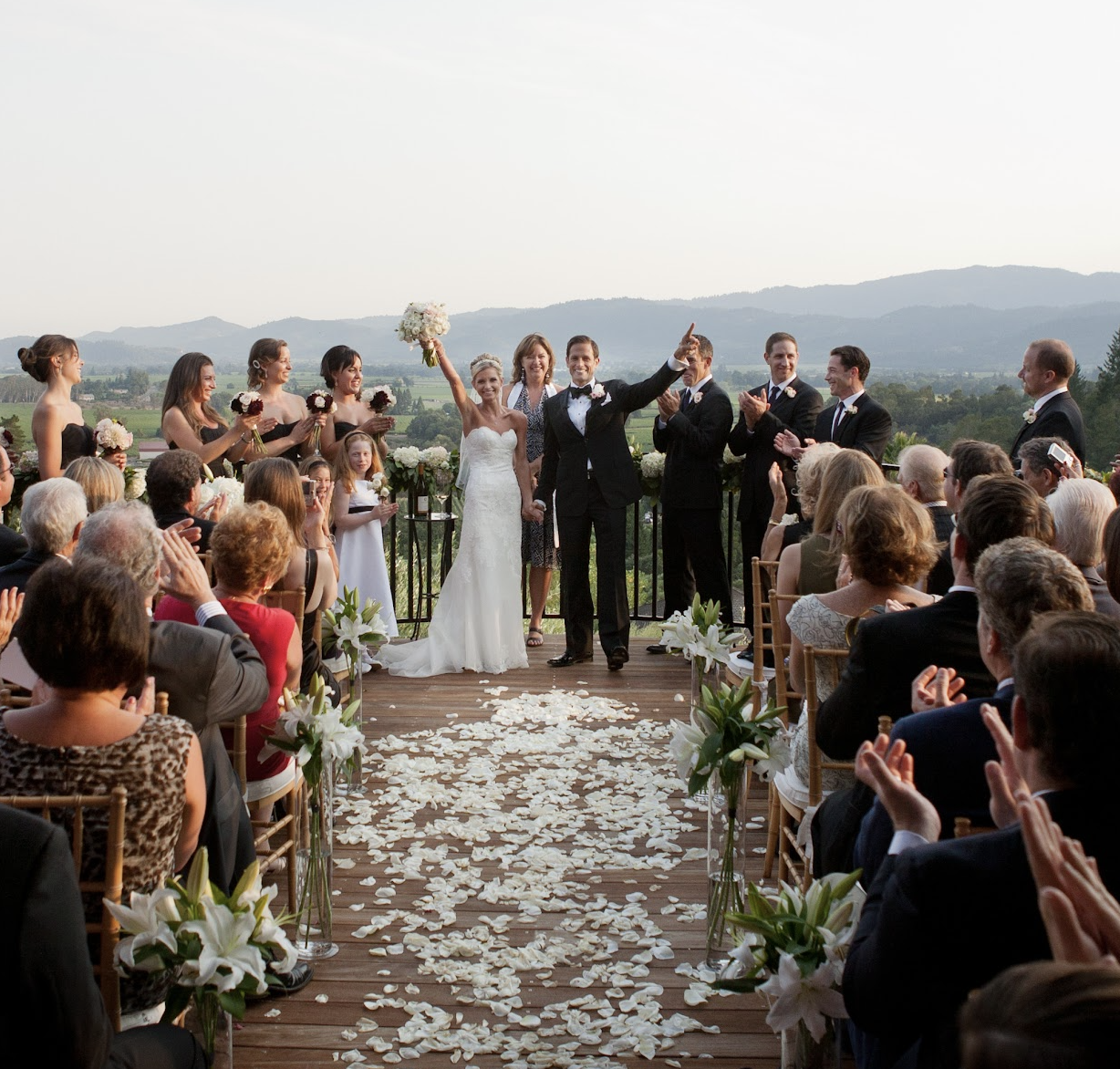
At my own wedding, those three were great music, great food, and a venue that was a destination in itself. P.s. my wedding took place at the storied and enchanting Auberge du Soleil, which I was fortunate enough to return to this past week for my birthday and will be posting about in my next Sexy Property feature - stay tuned!
I'd guess Madison Square Garden made Taylor and Travis's list for similar reasons: it let them be fully inclusive with her guest list while landing on a venue that fuses sport and music in a way no other room in the world can.
I'd also bet inclusivity was a core value driving her decisions throughout given that value is central to her brand. That likely explains the venue size, why her wedding party was family rather than a curated friend group, and the open seating that avoided any "who's-at-my-table" drama.
Theme: your memory anchor
A theme is a container that holds the rest of the experience together. Taylor and Travis turned a practical need, privacy and capacity at MSG, into their secret garden theme. I once attended a wedding that got hit by an actual hurricane. Instead of panicking, the bride and groom walked down the aisle to "Rock Me Like a Hurricane." The moment a wedding day seems to be falling apart is often the moment you get your most unforgettable memory and I’ve re-told the story of the badassery of that couple so many more times than the “flawless cookie cutter weddings” I’ve attended.
Make it personal
When I led events at Google, we ran everything through one test: if this could belong to any other brand, we hadn't done our job. Personalizing an experience around your real values and history, not your budget, is what makes people remember it. Taylor and Travis wrote their own vows (twenty minutes long!) and had Adam Sandler officiate because of his relationship with Travis. At my own wedding, my husband and I got engaged in Napa, so we built a "wine ceremony" around it, had my dad saber a champagne bottle to move guests from ceremony to reception, and had five friends each speak to one of our five core values. The best details are the ones that couldn't be copy-pasted onto anyone else's wedding.
Think outside the box on venue
Once you're anchored in your values, the venue stops being a limitation and starts being a canvas. I once had to build a 300-person Google leadership event in a town with no suitable venue, so we transformed a volleyball court into a five-star space: new flooring, scent piped in to erase any trace of "gym," a custom copper stage, and greenery to break up the room. Nobody in attendance ever guessed what it used to be. Any venue can become the right venue with enough imagination. Shout out to Grow Marketing, the female-founded agency that partnered with me on this one. (Dm me if you’d like an intro to the team there who also produced the Mattel Barbie Dreamhouse!)
This was obviously a luxury wedding, but here's what everyday brides can actually take away from it.
Custom logo. Creating one is far more affordable than people assume, and it's one of the highest-impact things you can do to tie a whole event together. I recently planned a milestone birthday for a couple where we built a custom logo from their initials and theme colors, then carried it across invitations, pillows, signage, napkins, notecards, and even the gifts themselves. Guests loved it so much they took the pillows home as souvenirs. A logo isn't decoration, it's the thread that turns a hundred small details into one memory. Taylor and Travis did their own version of this with their custom "JusT&T Married" nuptial branding.
Gifting. Never give a favor just to have a favor; every gift should carry a reason, or it's wasted budget. Taylor and Travis gave guests embroidered cloth tissues with their logo, which signaled the emotional, intimate tone of the night and left people with something to keep. At my own wedding, I gave out custom Bouchon Bakery boxes with our wedding logo, filled with oversized macarons for the ride home, plus a note telling the story of our engagement at that same bakery... and a coupon to go experience Bouchon themselves. A great gift doesn't just say thank you, it extends the story of the day past the day itself.
Personalize the entertainment. Live music is always my first choice for anchoring a memory, and Taylor and Travis leaned all the way in with Paul McCartney, Stevie Nicks, and a custom comedic song from Adam Sandler. I've seen a bride perform a custom wedding dance as a gift to her husband, and a groom compose and perform an original piece for his bride. At one Charleston wedding, the couple brought in a 15-piece local big band, instantly the most talked-about part of the night, and a gift to out-of-town guests who got a real taste of the destination. The best entertainment doesn't just fill the room - It gives your guests a piece of who you are, or where you are.
The real trend underneath all of this
If there's one thread connecting the logo, the no-phones policy, the open seating, the games, it's this: none of it is actually about scale or budget.
Gianna’s Gem: It's about identifying the essence of an experience and finding a way to implement that essence at any size.
Taylor and Travis had Paul McCartney; another couple might have their uncle with a guitar. Both can deliver the same emotional payoff live, personal music that anchors a memory) because the couple identified why the moment mattered, not just what it looked like.
That's the real takeaway for everyday couples watching this wedding: don't copy the execution, copy the intention. A $10 million wedding and a $10,000 wedding can hit the exact same emotional notes if the couple starts from the same question Taylor and Travis clearly did: what do we want people to feel, and what's the smallest, smartest way to make them feel it?
Here are the elements to T&T’s wedding I think could become real trends:
Secret garden / immersive theme: the best themes usually come from embracing a constraint rather than fighting it. Any couple can do this on a smaller scale: a rented backyard, an odd-shaped room, even bad weather, just by asking "what story can this limitation tell?"
No phones: the weddings I remember most vividly are the ones where I wasn't holding a phone. Hire a great photographer and photo booth and tell guests photos will be shared, or go softer: hand everyone a silk pouch at the entrance as a gentle nudge to tuck their phone away.
No assigned seating: letting people sit wherever they want isn't a loss of control, it's a gift of freedom to both the couple and the guests. When people can move around, they meet more people, not fewer.
Games and raffles: the goal of any great event is to give people something to do together, not just something to watch.
Wedding logos and crests: a logo turns a wedding from an event into a brand, and brands are what people remember.
No wedding party, siblings as best men/women: when you strip the wedding party down to family, you're not losing tradition, you're choosing the version of it that matters most.
Long, personal vows: the trend I'm seeing is couples treating their vows as the centerpiece of the day, not a formality to get through. Guests remember what was said far longer than they remember the flowers.
Gianna's Gem: The celebrity wedding copycat effect
Celebrity weddings don't just reflect trends, they manufacture them. In my experience, planners aren't the ones setting these trends in motion; it's the couples getting married the following year who saw the photos, felt the emotion, and wanted a piece of that same feeling at their own wedding. It's a socially proven copycat effect: when people see someone they admire do something joyful and authentic, it gives them permission to want the same thing.
We've seen this pattern for decades:
Kate Middleton's long-sleeve lace gown (2011) sent long sleeves back into bridal fashion after decades of strapless dominance.
Meghan Markle's minimalist, single-layer veil shifted an entire era of bridal style away from maximalism toward quiet luxury.
Chrissy Teigen and John Legend's Bali destination wedding helped accelerate the destination-wedding boom among millennial couples.
Priyanka Chopra and Nick Jonas's multi-day, multi-tradition wedding normalized blending cultural ceremonies rather than picking just one.
Taylor and Travis's wedding will likely do the same thing, not because everyday couples can replicate Paul McCartney or Madison Square Garden, but because they can replicate the feeling behind the choices: inclusivity, personalization, and presence over performance.
So will this start a trend? Almost certainly and just not a trend of what the wedding looked like. A trend of what it felt like. That's always the real copycat effect: people don't remember to steal the venue, they remember to steal the emotion.
Gianna Recommends (and for all my all-time favorite vendors and partners, visit:giannagaudini.com/gianna-recommends)
Natulang: I just celebrated my birthday last week, and on birthdays, I usually take a look at my “bucket list” and take a few steps towards those goals. One of my birthday goals this year is to finally learn Italian (long overdue given how much time I spend dreaming about spending an entire summer there!). I've been trying the app Natulang, which skips the tapping-and-matching games most language apps lean on and gets you actually speaking out loud from day one, using voice recognition so you can practice hands-free while cooking, driving, or getting ready in the morning. It's a completely different feel than the gamified apps I've tried before, and exactly the kind of "small, intentional habit" I talk about all the time when it comes to hitting a goal. Ciao for now signores & signorinas… I'll report back on my progress!
As seen in Martha Stewart Living: Gianna’s Gems: what to bring to your 4th of July party
Hi there,
Big news this week in time for America’s birthday (and my own!): I'm featured in Martha Stewart Living! They asked me to share my best tips on what to bring to a Fourth of July party, and I couldn't resist expanding on that here too, because once I started thinking about it, I had way more to say than one feature could hold.
You can read the full Martha Stewart piece here, but consider this your bonus round: more ideas, more detail, and a few of my personal go-to’s that weren’t included.
Last week, I shared some of my favorite tricks for sparking better conversation at any gathering, the magical questions, the scavenger hunts, the little prompts that turn small talk into something people actually remember (if you missed it, you can catch up here, and bring a few of those questions with you this weekend, they work beautifully at a Fourth of July table too).
This week, I'm tackling the other half of being a great guest: what you actually bring with you when you walk through the door.
As I drafted my response for Martha Stewart Living on what to bring to a Fourth of July party, it got me thinking about how much I love this topic. The "bring a bag of chips and call it a day" approach is fine, but it's a missed opportunity. The best guests I know have figured out how to bring something that's memorable, useful, and thoughtful, often all three in one. It doesn't have to be expensive or complicated. It just has to be intentional.
So whether you're headed to a backyard barbecue this week or any party you're lucky enough to be invited to this summer, here's how I think about what to bring, and how to make sure it actually lands.
The Fourth of July is one of those rare occasions where the theme does half the work for you; red, white, and blue are your palette, and nostalgia is your secret ingredient. I love leaning into that. Think old-fashioned ice pops, Cracker Jacks in their classic box, striped sugar cookies, or those retro glass-bottle sodas that make adults feel like kids again. There’s something deeply joyful about bringing something that makes people smile before they even take a bite. That’s the energy I’m going for every time.The Fourth of July is one of those rare occasions where the theme does half the work for you; red, white, and blue are your palette, and nostalgia is your secret ingredient. I love leaning into that. Think old-fashioned ice pops, Cracker Jacks in their classic box, striped sugar cookies, or those retro glass-bottle sodas that make adults feel like kids again. There’s something deeply joyful about bringing something that makes people smile before they even take a bite. That’s the energy I’m going for every time.
Food: Bring Something Beautiful (and Host-Friendly)
The golden rule? Always ask the host what you can bring, and never show up with something that demands oven space, freezer real estate, or assembly on arrival. The host is already juggling a million things and your contribution should be a relief, not a project.
My go-tos:
• A watermelon, feta & tomato salad with fresh basil and mint It’s festive, healthy, and works beautifully at room temperature or chilled. It’s the kind of dish everyone loves and is almost impossible to get wrong. Drizzle with good olive oil, fresh mint, and a pinch of flaky salt. Sometimes, I bring potted herbs with little flags sticking out of the platers and shears for people to “snip” their own herbs into the salad. Doubles as fun centerpieces and host gift!
• A flag fruit platter Arrange strawberries, blueberries, and star fruit on a gorgeous platter. The visual does the talking, and if you source or create your own beautiful serving board or ceramic platter to leave with the host, it doubles as a gift.
• Fresh-baked muffins or buttermilk biscuits in a lined basket Tuck them into a red-and-white striped tea towel (that the host keeps), tie with twine, and suddenly a humble basket of baked goods feels like something you’d find at a farmstand in the Hamptons.
Drinks: Think Everyone at the Table
Rosé is practically the official wine of July 4th, and I always bring a bottle, but I never show up without a non-alcoholic option too. The number of times a pregnant mom or a sober friend has lit up seeing a beautiful non-alc rosé in the mix… it never gets old. De Soi (yes, Katy Perry’s brand, and genuinely delicious) is my current favorite for this and comes in both individual cans and bottles.
For the kids, a festive probiotic pop or nostalgic pop in a glass bottle keeps them feeling included in the celebration.
Transport tip: Skip the plastic bag and invest in a beautiful rattan cooler bag. It’s chic on the outside, functional on the inside, and makes the whole arrival feel intentional and pulled-together.
Host Gifts: Make It Personal, Make It Last
Wine is always my favorite and always welcome, but the way you give it is what makes it memorable. Here’s how I elevate it:
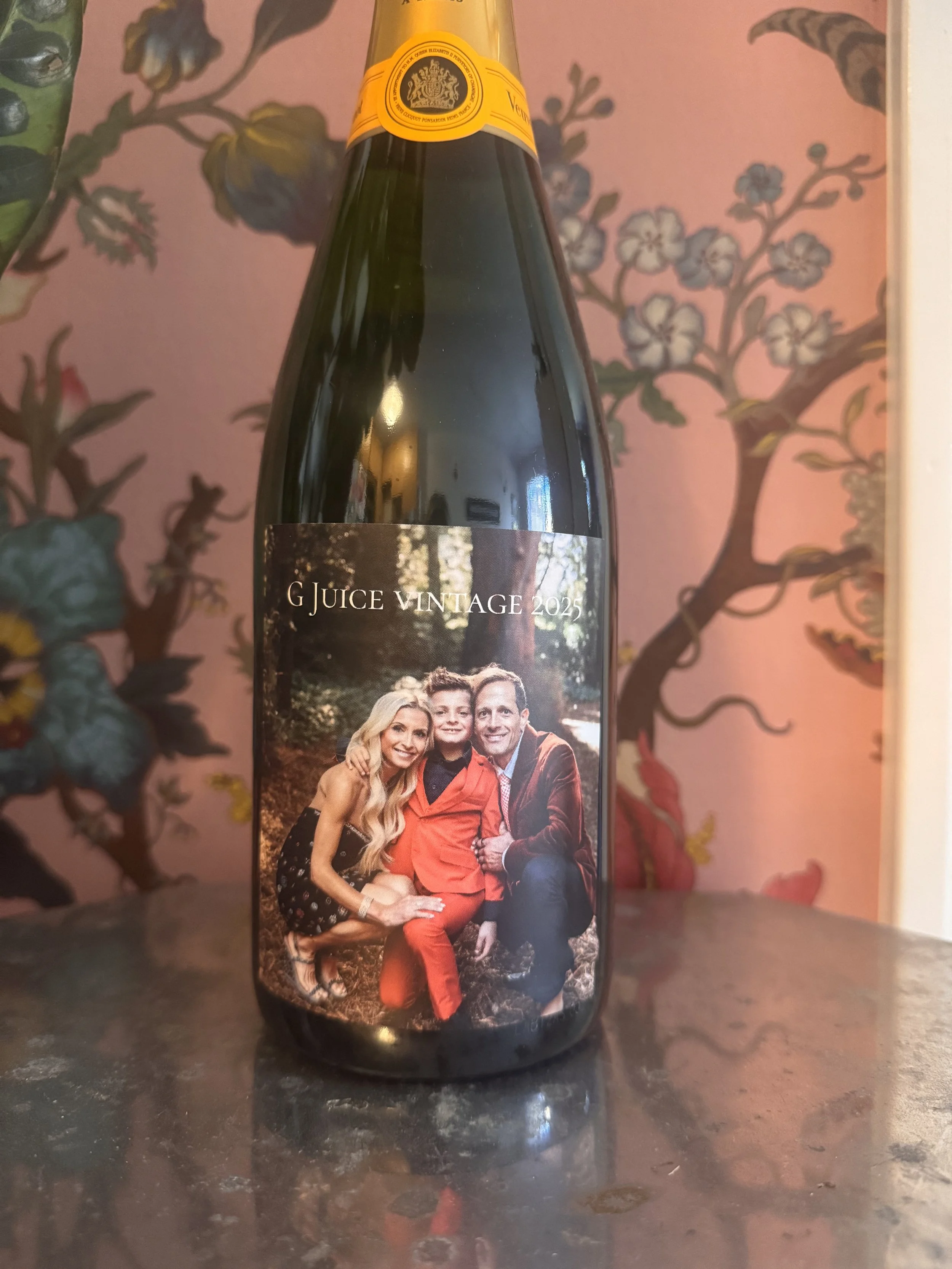
• A custom wine label I design my own stickers with a family photo and the “vintage” year. It turns a bottle of wine into a keepsake (see photo attached).
• A festive tea towel wrap Wrap the bottle in a Fourth of July or flag-themed tea towel and tie with ribbon. Long after the wine is gone, that tea towel lives on in their kitchen as a little reminder of your thoughtfulness.
• A handwritten note Always. Not a card, a note. Something specific: what you love about your friendship, one thing you’re looking forward to doing together. It takes three minutes and people keep them forever.
On flowers: I only bring fresh-cut flowers if I also bring the vase. Otherwise, you’re handing the host a task right when they’re at their busiest. A better option? A potted white orchid in a navy or cobalt blue ceramic pot. It’s elegant, patriotic in its palette, and will last for years. There’s always a place for an orchid in a home.
For something truly personal, I love custom fragrance. You can create a bespoke candle or room scent for the host through Le Labo or a similar house. It takes the standard candle gift to a completely different level. A scent designed for them, for their home? That’s a gift they’ll remember.
Fun Extras: The Things That Make a Party Actually Fun
This is my surprise and delight category. I always bring custom conversation cards themed to the occasion; questions about summer memories, patriotic traditions, family lore. They break the ice, slow people down, and create real connection.
If there are kids involved, Fourth of July trivia cards are an absolute hit. Print a set of questions, bring a small prize (sparkle tattoos, a little flag kit, a bag of old-fashioned candy), and suddenly you’re the most popular person there. Competitive kids + a prize + a little friendly patriotic knowledge? Pure gold.
For the Kids
Kids make or break a party’s energy, so I always come prepared. The goal is to keep little hands busy and little faces lit up, especially during the long stretch before fireworks.
● Bubbles Classic, universally loved, and zero cleanup stress for the host. Bring a few extra wands and the big bottle. Kids (and honestly, adults) never tire of them.
● Glow sticks and glow necklaces An absolute must for after dark. Kids go wild for these on the 4th, and they double as the best pre-fireworks activity. Bring a big bag and be everyone’s favorite guest.
● Patriotic pinwheels They double as decorations and instant toys. Stick them in the yard, hand them to the kids, and watch the magic happen.
● Temporary patriotic tattoos Stars, flags, eagles — kids beg for these and they keep little ones entertained for a solid 20 minutes just applying them.
● Bomb Pops or push-up pops The Bomb Pop is basically a July 4th icon. Tuck them in your rattan cooler alongside the rosé and you’ve covered every generation at the party.
● Old-fashioned candy in a mason jar Think candy buttons, Fun Dip, Pixy Stix, and Pop Rocks. Tie with a ribbon and a little flag pick. It’s a centerpiece and a treat all in one. Can also be used as a prize for the trivia questions.
“The best guests are the ones who bring something that makes the host’s life easier and the party more memorable, and often, those two things are the same.”
Gianna’s Glimmer - No More Bad Conversation. Magic Questions and more.
Hi there,
I just got back from a family vacation in Napa, and one of the small things I packed ended up being one of the best things I packed: a deck of conversation cards for dinner every night.
One evening, our waiter noticed the deck on the table and asked what they were. I told him they're a great way to spark conversation, learn something new about the people you're with, and stretch your imagination at the same time, rather than defaulting to the same dinner-table small talk. Then we pulled a card and asked him the question: What movie would you never want to watch twice?
He lit up thinking about and then sharing his answer. And we felt like we got to know him a little bit better…as a human.
Gianna's Gem: The right question at the right moment can turn a transactional interaction into a memorable one. It costs nothing and takes ten seconds to ask. It creates engagement and inclusivity and a little spontaneous surprise and delight.
Priya Parker, author of The Art of Gathering, has a name for questions like this. She calls them "magical questions." Her definition: a question is magical when everyone in the group is interested in answering it, and everyone is curious to hear everyone else's answer. It's a simple equation, but it's the difference between a question that lands and one that falls flat.
The questions that don't work are the ones we default to on autopilot: How are the kids? How's work? Anything new? They're not bad questions, they're just tired. They invite a status update, not a story.
Magical questions do something different. They invite a story instead of an opinion, and in doing so, they let people show up as more than their job title or their role in the room.
A few of my favorites to keep in your back pocket:
What is one thing you own that probably nobody else in this room owns?
What's the first concert you ever went to, and who took you?
What's a path you almost took but didn't?
What topic could you give a 20-minute talk on with zero preparation?
Before your next dinner party, networking coffee, or kid's school pickup line conversation, bring one or two of these with you. The moment conversation starts to lag, that's your cue. I often throw a few in my purse and even use them if I’m out entertaining a few of my sons friends - they love it and we all end up with a few laughs as well. For dinner parties, you can also slip a couple under everyone’s plate and it creates a way for people to actively engage and ask questions that are prepared in advance and spark group conversation.
Gianna's Gem: You don't need to wait for conversation to get interesting on its own. You can simply bring the spark with you.
But the magical question is not the only way to spark better conversation. Here are a few other gems I use regularly to keep conversation engaging and playful:
1. Co-create a scavenger hunt. If you're on a group trip, build a list together before you go (or on the first day together) and require photo proof along the way. In Napa, our family hunted for things like pink hair, a bride, a skateboard, a Ferrari, a grasshopper, a balloon, a hummingbird, etc. It kept everyone looking up and around instead of down at a phone, and it added just enough friendly competition to make people pay attention to the place they were actually in.
2. Pair the meal with an experience. Don't just plan a dinner. Plan a dinner after something: forest bathing, a wine tasting, a painting class, a friendly poker game. Conversation flows so much more easily when people have already shared an experience together. You're not starting from zero, you're picking up a thread that's already there.
3. Ask everyone to bring something to share that’s under $50. Fancy sun lotion or hand cream to share. A genuine compliment. A square of good dark chocolate. A bottle of wine. Even a joke or a compliment. It doesn't matter what it is, what matters is that everyone gets to give and receive. People leave feeling like they contributed to something, not just attended it.
Stack these all together, and your magical question isn't doing all the work alone at a quiet table. It's landing on a group that's already warmed up, present, and a little more generous with each other than when they arrived.
XX,
Gianna
What I'm Loving This Week: Good Humans Example
A New Baby Care Package…But for the Neighbors, not the new parents
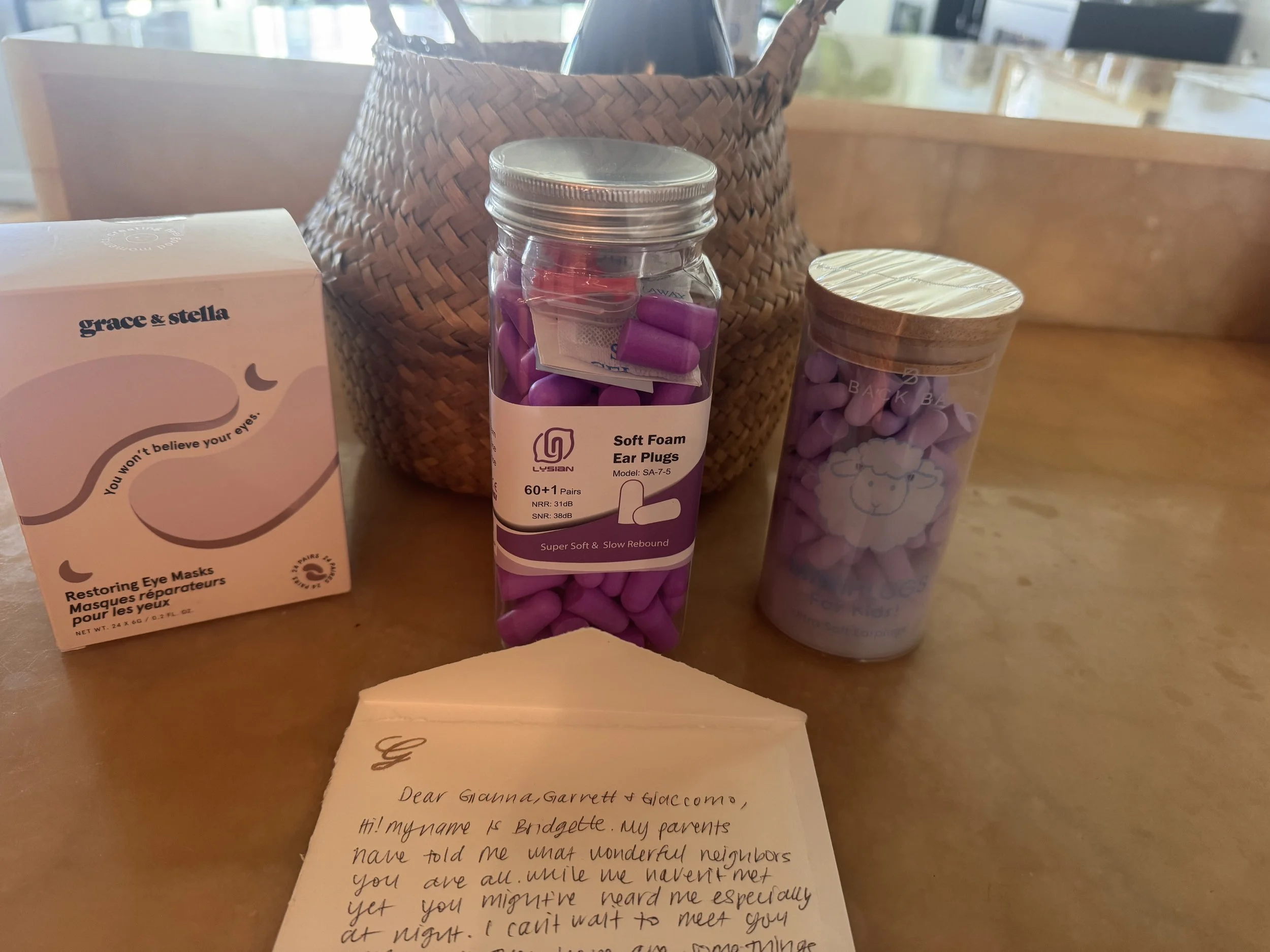
Our favorite next door neighbors just welcomed a newborn, and of course, we sent over goodies to welcome the baby. What I didn't expect was what came back: a basket from them, for us, with wine, earplugs, and under-eye patches, along with a note written "from the baby" apologizing in advance for any crying we might hear through the walls.
I was so delighted by the thoughtfulness, I haven't stopped talking about it. It flipped the script entirely. The new parents, who have every excuse to be depleted right now, took a moment to think about our experience too.
Everyone should be this thoughtful. Consider this your nudge: if a neighbor welcomes a baby, a little something for the people who'll be living next door to the new noise might be the most memorable gift you give all year.
Gianna’s Gems is a weekly exploration of ideas that transform the ordinary into the extraordinary. If you found this valuable, please share it with a fellow magic-maker, and subscribe for more inspiration delivered directly to your inbox.
For coaching or a quick consult, book a 1:1: intro.co/GiannaGaudini
Gianna’s Gem: I Went to Dinner at Wolfsbane. I Took Notes. Here's Why…
Hi there,
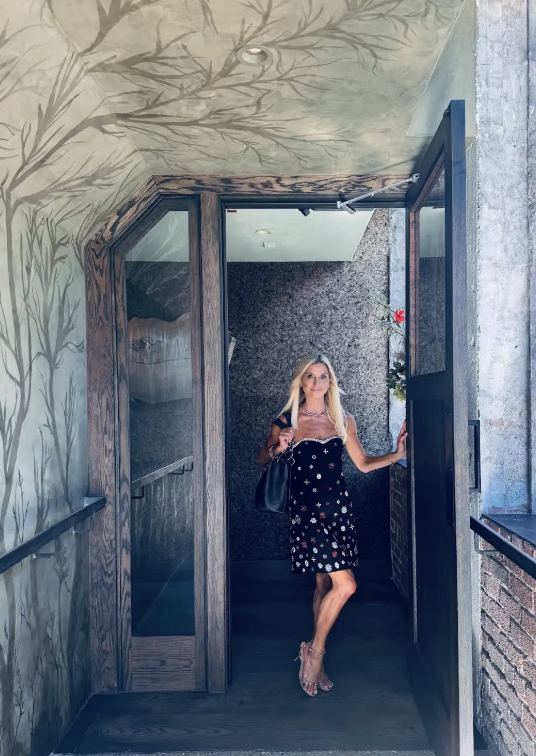
I’ve spent my career designing the kind of experiences that make people feel truly seen, surprised, and delighted. Corporate conferences, product launches, intimate executive dinners. I think about every touchpoint, every transition, every detail. So when I sat down recently at Wolfsbane, the stunning new tasting menu restaurant in San Francisco’s Dogpatch neighborhood, I didn’t just eat dinner. I took notes for you.
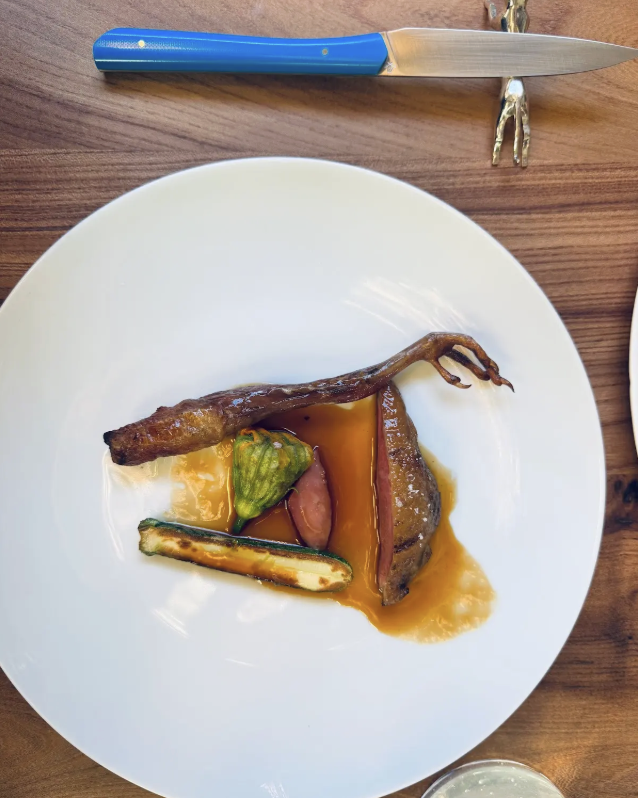
What I experienced was fresh, deeply thoughtful, and unmistakably intentional…A nine-course journey that drew parallel after parallel to how I craft experiences for events. Wolfsbane is, without question, a masterclass in creating a memorable experience that surprises and delights at every turn - is elevated yet approachable, and an experience I’d unequivocally recommend to anyone.
And…the best part is, if you want to bring the magic of this fine dining brick and mortar experience to your events, they have a catering company, Foxtail Catering, which was actually where I first met Chef Tommy and experienced the cuisine while at an AI Leader’s Dinner I blogged about (and raved about) back in March. This is a
The Dream Team Behind the Magic
Wolfsbane is the creation of three culinary forces: Tommy Halvorson, a Kentucky-born chef, catering veteran, and the owner of Foxtail Catering & Events, teamed up with Michelin-starred chef Rupert Blease and his wife and general manager Carrie Blease, the beloved couple behind Lord Stanley, which earned a Michelin star and ran for a decade in San Francisco before closing in May 2025. Together, they transformed the former Serpentine space at 2495 Third Street into one of the city’s most anticipated fine dining destinations.
Rupert and Carrie met at Raymond Blanc’s legendary Michelin two-starred Le Manoir aux Quat’Saisons in England, worked through New York kitchens including Per Se and Blue Hill, and made San Francisco their home and life’s work. Wolfsbane, named for the folkloric plant said to help werewolves hold onto their humanity, is their second act. And it is extraordinary.
The experience was part Michelin-star fine dining, part whimsical adventure; a beautifully decorated room hung with flowers, elevated service, and playful, approachable touches that make the room feel alive rather than stuffy.
Gianna’s Gem: Great hospitality, whether it’s a tasting menu or a corporate conference, is never accidental. It’s obsessively, lovingly designed. And when it works, people don’t just remember what they ate or what they heard. They remember how they felt.
What We Can Learn From Wolfsbane
Here’s how Wolfsbane’s experience maps directly to the principles I apply to every event I design:
1. Personalization: The Details That Say “We See You”
At the best events, guests never feel like one of thousands. They feel like the only one in the room. Wolfsbane achieves this with effortless grace:
• Guests choose their own chopstick holder at the start of a fish course - each “chopstick animal” playfully named by the staff to add an extra element of fun.
• Pick your steak knife color: a tiny choice that feels surprisingly personal.
• For guests with dietary restrictions, the adaptation is seamless and invisible. My gluten and dairy-free menu never made me feel like an afterthought. My dessert was a perfect truffle, exactly what I would have wanted. I didn’t feel like I was missing out. I felt considered and perfectly satisfied, not deprived.
• A thoughtfully curated mocktail menu for non-drinkers, because inclusion is an experience design decision.
• For guests who want the Wolfsbane magic without the full prix-fixe commitment, a communal table offers à la carte dining. There’s a format for everyone.
2. Presentation: Surprising, Delightful, and Deeply Creative
In events, we talk constantly about “surprise and delight.” Wolfsbane delivers it with every single course. These are the moments that made me lean over and grab my phone to take notes:
• A carved-out onion arrived filled with scallop, onion “soup,” and fried onions. It tasted like the pure, concentrated essence of onion, surprising in execution and deeply delicious.
• At the first course, sunflowers were presented, and the base of each flower was an artichoke heart filled with sunbutter and poppy seeds. Beauty and function, united.
• For dessert: a chocolate and banana creation that looked, and smelled, exactly like a cigar. They actually have a room in the back where cigar smoke is blown onto the dessert. It’s theater. It’s genius and evokes all the senses.
• A whole leg of squab, including the feet, was presented tableside. What could have been off-putting became memorable (and the drumstick was one of the best bites of the night!). Alongside it: a piece of bread soaked in the jus, a nod to the Italian “scarpetta” tradition of mopping up sauces at family meals. Story told through food.
• A single oversized ice cube, the size of a stick of butter, in my water glass. A tiny detail that somehow felt extraordinarily considered.
3. Ambiance: Every Sense Is an Opportunity
• The main dining room and the bathroom play different music. Different soundscapes for different moments, a detail so few bother with and so easy to implement.
• Whimsical flowers hang from the ceiling throughout, creating a sense of wonder and warmth that draws you into another world.
• The room is clean and elevated without being stuffy. Fine dining without the formality barrier, approachable enough that guests can relax, polished enough that they feel special. There is no other dining room like it.
4. The Full Journey: From Welcome to Send-Off
In event design, I always say: the experience doesn’t end when the last session ends. The closing moment is the one people carry home. Wolfsbane understands this better than almost any event I’ve attended:
• Guests are welcomed by name at the door, and that genuine warmth carries through the evening with thoughtful servers and the owners themselves circulating, checking in, and making real conversation.
• As you leave, you’re handed a gorgeous branded artisanal wood box filled with a freshly baked loaf of bread and preserves. The last impression is one of abundance and generosity. You don’t just leave full, you leave with a gift, and a story to share over their homemade bread for breakfast the next day.
5. Quality: The Foundation Everything Else Rests On
Here’s what I say to every client: surprise and delight can’t save a bad product. At Wolfsbane, the substance matched every ounce of the theater:
• Every single dish was a home run: well-seasoned, balanced, seasonal, and genuinely unique. Nothing felt dated or gimmicky.
• The portions were substantial enough to be filling (almost unheard of at a tasting menu) and I actually had to share bites with my husband. That’s saying something.
• Service was seamless throughout, water always refilled, the table always tended, attention always present without being intrusive.
• Every element of the table setting, the ceramics, the silverware, the glassware, was gorgeous. No detail too small to care about. Every course different and intriguing.
Gianna’s Gem Action Step: Map your next event (or dinner party, or meeting) as a guest journey: arrival through departure. At every single touchpoint, ask: “How can I make this person feel more seen, more surprised and delighted, or more memorable?” Then make one change you haven’t made before.
Wolfsbane is currently one of the hardest reservations in San Francisco, and worth every effort to secure one. It is not just a meal. It is a reminder of what’s possible when a team of deeply talented, deeply caring people decide that ordinary is never enough.
That’s the bar. For them. For us. If you live in San Francisco, or have a chance to visit, this is a can’t miss experience - you have my word.
What I’m Loving This Week
Wolfsbane: 2495 Third Street, San Francisco (Dogpatch). The nine-course tasting menu rooted in Northern California’s seasonal bounty. Book it. Reserve the communal table if the main dining room is sold out. Check out the private dining room as well for groups up to 10.
Foxtail Catering & Events Here's a pro tip that goes beyond the dinner table: Chef Tommy Halvorson's catering company, Foxtail, is a masterclass in smart business strategy. While Wolfsbane delivers the full fine dining experience to a lucky few each evening, Foxtail brings that same culinary philosophy, thoughtfully sourced, seasonal, technically advanced, to the masses, servicing weekly SF corporate clients, private events, and weddings with the same commitment to restaurant-quality food and flawless execution.
The model is genuinely clever, and one every event and hospitality business should study: the Michelin-pedigreed tasting menu builds the brand and the buzz; the catering company scales the reach and the revenue. If you want an intro, let me know and I’m happy to personally connect you to the dream team here.
Final thought: Ask yourself… where is the premium version of your service, and where is the scalable one? The two can coexist beautifully, and Foxtail + Wolfsbane is proof. If you're in the Bay Area and need a catering partner who refuses to believe event food should ever be an afterthought, the Foxtail team is your call.
Gianna’s Gems is a weekly exploration of ideas that transform the ordinary into the extraordinary. If you found this valuable, please share it with a fellow magic-maker, and subscribe for more inspiration delivered directly to your inbox.
For coaching or a quick consult, book a 1:1: intro.co/GiannaGaudini
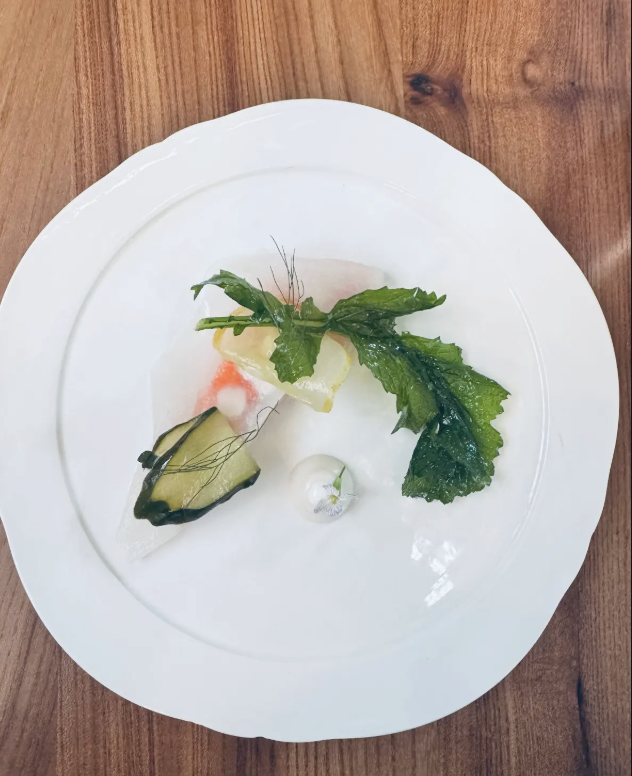
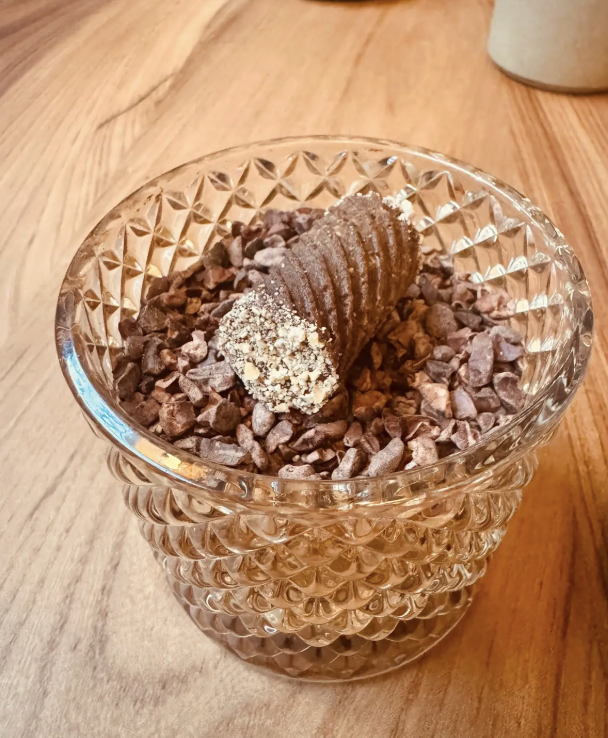
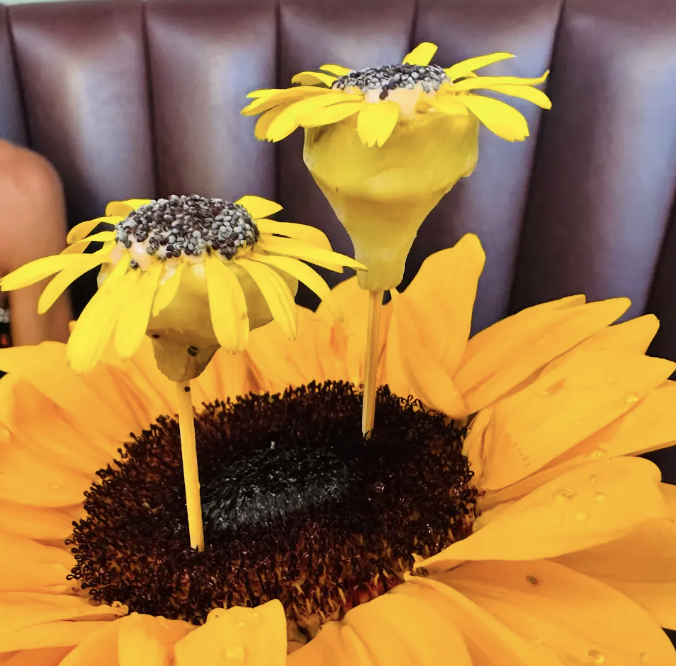
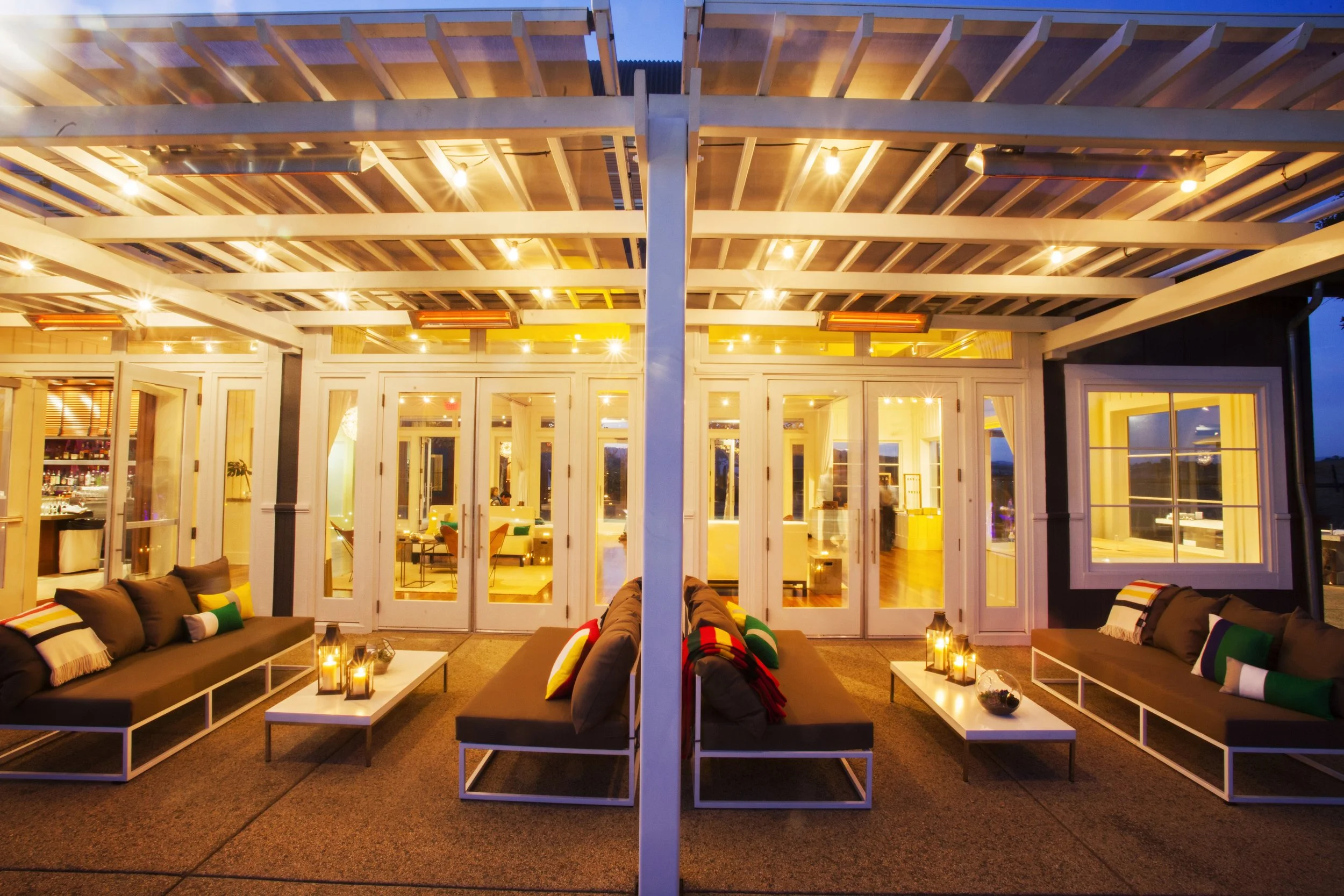
Gianna's Gem: Champagne Wishes, Bud Light Budget? I got you covered.
hi there,
I’m launching my annual summer AMA - send me your burning questions about events, strategy, leadership, wellness, and everything in between. Drop me an email and I’ll be answering one each month over the summer in an abbreviated version of Gianna’s Gems. (I’m calling these shorter form Gems “Gianna’s Glimmers”).
This Week’s AMA asked by a good friend who runs content strategy for some of the top brands in the world.
“How do you approach situations where your boss or client wants champagne on a beer budget?How do you frame it, and what do you say to keep the peace but still set reasonable boundaries and expectations?”
I love this one, and yes, I have many examples. Let me introduce you to the phrase my father, a former CTO and engineering leader, passed down to me early in my career. It has saved my sanity more times than I can count and Executives respond to it well because it’s logical, simple and reasonable.
I’ve been spending a lot of time lately with founders, product marketers, and recently attended the 2024 Engineering Leadership Conference. All of it has me coming back to this idea again and again, so this week’s Glimmer is all about trade-offs and stakeholder management for event planning.
“Cost, Schedule, Features. Pick Two.”
This concept is well-known in project management and product development (my husband’s profession). It’s called the Project Management Triad or the Triple Constraint. Here’s how I translate it for events:
Cost: The budget and resources allocated to the event.
Schedule: The timeline and date for planning and execution.
Features: All the bells and whistles, i.e. gifting, sessions, demos, you name it.
The theory is simple: you can optimize for two of these factors, but doing so will always affect the third. Instead of saying “no” (which rarely lands well), I walk clients through the trade-offs. Most stakeholders understand that cheap + fast + fully-featured isn’t realistic… they just need someone to show them why.
The Three Scenarios
Scenario 1: Prioritize Cost and Schedule
Keep the budget and the timeline. Something has to give; fewer attendees, fewer keynotes, no live stream, a simpler app. The event still happens; it’s just leaner.
Impact: Features take the hit.
Scenario 2: Prioritize Schedule and Features
Full feature set, same timeline… budget climbs. Rush fees, premium vendor rates, and more labor all add up. I use this one constantly: when clients keep adding requests, I say “yes, and here’s what it costs.” That usually does the trick.
Impact: Budget takes the hit.
Scenario 3: Prioritize Cost and Features
Full bells and whistles at your set budget… but the planning window stretches. Early-bird venue discounts, more time to negotiate with vendors, no rush premiums. Think: planning a wedding on a Wednesday instead of a prime Saturday.
Impact: Timeline takes the hit.
This framework doesn’t just help you push back — it gives your client or boss a concrete choice. They’re not being told “no.” They’re being empowered to decide what matters most.
Pretty simple, right?
Cost, Schedule, Features - Pick Two.
Happy prioritizing!
XX,
Gianna 💎
What I’m Loving This Week - Dejama Bird Boxes
I first experienced this delightful item in my mom’s bathroom! An interior designer with impeccable taste and a sharp eye (and ear) for details, she used this simple little device to create a moment of pure surprise and delight.
The Dejama Bird Box creates birdsong when someone passes by. Think: entering a bathroom, a hallway, or a quiet corner of an event space. It’s motion-activated, under $50, and requires zero effort to install.
For event planners and hosts, this is the kind of low-cost, high-impact detail that guests remember. It doesn’t shout for attention, it surprises you when you least expect it. That’s the magic of a well-placed sensory detail.
The Gem: You don’t need a big budget to create a moment. Sometimes a $50 bird box in a bathroom does more for your guests’ experience than a $500 centerpiece.A great room is a decision, not an accident.
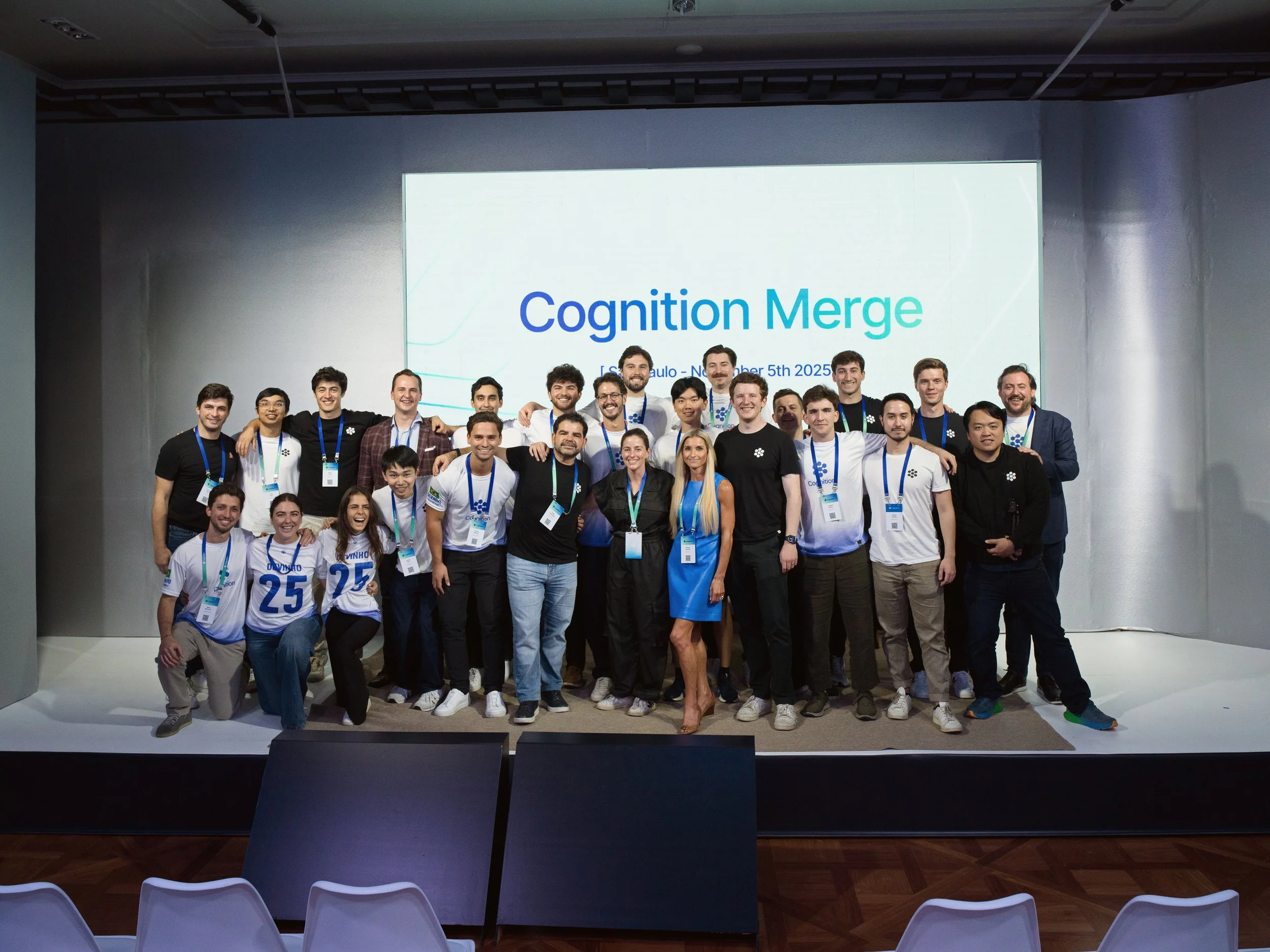
GIANNA'S GEM: How We Pulled Off a User Conference in Brazil with 60 Days sans Site Visit
Why the Best Events Aren't Built on Perfect Plans—They're Built on Trust and Team
Here's a story about what happens when you cancel a user conference, get acquired by a company, and then decide to plan a last-minute event in said company’s first market, Brazil, with barely two months of runway. Spoiler: it taught me more about what truly matters in event planning than a decade of perfectly executed programs ever could.
The Challenge That Changed Everything
Picture this: Windsurf gets acquired by Cognition AI. We cancel Windsurf's planned user conference slated for San Francisco, November 2025. Then, in a plot twist worthy of a telenovela, we decide to host a user conference in São Paulo with a planning timeline so compressed it would make even seasoned planners break out in hives (not that I did, but may have sprung a few gray hairs along the way). Two months. In Brazil. A country we'd never worked in before that takes no less than two days of plane travel (each way) from San Francisco.
The math was brutal: as flights take two days each way, a traditional site visit would consume a full week of our already impossible timeline. We had to launch registration immediately, which meant committing to a venue we'd never physically seen and locking it in within a week of kicking off a search (!). Every event planner reading this just felt their stomach drop—I know, because mine did too.
Why This Story Matters: The Success Formula Nobody Talks About
We pulled it off. Not just pulled it off—we exceeded our attendance goals, delivered an experience that had attendees showing up in custom Cognition-branded polo jerseys they'd competed for against Devin in a math game activation onsite, and created the most engaged user conference audience I've seen in my entire career. One attendee even brought his wife to teach her about AI agents. When was the last time that happened at your conference?
But here's what made it work, and it wasn't perfect planning or unlimited budgets or even divine intervention (though I'll admit to some heavy manifesting). It was four things that matter more than any venue or vendor contract:
A United Team
Unwavering Positive Attitude
Seamless Collaboration
A Trusted Agency Partner
Let me break down why these four elements transformed what could have been a disaster into one of the most memorable events I’ve planned recently:
The Power of Partnership: Why a Decade of Trust Made the Impossible Possible
I've worked with my production agency for over a decade (message me if you need an intro!). That relationship became the bedrock of this entire production. When we couldn't do a site visit, they activated their local agency partner in São Paulo—boots on the ground who knew the market, spoke the language, and understood the cultural nuances we couldn't possibly grasp from California.
But here's the critical learning: even trusted partners can't replace your own eyes on complex venues. We thought we had it figured out remotely. We booked what looked like a perfect historic venue—the Jockey Society—with a second floor perfect for an executive track. Then one of our team members traveled to Brazil for work a month before the event and discovered that second floor wasn't up to our standards.
Crisis? No. This is where trust and collaboration turn problems into solutions. We pivoted fast—launched a new venue search, moved the executive track to a different venue and different day. Did it create extra work? Absolutely. But our agency partnership and team unity meant we could adapt without panic. And pivot we did! Within just a few days, we’d locked in the Rosewood on an even more optimal date (day before F1) and had a contract signed in less than a week before someone else could swoop in and challenge it.
Learning #1: Build relationships with agencies, and any partners before you need them.
When you're planning an event in an unfamiliar market with an impossible timeline, decade-long partnerships become your insurance policy. I also had my favorite photographer I’ve worked with for close to two decades onsite. I didn’t have to micromanage him - every time I wanted a shot captured, he’d already taken it. That’s the power of working with trusted team members and building relationships that last decades and through many companies and clients. You learn each other's preferences and can start working even more seamlessly anticipating each other's needs.
The Brazil Reality Check: What They Don't Tell You in Planning Guides
Let's talk about what working in Brazil actually means for event planners:
The Response Time Reality
Brazilians operate on a different timeline. Vendor responses that take hours in the US can take days in Brazil. There's a language barrier, yes, but there's also a cultural approach to efficiency and quality standards that differs from what we're accustomed to. This isn't good or bad—it's just different, and you need to plan for it. I didn’t get our menus for the event until the week prior, but I relaxed and trusted that this was normal and low and behold, food/beverage was one of the highest rated aspects of the experience.
The Buffer Principle
We built substantial buffer time into every deadline, and we needed every minute of it. For two days straight, we worked around the clock—literally overnight shifts—to deliver the exceptional experience we'd promised. Would I recommend working 48 hours straight? No. But I would recommend building in twice the buffer time you think you need when working internationally. Not to mention, Government shutdown in the US caused half of our team’s flights (including my own) to be severely delayed or canceled, so definitely leave yourself and speakers buffer as well. We had to rejigger a few speakers and staff members as a result, but luckily it still worked out seamlessly.
The Load-In Reality
Load-in in Brazil requires significantly more time than comparable US events. The infrastructure, processes, and logistics simply move differently. Budget extra time, extra hands, and extra patience.
Learning #2: International events require international-sized buffers. Triple your timeline estimates. Double your team. And accept that "normal" doesn't translate across borders.
Why Unique Venues and Exceptional Food Still Matter—Maybe More Than Ever
Despite the compressed timeline and logistical challenges, we didn't compromise on two things: a unique and venue that paid homage to local culture, and food quality. And these small details matter.
The Venue Choice
We chose the Jockey Society—historic, distinctive, and completely unlike any convention center or hotel ballroom. Open-air terraces overlooked the horse track with sweeping views of São Paulo - it’s cool and classy (like our Cognition brand!). During keynotes and meals, attendees could step outside, feel the breeze, and remember they were in this beautiful, vibrant city. The venue wasn't just a backdrop—it was part of the experience.
The Food Philosophy
We curated a diverse, healthy menu that honored local favorites: great wines, caipirinhas, fresh coconuts you could drink from straws, and authentic Brazilian cuisine alongside international options. We treated our attendees like royalty, and they noticed and were so happy, we had virtually no attrition.
Learning #3: People remember how you made them feel, and nothing makes people feel valued like exceptional food and hospitality or a friendly greeting in a memorable setting. Don't cut corners here, even when timelines and budgets are tight. We had translation and the most exceptionally talented (and might I say gorgeous) brand ambassadors supporting the experience onsite. They truly went above and beyond and having staff that actually cares and is helpful and informative is a major signal of hospitality and also of how your company treats its customers and community.
The Audience That Changed My Perspective on Engagement
Here's what stunned me most: the Brazilian audience repaid our investment with the highest level of engagement I've ever witnessed at a user conference.
Minimal attrition throughout the entire day—from morning keynotes through afternoon breakouts, hands-on labs, demos, and evening networking. Every seat filled in the keynotes. Every breakout full. People actually showed up to absorb the experience, not just check the boxes, or grab the swag and part of the session and jet.
In the US, we're accustomed to networking-focused conferences where learning sometimes takes a back seat to deal-making and socializing. In Brazil, attendees came to learn. They wanted to understand our products, see real use cases, test features hands-on. They asked questions. They stayed for every session. They wore those Cognition jerseys with genuine pride, not ironic detachment. They did our “man on the street” video interviews, stood and kindly practiced their English when I asked them what we could do better (see my blog on why I love feedback), and one of them even asked if I was going to be sending out an event survey!
Learning #4: Different markets have different motivations. Understanding what your audience truly values—and delivering on that—creates engagement that no marketing budget can buy.
The Real Lessons: What Two Months Leading up to in Brazil Taught Me About What Matters
After a decade of planning events, here's what this compressed, chaotic, completely imperfect Brazil conference planning sprint clarified for me:
Trust Beats Timelines: A trusted agency partner with local expertise is worth more than a perfect project plan. When things go sideways (and they will), relationships are what save you.
Team Unity Is Your Superpower: A collaborative team that can pivot gracefully when the unexpected happens will outperform a larger team with perfect processes every time. Our team stayed positive, adapted constantly, and supported each other through two days of round-the-clock work—that attitude made everything possible, and might I say FUN?
Cultural Intelligence Trumps Assumptions: What works in San Francisco or New York doesn't automatically translate to São Paulo. Respect the local market, work with people who understand it, and be humble enough to learn from what surprises you.
Excellence Is Universal: Despite language barriers and cultural differences, people everywhere recognize and appreciate when you've invested in creating an exceptional experience. The food, the venue, the care we took—it all communicated respect, and our attendees responded with enthusiasm and engagement.
Buffer Time Is Event Insurance: When working internationally, especially in markets with different operational rhythms, build in buffer time you think is excessive. Then add more. You'll use it, and you'll be grateful you have it.
The Bottom Line: What Actually Delivers Unforgettable Events
Perfect planning is overrated. Perfect partnerships are priceless. You can have the most detailed project plan in the world, but if you don't have a team that trusts each other, maintains positive attitudes under pressure, and can collaborate through chaos, your event will suffer. And if you don't have agency partners who know you, understand your standards, and have local expertise you can rely on, you're flying blind.
The Brazil conference succeeded not because we had more time or resources (we had less of both), but because we had the right people in the right relationships approaching challenges with the right mindset - which was, we would succeed (if humbly) at all costs with determination and grit and a bit of humor and levity too.
For Planners Considering International Events:
Build agency partnerships before you need them
Invest in local expertise—you can't Google (Or Claude/GPT) your way through cultural nuances
Budget significantly more time and expense for travel and logistics
Don't compromise on venue uniqueness and food quality—they're worth the investment and try to focus on what’s important locally even if it’s different from what you’re used to
Understand that your audience's motivations may differ from your domestic expectations
Assemble a team that values collaboration and maintains positivity under pressure
Accept that some things won't go as planned, and that's okay—flexibility is a feature, not a bug
The Brazil Bottom Line:
Would I do it again with two months' notice? Honestly? Probably not—the overnight shifts and stress took years off my life. But would I encourage planners to take calculated risks on international events with the right team and partners? Absolutely.
Because sometimes the events that push you furthest outside your comfort zone teach you the most valuable lessons. And sometimes—when you have trust, team unity, and a little bit of samba in your soul—the impossible becomes not just possible, but extraordinary.
Ready to discuss how the right partnerships and team can transform your next event from logistically challenging to genuinely unforgettable? Always happy to chat.
What international event challenges have pushed you to grow as a planner? I'd love to hear your stories—drop me a note and let's compare notes on what we've learned in the field.
Book me here 👉 intro.co/giannagaudini
Let me guide your team 👉https://www.giannagaudini.com/learn-from-me
Gianna Gaudini is an event strategist, advisor, and author of the Amazon bestselling book "The Art of Event Planning." She's held leadership roles at Google, AWS, SoftBank Vision Fund, and Airtable, creating unforgettable experiences that drive business results.
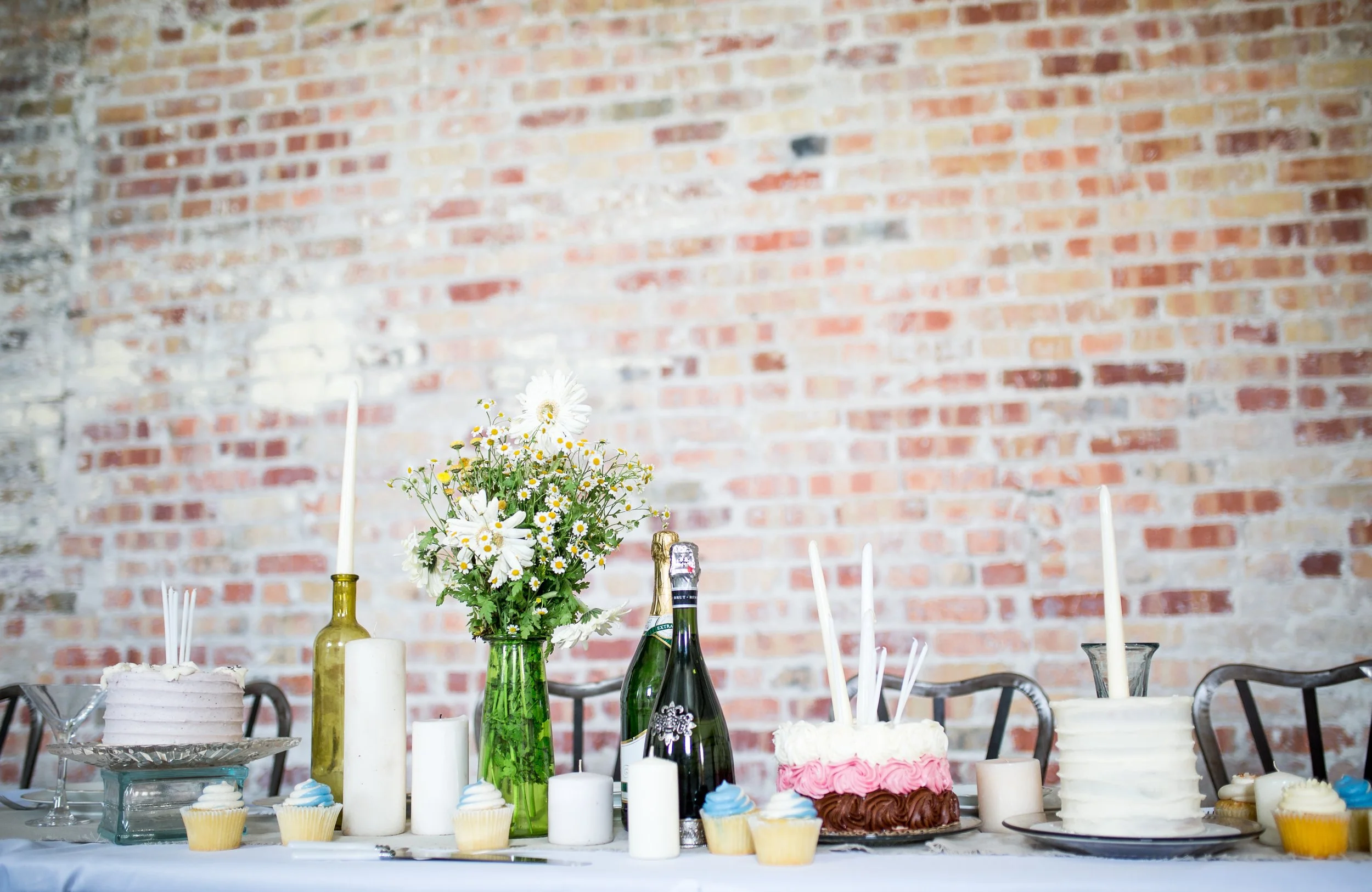
How To Maximize Your Event Budget
If you find yourself over budget, you either need to find ways to supplement that budget (ticket sales, sponsorships, donations) or find ways to shave budget.
Can you imagine a world in which you didn’t have to take budget into consideration when planning events? It might seem like every planner’s heaven, but I truly feel it’s akin to giving creatives no direction.
People tend to work better when they have some constraints and budget is a great one!
I am a firm believer that everything’s negotiable. If you have a budget, state that budget to your vendor and see if they’re willing to work with you within your means.
Look For Economies Of Scale
When budgeting for corporate events, I try to look for economies of scale. This kind of bulk purchase greatly reduces cost, here are a few tactics I use often to shave costs off programs.
If you’re using a vendor like a caterer or production agency, see if they’ll cut 20% off their fees if you guarantee them multi-program or multi-year business.
If you need to order lanyards for badges, can you order a larger quantity that can be used for the entire year’s events rather than just ordering one at a time?
Can you see if your hotel or venue will do away with venue rental in exchange for a slightly higher F&B minimum?
Get Creative!
When planning my own events, I always keep budget in mind.
When hosting an open house type of party (holiday party, house warming, etc.), consider making a batch cocktail like sangria rather than purchasing cases of expensive wine. It’s festive, and will save you a ton of money!
Instead of hiring a florist, buy flowers from your local flower mart and arrange them yourself. I will often get as many flowers as I can in the same color and mix them in varying vases. It’s elegant, effective, and costs so much less than hiring a florist.
Rather than hiring an event photographer, see if you can get a Taskrabbit to come use your own camera and shoot photos at your party. It’ll not only keep you from having to stay on top of capturing pin-worthy moments, but it’ll only set you back a hundred bucks or so!
If There Is A Will, There Is A Way
I’ve worked with multimillion dollar budgets where I still have to trim and shave every last bit of fat off the project to come in within my allocation.
In general, if you find yourself over budget, you either need to find ways to supplement that budget (ticket sales, sponsorships, donations) or find ways to shave budget.
Know Your Audience
By putting yourself in your attendee’s shoes, you’ll not only be able to anticipate their needs, you’ll be able to strategically plan their journey through your event so they see / do and feel the things you want them to.
Would you ever plan a seated dinner for a 2 year old birthday party? What about a tea party for IT executives?
Sure, these are extreme examples that planners like you obviously would never consider, but I’m surprised at how often we forget to pause and get into the minds and hearts of the people who we’re planning for.
This makes the difference between connecting with your audience and missing the mark, wasting your precious planning time and budget.
What is a Target Audience?
A target audience is the demographic of people most likely to be interested in a your product, service, content, or event. If you work for a wedding planner and are hosting a promotional event to make your company’s flair known to the surrounding area, your target audience will likely be as simple as men and women in their late twenties and early thirties.
Below are some questions if you’re struggling to determine your target audience, or helping a client identify them:
What age is your target demographic?
What region are they from?
What are they passionate about?
There are many more questions, but these three apply to any demographic.
Plan their journey
When thinking through how you’re going to allocate space planning for your event, many of us immediately think tactics rather than strategy. We slot programming in where it fits our diagrams best, without pausing to consider the flow of how an attendee will move through the day.
When you begin by thinking through the attendee journey, you may do a bit more legwork upfront, but ultimately it will pay off because they will be drawn to the things you want them to see and do rather than passively navigating through the space and potentially missing specific areas you’ve planned.
Plan meals strategically so attendees have to walk through a demo or sponsor area you want them to see in order to get food
Consider lines - what spaces will end up having the most traffic - if there will be people waiting in line, what can you offer to capture their attention or offer them some delight while they’re captive?
Consider the arrival - how are attendees arriving at your event? Think through navigation issues that could occur if, say, there’ snot a clear ride-share drop off location, or if guests tend to get dropped off at the wrong entrance to your event.
Attendees show up when they want to show up:
One thing that always fascinates me is how different types of attendees tend to have specific qualities including how early or late they arrive at an event.
Our developer audiences tend to arrive hours before a keynote and will line up outside the venue waiting to get a prime seat. However, our corporate audiences tend to show up just 5 minutes before keynote starts. And I’ll never forget, when I used to plan EDU events, our teachers would arrive even before the published time on the agenda!
For the early birds who will line up outside your conference in droves, consider thinking ahead and investing in coffee and donut carts! Not only will you please these devoted fans of your brand, but it’s probably cheaper than serving the venue’s food and this will help your buffets from getting hit hard all at once when doors open.
When you know attendees tend to show up late, plan buffer time into your agenda, so you can let keynote start late and run a bit long without throwing off the rest of your day’s schedule. Also message that reserved seats will be released 15 minutes prior to the event to make sure people get there in time for you to fill your room or backfill any reserved sections.
If you know you’ll have guests who arrive before doors open, tell your caterer they need to be set a full hour early and/or have a clear location at your venue or off property to usher these early guests to wait until the appropriate time.
The Power Of Knowing Your Audience
By putting yourself in your attendee’s shoes, you’ll not only be able to anticipate their needs, you’ll be able to strategically plan their journey through your event so they see / do and feel the things you want them to.
It’s a win/win!

Planning a theme
Themes aren’t always needed for events. But if your event does warrant a theme, it’s important that it resonates with the kind folks you’re catering to.
Themes aren’t always needed for events. But if your event does warrant a theme, it’s important that it resonates with the kind folks you’re catering to.
Some events don’t require a theme, but have an inherent one.
For example, I’ve planned cybersecurity summits and political events that in and of themselves are the theme. Try to be clever about a theme without over-doing it. Here area few examples:
When you think cybersecurity, the last thing you want to do is instill fear in attendees.
They’re already terrified about hackers, so steer clear from icons like locks, bars, and other things that will make attendees want to close down
Instead, consider the opposite: what things instill comfort and security?
I selected a clear, open venue with lots of light rather than a dark conference center so attendees would feel different at my conference than standard dark security summits.
I’ve planned political debates, conventions and galas.
One thing that brings people together more than overt political themes, red/white/blue stripes and stars, is the people and place themselves.
If I had a debate in Philadelphia, Pennsylvania, I focused on the local flavors, bringing in elements of the city to my event and featuring local specialties and vendors.
When you have to come up with a theme
Other times, a theme isn’t as obvious and you as a planner are tasked with developing a theme. How do you create one that won’t feel cheesy or outdated? Here are a few ideas.
Consider seasons
They aren’t offensive, and you can use local, seasonal ingredients, florals and materials that will inspire memories in people.
Everyone can relate to a season, so if you’re hosting an event in the spring, play up the theme of rebirth and greenery. In the winter, focus on things that make people feel cozy and grateful since it’s a season of giving.
Go Retro
Similar to seasons, people love nostalgia. I find retro themes are often popular ways to get people to naturally reminisce and bond with each other.
Plus, it’s really fun to plan everything from the fonts on your signage to the food and beverages you’re serving around a certain era, be it the Gatsby 20’s, Madmen 50’s or hippie 60s. And there’s nothing like an 80’s cover band to get your guests on the dance floor!
Look At Current Events
Another great theme for an event, especially if you need to theme the content, is around whatever’s in the zeitgeist. Take cybersecurity, or women’s initiatives, or sustainability.
Execution:
Here are a few additional tips to execute on the above themes
If focusing on an important theme that’s in the zeitgeist like sustainability, make sure you talk the talk.
Source local, sustainably farmed foods and use local brewers and wineries for your catering.
Use compostables and even consider partnering with an eco-friendly or LEEd certified venue.
Take inspiration from the seasons when hosting a dinner party.
For fall dinners, I love using leaves, buckeyes, and other found organics like persimmons, squash and gourds to decorate.
I also use organics as place settings - etching people’s names into pumpkins or persimmons.
You can also serve your first course in a hollowed out pumpkin shell to make a beautiful, festive presentation on your table.
I once hosted a retro pool party-themed reception that was hugely popular.
We hired synchronized swimmers, planted pink flamingos around the pool, and left 60’s style sunglasses on the high boy tables for guests to wear.
No matter what you do, make sure your theme is on-point.
You’d never want a theme that could offend any of your attendees or one that promotes stereotypes. Have any great theme ideas you’ve used recently? I’d love to hear!
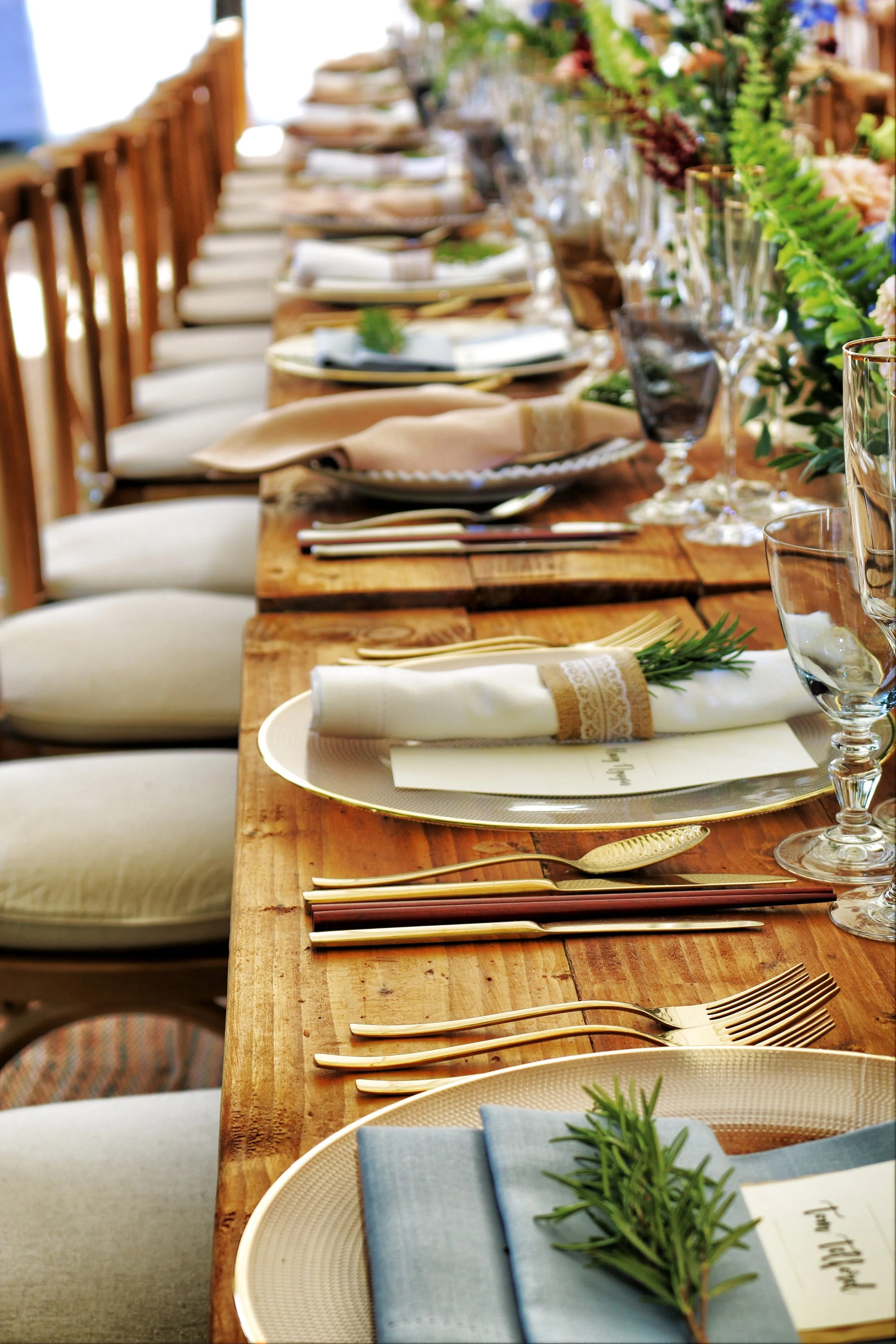
Setting A Goal For Your Social Event
Whether you are planning a major corporate event or a social dinner party, there is one question you need to ask yourself before you start planning: How do you want people to feel?
Whether you are planning a major corporate event or a social dinner party, there are three questions you need to ask yourself before you start planning:
What do you want people to Think? How do you want people to Feel? What do you want people to Do?
Set A Specific Goal
Even in social settings you have to get clear with yourself about what the goals are when you’re thinking about what to serve
Is your goal to show off new dishes because you’re a budding chef?
If so, put thought into the complexity of the dish. I once set a goal that I wanted to learn how to braise shortribs in wine. Once I perfected this skill, it was a perfect opportunity to prepare them for a New Years dinner party!Maybe your goal is you want to engage with people you haven’t seen in a while?
Come up with a menu you can put in the oven while guests arrive or make in advance then spend just 10 minutes to finish up. This way, you won’t be stuck behind a stove and can offer each guest a glass of wine and catch up with them. #superhost!
Prioritize Your Goals
Before planning an event, I always lead a prioritization exercise to get clear on the experience we want to create.
People usually want an event to accomplish a lot, but guests have so much competition for their attention and mind space, you can really only take away three things from an event. I know, I know, you want them to remember so much more, but trust me on this one!
Think about the last time someone asked you about an event. How did you describe it? How much detail? Most people are never going to say more than three things, so when I work with people or even when I’m planning my own events I list all the things I want people to think or feel.
After all those ideas are down on a list I can start to prioritize each one. Once I know the three most important things, I can start to put attention on those.
Questions To Ask Before Your dinner party
1. What do you want attendees to feel while here?
This helps you get into the mindset of your guests and reminds you of the reason why you’re hosting the dinner party! If you want them to feel loved, what are you doing to show them this while at your dinner?
2. What are two things you must have and two things you would like to have if time and budget permit?
This helps you prioritize where your focus should be before you allocate time and budget to all the ideas you have.
3. What is the most important part of the environment?
If it’s mood, think through your lighting, scent, music. If you want people to connect, think of your seating plan strategy.
4. How much effort, time, and money do you want to spend?
Paying a venue but means you don’t have to clean your house and they’ll handle the food so you can focus on other details like gift bags, music, speeches, etc.
5. What can you outsource?
Figure out how you can get help, because no matter how awesome you are - no one can do it all.
Want to capture photos at your social event? I started hiring task rabbit photographers to come to my events and take photos with my phone that way I make sure I capture everything without burdening your guests.
My mom has her housekeepers come to dinner parties so they can do the dishes and she can spend time socializing with her guests without worrying about the clean up between courses.

Pro Tips for Planning Women's Events
Women need events where they can access role models, support one another, and hear success stories specific to women.
"We are linked not ranked." - Gloria Steinem
Hosting women’s events helps companies retain female employees, acquire new talent, make new business connections, and increase female employee morale and career development.
Making Equality The New Normal
Women need events where they can access role models, support one another, and hear success stories specific to women. There are many things we can do to make events more women-friendly in addition to hosting women-focused conferences:
Consider setting a goal to have 50% speakers and 50% of your attendees be female
Consider the marketing and graphics you’re using on your event site. Is there good diversity and inclusion represented?
Consider offering travel grants or subsidized tickets to under-represented groups like women to encourage them to attend.
A great way to create a baseline of diversity within your event is by adding questions to your event registration form. Take into account cultural sensitives and labor law based on your the location of your event. Doing so will help you capture needed information.
How do you plan a women’s only event properly?
There is a lot of debate around whether women-only events perpetuate segregation or benefit females. Personally, I feel the offer a valuable experience for attendees to safely share and connect with others like them, make career connections, get inspired, and speak openly.
When planning women’s only events, you should consider whether you are making the event exclusive to women, or women-centric, allowing males allies to attend (and hopefully learn how to support women).
Ask yourself questions around what the goals of your event are which will help guide you to a decision. Some other best practices around hosting women’s events are listed below:
Add a mother’s room so that nursing mother’s can attend your conference.
Consider the hours of your conference and adjust them to accommodate pick up / drop off times for parents and/or offer childcare or a childcare stipend.
Offer pronoun stickers she/her, he/him, they/them, ze/hir, and blank field for people to self-identify.
Choose your colors and vendors mindfully
For a women leadership summit I planned, we were careful to select all women-owned businesses as our vendors and were also mindful not to lean into gendered stereotypes (like focusing on shopping, manicures, and pink/purple).
We featured women-owned businesses in a market place where we served up confections, coffee and healthy treats throughout the day.
Our production agency, videographer and photographer were all female and our female musicians even complimented us that we’d hired female sound technicians!
Without leaning into stereotypes, we featured content relevant to women like a VR experience that featured women in different industries including America Ferrera and other inspiring and diverse females.
We created networking activities like postcards featuring work by female artists that attendees could post around the room with inspiring messages, or mail to someone (postage and adorable mailbox provided by us)
Making Room At The Table For Everyone
In industries that skew heavily male, the male to female participant ratio is often unbalanced and the topics addressed can make women feel excluded from the conversation.
By tailoring an event to a group with shared experiences, attendees can discuss and gain advice without judgement – addressing challenges women face in their respective industries.

Key Factors of a Successful Proposal
As event planners, we’re expected to write proposals at a relatively high frequency. Most vary from each other, but I’ve taken what I’ve learned along the way and improved my overall proposal strategy dramatically over the years.
As event planners, we’re expected to write proposals at a relatively high frequency. Most vary from each other, but I’ve taken what I’ve learned along the way and improved my overall proposal strategy dramatically over the years. This has culminated in my pitching to a number of fortune 500 companies for partnership on the launch of my book, The Art of Event Planning.
Last week I wrote a proposal for a potential collaboration with a company I’ve gotten to know well over the years. I sent my new contact all the information I knew she would need to make a decision. We’ve all dealt with potential clients or stakeholders who don’t follow up, but this meeting quickly materialized. Our conversation was a great one, and I felt thankful for the expertise past mentors had imparted. Now, I am sharing my strategy with you, and I hope you hone it to represent your own voice and move mountains!
Establish a level of understanding first
When we collaborate or pitch to new people, we try to ensure that they understand the role we will play in helping them create a goal-oriented event. However, I do think it’s easy to overlook how little a new client might know about the event planning process. Think about it this way, what seems obvious to us, most likely wasn’t fresh out of school.
Maybe the new prospective client assumes that they will sell a certain number of seats at their ticketed conference, at an exact price point, and this bolsters their budget. However, we understand that there are comps and discounts and affiliate codes to be shared, and these affect net numbers. These additional discounts must be accounted for, since the overall budget will likely be less afterwards.
If we can educate our clients on basic strategies in talks before the proposal hits their inbox, then we have already cleared up any foreseeable confusion and we can seal the deal in a prompt manner.
Differentiation
The CEO of Advanced Nanotechnology Solutions, Inc.Hector Ruiz, once said, “Fair and open competition is the only course we know that can lead to meaningful innovation.” This much is true, and studying competing agencies will only help you glean information on what’s working tech wise. While there is an abundant amount of tools at our disposal, knowing which ones to use to sustain a client’s strategy is key. In addition, whether you’re great at reducing budgets or very interested in engagement or have unique strategies for sharing messaging— I implore you to share your super strengths within your proposal. List them first and make sure to leave some points open ended so that you can talk to your client and provide supporting evidence, and avoid overwhelming them with the printed word.
Transparency is key
Finally, sometimes, our clients ask us for things to include in our scope that we don’t have practice with. It’s fine to say no, or ask more questions, or propose a different solution that your agency can handle. The truth is, there is a fair amount of risk in overpromising to a client. We must always air on the side of caution when we go about listing our services, when they are outside of our typical scope of work. Whether it’s a 30,000 person event you’re trying to win, or a fully integrated AI concierge service you’re trying to implement— always remember that your “yes’s” should be truthful. Take your time in answering, and if you realize you can’t accommodate their proposal, it’s okay! The great thing is, there is always a way: it just takes some brainstorming to get there.
Finally, I’d love to hear your tips for scribing winning proposals. Since I am learning everyday, I will continue to share. I hope you do too!