
If Events Overwhelm You…Try This Solution
If you've talked to me for more than five minutes about events, you've probably asked me some version of these questions: What even is a Fractional Head of Events? Who actually needs one? What stage should a company be at before hiring one? And how is this different from just hiring a contractor, an agency, or a full-time employee?
Fair questions - and ones I get asked constantly. So let's settle it once and for all. Here's the overview, the downlow, the whole deal.
Let’s start with some #realtalk: events aren't just a brand moment. They're one of the most powerful tools in your marketing mix to build trust, drive pipeline, and deepen customer loyalty.
In fact, they're the #1 marketing channel for both ROI and building trust. But they're also high stakes, and without the right strategy, "events" quietly becomes "expensive guesswork."
The solution is a fractional event leader to curate the inputs and guide your decisions so you approach your events with relief rather than risk.
Here's what I’ve observed most companies are missing: a fractional head of events does something no AI, freelancer, or junior planner, producer or ops team member can do.
They curate the overwhelming amount of advice and information out there and actually make the calls:
Which agencies deserve a seat at the table and when to RFP new ones
What your event portfolio strategy should look like split between owned and third party hosted events
Where to spend and where to cut budget
When it's the right moment to host a user conference and what to do before that to build your event muscle as a company
They can tap into relationships and experience built over decades that open doors and get senior attendees in the room. That's not a prompt you can write. That's not a job you can post for $28/hour. That's judgment that comes from years of anecdotal experience.
Gianna’s Gem: You wouldn't hand your CFO position to an intern. Why trust your brand's biggest external moments to anyone but an expert?
What's a Fractional Executive Anyways?
By now, most business leaders know the model. Senior-level experts who plug into your business part-time to fill high-impact roles. Think Fractional CMO, CFO, COO, Head of People. You get C-suite strategy without the full-time cost or the long ramp-up.
As many as 70% of early stage companies now have a fractional team member.
Fractional leaders get brought in when:
You need experienced leadership without adding another headcount
You're scaling fast and need expertise now
You've got a high-priority initiative and need someone to own it
But somehow, events, despite being one of the largest line items in many marketing budgets, often 35% or more, have rarely had a seat at that same strategic table.
That's a mistake. And it's costing companies time, budget, and business.
Enter the Fractional Head of Events:
In 2023, I launched a service I had rarely seen offered: Fractional Head of Events. I built it because I kept observing the same problem. Companies were investing six and seven figures in events without any senior strategic leadership in the mix...and then coming to me to fix everything when they weren’t performing.
Either a junior coordinator was expected to figure it out, or an already-slammed marketing lead was moonlighting as an event expert. There was too much to do, no strategic direction, no way to measure what was working and no brand consistency.
Spoiler: that doesn't work.
A Fractional Head of Events is a senior event executive who joins your team part-time or project-based, bringing decades of lived expertise, executive-level thinking, and a real strategy lens without adding a full-time salary of a C-Suite member and benefits to your org chart.
Why Companies Are Cluing into the Fractional Head of Events
1. Events are your #1 trust and ROI builder. Since 2022, events have ranked as the top-performing marketing channel for both return on investment and building trust with customers (Freeman Trends Report, 2023). If you're investing in them, they need to deliver measurable impact, not just good vibes and instagram photos.
2. The experience gap is real. 70% of live events industry jobs have turned over in the last 3–4 years (Julius Solaris Research, 2024). That means most of the people running your events are new to their company, new to the role, new to events, or all three. A fractional leader brings steady leadership, mentorship, and structure so nothing gets dropped and your brand doesn't take the hit.
3. Strategy and execution/logistics are not the same thing. Anyone can book a ballroom and plan a menu with reasonable success. Aligning your events to pipeline goals, sales cycles, brand experience, and complex brand goals? That takes real expertise. A fractional event leader brings both the vision and the execution.
4. You've got a high-stakes event and zero margin for error. Launching a customer conference, a product launch, an executive dinner? These aren't "learn as you go" moments. A fractional event leader steps in fast, builds the plan, leads the team, and protects the outcome.
5. You're growing, but not ready for a full-time head. Not every org is ready to add a VP or Head of Events. Fractional gets you executive-level leadership, scaled to your stage and budget.
Gianna’s Gem: The value of a fractional leader isn't just strategy on paper it's decades of relationships that get the right people in the room. Anyone can send an invite. Not everyone can get a senior exec to actually show up.
Who Should Be Hiring a Fractional Head of Events?
You'll benefit from one if you're:
A marketing leader drowning in demand gen while also being asked to run events
A founder or CEO who wants to create a major moment for customers, partners, or prospects, but doesn't have the internal bandwidth to pull it off
A lean event team that needs seasoned backup, mentorship, and air cover
A VC- or PE-backed brand that needs to scale experiential quickly and smartly
A company in healthcare, fintech, or SaaS, where compliance, trust, and reputation are mission-critical
A company who is ready to grow their events function but doesn’t know how to build a proper event portfolio, or secure the right agency partners, budget and cross-functional team structure
But Does It Work?
Yes. Here's one example: an ai client brought me on with just one event on their calendar (AWS reInvent) to execute that flawlessly and build out the rest if the year’s event portfolio. During that engagement, we:
Had a 200% ROI from the first event, closing over ten major deals
Improved client retention rates from 75% to 95%
Landed a $100K deal out of one curated customer dinner
Cut waste while elevating the experience for top-tier customers
Grew new logos by 150%
Landed the most premiere lounge space to activate at Google Cloud Next
Launched out own User Conference for 1000 people within 7 months
Got acquired by Google just 9 months after I started there.
Their words, not mine: "This was not just an event. This was an EXPERIENCE that they will never remember, and serves as an extension of how we’ll treat them as a client" Their Chief Growth Officer got it.
So…what’s stopping you?
The Fractional Head of Events model is still new, but it's taking off. Events are too important to be led by someone without experience, and too expensive to get wrong..
Ready to explore? Here's how to get started:
👉 Book a 30-minute discovery call with me: Request here.
👉 Request a discounted Event Audit (limited spots per quarter): Request here.
Things I'm Loving This Week: The Essence Experience
I’m obsessed with an event I attended last week at The Battery called The Essence Experience: The Power of Perspective, a workshop led by Michael Tertes. It was unlike anything I've experienced there before.
I've been a founding member at The Battery for 11 years, and in that time I've been to more events than I can count. It takes a lot to genuinely pull me in these days. This one did, even though I admit I was a bit terrified about what to expect. I was so engaged, so captivated, so deeply moved, that I reached out to Michael directly afterward. We met for coffee at The Battery to keep the conversation going, and it was an absolute delight.
What made this event so different? It wasn’t the budget, or any “sizzle”.
Most "know yourself" work asks us to look inward - to examine our intentions, our efforts, our hopes, the stories we tell ourselves. Michael flips that. He asks: how are we experienced by others, and how do we experience others? And then he holds that question up against our inner beliefs about ourselves - and about each other.
Here's the line that's stayed with me since the workshop:
Every person you've ever met knows something about you that you don't - not because they know you better, but because they know what it's like to be with you.
Most of us spend our lives asking:
Why have I been successful?
What makes me different?
What don't I know about myself that's important to know?
We tend to search for those answers inward. But there's another force shaping every relationship, every conversation, every opportunity we've ever had: the experience other people have of us.
The Essence Experience starts from a different place entirely: what if understanding ourselves begins with how we're experienced by others?
Through a series of thoughtfully designed exercises, we practiced receiving observations with curiosity, noticed the patterns across different people's perspectives, and learned the qualities that have been shaping our lives all along. It was deeply powerful and left me with so many insights and also a newfound curiosity about everyone I encounter.
If this resonates and you'd love to bring this experience to your own organization, let me know - I'd be happy to personally make an introduction to Michael.
Gianna's Gem: F-It, Ship It. Lessons from Running Events at Airtable and Windsurf
Hi there,
Last week, Airtable sold to Bending Spoons in an all-cash deal valuing the company at a little over a billion dollars, with an equity value of roughly $2.25 billion once you factor in cash on hand. Airtable was valued at over $11 billion at its 2021 peak. Do the math on that, and you'll understand why the news stopped me mid-scroll.
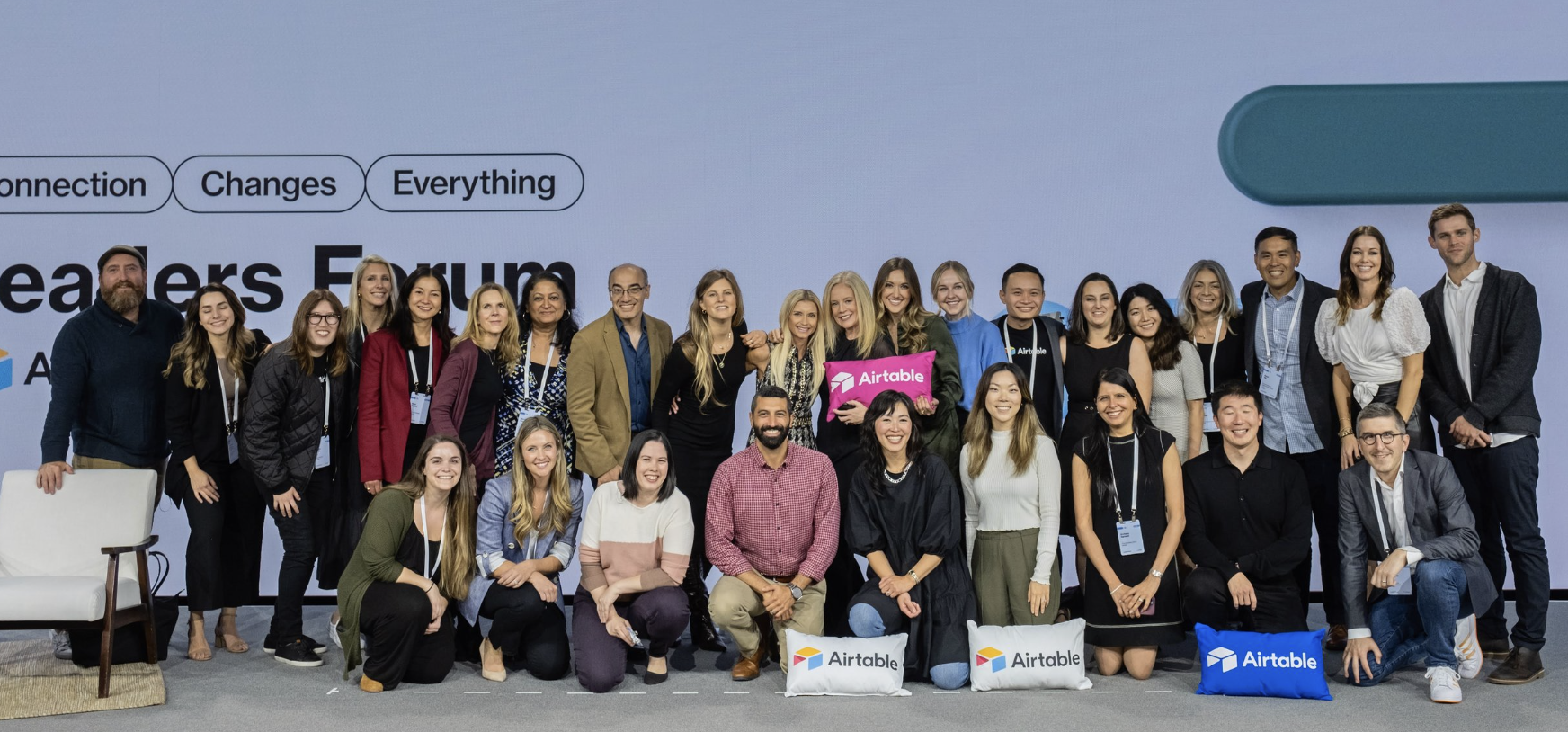
I was Airtable's first Global Head of Events, hired at the golden moment the company was scaling fast, pivoting from product-led growth into selling to big Enterprise, and launching an entirely new category: the connected apps platform. I fully expected pivots. I expected delayed approvals on our first major externally hosted events. That's the nature of hypergrowth, and I signed up for it with my eyes open and loved and respected every minute of the grind alongside my colleagues and leaders.
What I didn't expect, and what I still think about, is how much overthinking and conservative rather than bold decision-making crept into the approval process for initiatives like events. This apprehensiveness became deeply embedded in the culture and company’s ability to operate and execute with courage and audacity. Not because anyone was lazy or careless -quite the opposite; these were the brightest colleagues I’ve ever worked with (and I’d worked at Google, Amazon and SoftBank Vision Fund)...everyone cared enormously, which is often exactly the problem. But overanalyzing too much about avoiding a wrong move can sometimes cost you the right one. I can't help but wonder whether some of that hesitation cost us opportunities, and in the case of events the “signaling” we needed to strengthen our brand as we scaled and to have a more successful exit.
Gianna's Gem: Fear can be masked inside a company as "prudence” or "vigilance." But "let's revisit next quarter” slowness has a price tag too, and nobody puts it on the leger.
Contrast that with Windsurf (now Cognition).
I came in as fractional events lead with exactly one event on the calendar: AWS re:Invent. Within four months, we had secured the best location right in front of registration at Google Cloud Next for a bespoke Windsurf Lounge and within six months, we were designing and building our own 1,000-person user conference from scratch. No decades of institutional caution. No fifteen rounds of approvals. Just a clear-eyed, level-headed approach to taking calculated bets based on data and sentiment that the moment called for boldness, and the willingness to move. Fast. I loved the bold culture!
Open Ai announced that they were going to acquire us, but…that event didn’t happen, and neither did our Conference. But that’s because before it could happen, Google acquired the majority of Windsurf in the tech story of July 2025, and Cognition swiftly acquired the remainder within 48 hours.
Is that a coincidence? I don't think so, and I don't think it should surprise you either. A team that moves at that speed on something as visible and vulnerable as a first-ever conference is a team that's operating with conviction across the board. That kind of energy and bold audacity gets noticed. It gets acquired.
Gianna's Gem: The companies that win aren't the ones with the fewest mistakes. They're the ones with the shortest distance between "we should do this" and "we did this."
Here's my philosophy, and it's not reckless, it's disciplined, but bold and action-oriented:
Do your research. Budget responsibly. Get crystal clear on the ROI or output you actually want from your event and what absolutely cannot happen. And then, f-it, ship it already.
Gianna’s Gem: With events, there is no bad data.
You either crush it, or you learn something you couldn't have learned any other way. Both outcomes beat the alternative: losing the opportunity entirely because you were too afraid to take the swing, and spending the next year regretting it.
Because here's what a great event actually does for your business:
It’s a Signal: hosting an event at scale tells customers, industry influencers, press, analysts, and investors that your company is serious, and it builds pride internally in the company's growth trajectory.
It’s a thought leadership driver: the physical environment to show what leadership means to your company and your community.
It’s a brand personality exemplifier: the place where your brand comes alive IRL, where attendees immerse themselves in the community in a relaxed environment, and where brand impact and social sharing happen organically.
It’s an morale and momentum booster: it builds momentum heading into the year ahead.
It’s a pipeline accelerator: it can dramatically expand and accelerate customer and investment pipeline through the new ideas an event generates.
It’s a relationship builder: a demonstration of what your company stands for, built through the relationships forged between leadership, customers, partners, press, analysts, and investors.
It’s an appreciator: a genuine thank-you to the employees, customers, and champions who support the company.
It’s a feedback collector: a live feedback mechanism for needs, challenges, and honest conversation you won't get from a survey.
That's a lot of value sitting on the other side of a "yes." And the cost of not doing the event is just as real, it's just harder to see on a spreadsheet. In today's environment, agility isn't a nice-to-have. It's often the whole ballgame.
Your Challenge This Week:
Find the event (or other initiative) that's been sitting in "let's revisit it" parking lot purgatory. Get honest about what's actually driving the delay: is it a real resourcing constraint, or is it fear wearing a prudent-sounding costume? If it's the latter, do the research, set your budget, get clear on your ROI, and then give yourself permission to ship it.
If you need help overcoming your fear of hosting an event, let's talk. I'm happy to coach you through it or step in as your fractional head of events to take you to the finish line.
You've got this.
XX,
Gianna.
BONUS: I will offer one 45-minute coaching call with one reader. To be entered to be selected, email me with 1-2 sentences about where you’re stuck and what you need my help with. gianna@gaudini.com
P.s. Want to work learn more frameworks for creating the gold standard in events and experiences, negotiating, or creating better content for your events? New individual modules from my masterclass are now available at: giannagaudini.com/learn-from-me
Gianna's Gem: Champagne Wishes, Bud Light Budget? I got you covered.
hi there,
I’m launching my annual summer AMA - send me your burning questions about events, strategy, leadership, wellness, and everything in between. Drop me an email and I’ll be answering one each month over the summer in an abbreviated version of Gianna’s Gems. (I’m calling these shorter form Gems “Gianna’s Glimmers”).
This Week’s AMA asked by a good friend who runs content strategy for some of the top brands in the world.
“How do you approach situations where your boss or client wants champagne on a beer budget?How do you frame it, and what do you say to keep the peace but still set reasonable boundaries and expectations?”
I love this one, and yes, I have many examples. Let me introduce you to the phrase my father, a former CTO and engineering leader, passed down to me early in my career. It has saved my sanity more times than I can count and Executives respond to it well because it’s logical, simple and reasonable.
I’ve been spending a lot of time lately with founders, product marketers, and recently attended the 2024 Engineering Leadership Conference. All of it has me coming back to this idea again and again, so this week’s Glimmer is all about trade-offs and stakeholder management for event planning.
“Cost, Schedule, Features. Pick Two.”
This concept is well-known in project management and product development (my husband’s profession). It’s called the Project Management Triad or the Triple Constraint. Here’s how I translate it for events:
Cost: The budget and resources allocated to the event.
Schedule: The timeline and date for planning and execution.
Features: All the bells and whistles, i.e. gifting, sessions, demos, you name it.
The theory is simple: you can optimize for two of these factors, but doing so will always affect the third. Instead of saying “no” (which rarely lands well), I walk clients through the trade-offs. Most stakeholders understand that cheap + fast + fully-featured isn’t realistic… they just need someone to show them why.
The Three Scenarios
Scenario 1: Prioritize Cost and Schedule
Keep the budget and the timeline. Something has to give; fewer attendees, fewer keynotes, no live stream, a simpler app. The event still happens; it’s just leaner.
Impact: Features take the hit.
Scenario 2: Prioritize Schedule and Features
Full feature set, same timeline… budget climbs. Rush fees, premium vendor rates, and more labor all add up. I use this one constantly: when clients keep adding requests, I say “yes, and here’s what it costs.” That usually does the trick.
Impact: Budget takes the hit.
Scenario 3: Prioritize Cost and Features
Full bells and whistles at your set budget… but the planning window stretches. Early-bird venue discounts, more time to negotiate with vendors, no rush premiums. Think: planning a wedding on a Wednesday instead of a prime Saturday.
Impact: Timeline takes the hit.
This framework doesn’t just help you push back — it gives your client or boss a concrete choice. They’re not being told “no.” They’re being empowered to decide what matters most.
Pretty simple, right?
Cost, Schedule, Features - Pick Two.
Happy prioritizing!
XX,
Gianna 💎
What I’m Loving This Week - Dejama Bird Boxes
I first experienced this delightful item in my mom’s bathroom! An interior designer with impeccable taste and a sharp eye (and ear) for details, she used this simple little device to create a moment of pure surprise and delight.
The Dejama Bird Box creates birdsong when someone passes by. Think: entering a bathroom, a hallway, or a quiet corner of an event space. It’s motion-activated, under $50, and requires zero effort to install.
For event planners and hosts, this is the kind of low-cost, high-impact detail that guests remember. It doesn’t shout for attention, it surprises you when you least expect it. That’s the magic of a well-placed sensory detail.
The Gem: You don’t need a big budget to create a moment. Sometimes a $50 bird box in a bathroom does more for your guests’ experience than a $500 centerpiece.A great room is a decision, not an accident.
Gianna's Gem: The Human Formula in an AI-Focused World
Hi there,
There's a quiet revolution happening in events right now.
After years of chasing scale… bigger stages, flashier production, broader reach… something has shifted. The most coveted invitations now aren't to the largest rooms. They're to the smallest ones. And the experiences leaving the deepest impressions aren't the ones with the most impressive production budgets. They're the ones that make you feel most seen, and the ones that make you feel human.
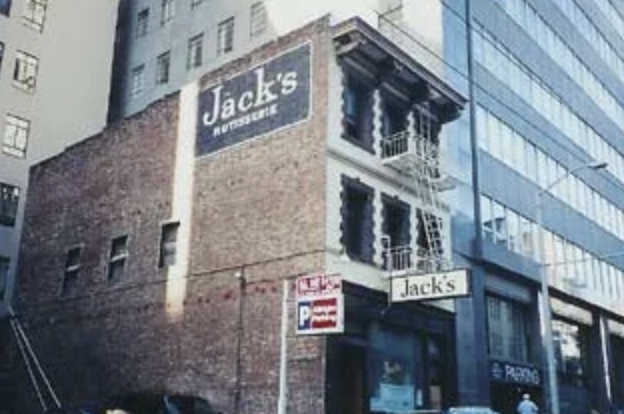
I experienced this firsthand this past week when I was invited to an intimate dinner for marketing leaders at Jack's, an exclusive cultural salon and private venue in San Francisco, recently restored to its original grandeur after a storied history that includes hosting the luminaries who planned the World's Fair. The chef hailed from a Michelin-starred kitchen. The conversation ranged from AI to miscarriage to death doulas. I dreamt about the brodo served as the first course.
And I left thinking: this is what events should feel like.
So what made it work? There's actually a formula… and it's replicable. Here’s how I’d break it down if I was to give a recipe for how to create the most human and authentic dinner that will provide not only catharsis but metamorphosis for attendees who will leave more sated than from any 5 star dining experience.
The Human Formula for Unforgettable Events
1. Curation Over Scale
The guest list was small and intentional. But what elevated it further was that guests weren't just sorted… they were named. Tables carried identities: Builders, Visionaries, Connectors, etc. I was seated at the Builders table alongside six others who had built brands, published books, launched companies. The commonality wasn't just professional, it was dispositional. We already had something to talk about before we sat down.
Even more telling: the organizers had asked guests to nominate others to attend this and future events. That single move is worth noting. Asking your target audience who else belongs in the room is how communities actually grow. It signals trust, activates ownership, and ensures the room keeps getting better. More hosts should do this.
2. Priming Before You Walk In the Door
The experience began well before arrival. A custom website and a thoughtful "know before you go" email set the stage by including the evening’s agenda, parking tips, dress code energy, and yes, a heads-up that phones would be collected in green satin bags upon arrival.
That last detail is worth dwelling on. By naming it in advance, the organizers transformed what might have felt like a jarring ask into an anticipated and appreciated ritual. Guests arrived ready to be present. There was no resistance, no awkward moment, just a graceful collective exhale and the rare feeling of a room fully, genuinely present.
Priming isn't just logistics. It's consent. It's trust-building. It tells your guests: we've thought about you.
3. Exclusivity With a Soul
"Venues hold stories in their walls." That's how the host described Jack's, and it's one of the most astute observations I've heard about why historic venues are having such a moment right now.
We are collectively exhausted by the new and the sterile. Glass-and-steel conference centers optimized for AV load-in cannot compete with a room where you can feel the decades. Authenticity has become the ultimate luxury, and historic venues deliver it structurally, before a single word is spoken. It’s one of the reasons I selected the historic Alamo Drafthouse to host an exclusive Mission Impossible premiere with A list talent last year over a Metreon with reclining seats.
The same logic applied to the talent in the room. The chef wasn't just a culinary credential, he was a storyteller, a guest speaker, a presence. The venue owner spoke. He sipped wine between questions. He spoke from the heart. An author joined the conversation and similarly spoke from a place of vulnerability that invited guests to subsequently do the same. These weren't last minute add-ons. They were part of the texture of the evening, a layering akin to a complex broth (or brodo?), or elegantly woven tapestry.
4. A Format That Earns the Conversation
Here's where the design truly sang.
Rather than a panel-during-dinner setup (which splits attention and serves neither well), the evening opened with something I'd call a "witnessed conversation." The venue owner, the chef, and the author sat together at a single table facing the rest of us… drinking wine, talking freely, answering questions from an extraordinarily skilled host, while the rest of us leaned in and listened. No slides. No stage. Just three people being genuinely interesting in front of an audience that was given permission to simply receive. The host called it “eavesdropping” on a conversation, which, in this simple lexicon, hinted at exclusivity and intimacy.
The panel was a container for an authentic and vulnerable discussion. My favorite quote was “If you want to predict the future, build it.” My favorite shared term was “protopean”.
Wine was poured, bread served, brodo distributed in small pitchers beside our first course.
Then: two envelopes per table, each containing a discussion prompt tailored to that table's theme. What followed was a Jeffersonian-style dinner (my favorite format as it featured one conversation, no side chatter, no interruptions) and it produced the kind of depth that most hour-long panels never touch.
By the time we were trading perspectives on how humanity survives in an AI-saturated professional world, and how humans find purpose, we'd already metabolized the scene-setting conversation, broken bread, and established enough trust at our tables to say something real.
The phones stayed in the bags. The green pens and journals got used. The gifted tea and book felt like a warm hug goodnight, not a swag bag.
Why This Matters Right Now
We're living in a moment of profound disconnection dressed up as constant connection. We are always reachable and rarely reached. AI is accelerating output while people quietly hunger for exchanges that feel unmistakably, irreducibly human.
The events that will matter going forward, the ones people will actually show up for, remember, and evangelize, are the ones that understand this. They won't try to be bigger. They'll try to be truer.
The formula isn't complicated. Curate with intention. Prime with care. Choose spaces with soul. And design a format that earns the conversation you actually want to have.
A brodo that blows your mind doesn't hurt either.
XX,
Gianna
Gianna's Gem is a recurring column sharing observations, frameworks, and field notes from the world of events, marketing, and human connection.
Gianna Gaudini is an event strategist, advisor, and author of the Amazon bestselling book "The Art of Event Planning." She's held leadership roles at Google, AWS, SoftBank Vision Fund, and Airtable, creating unforgettable experiences that drive business results. For more insights on creating exceptional events, visit GiannaGaudini.com or connect with her on LinkedIn.
Want to work with Gianna or take her Event Planning Masterclass? Visit giannagaudini.com/learn-from-me
Gianna's Gem: Why "Perfect" Is Killing Your Events (And What to Do About It)
Hi there,
Last week, I was coaching a rising event manager who was stuck. She'd been planning her company's first major user conference for six months, and guess what? The company still hadn't sent out invitations.
"We’re still refining the agenda," she told me. "My CMO wants to make sure everything's locked in and perfect before we send out invites."
I recognized that look in her eyes immediately as I could recall being in a similar situation as a Head of Events with a C-Suite who were often paralyzed by “shipping” anything if it wasn’t perfect (and what perfect looked like changed on the weekly!). It's the paralysis that comes from believing that if you just plan a little more, research a little deeper, polish a little longer, check a few more times, you'll finally achieve the "perfect" event (or insert anything else here).
Here's what I told her…and what I wish someone had told me fifteen years ago: Perfect is the enemy of good.
Gianna’s Gem: In event planning, “motion” is the enemy of “action”.
The Difference Between Motion and Action
James Clear nails this in Atomic Habits (a favorite book of mine I shared with you in last week’s Gem): Motion makes you feel like you're making progress, but it doesn't actually produce results. Action, on the other hand, delivers outcomes.
In event planning:
Motion looks like:
Endlessly researching venues without booking site visits
Creating the perfect planning spreadsheet (and then recreating it)
Attending webinars about event marketing without implementing anything
Researching but not reaching out to speakers
Perfecting every budget line item instead of putting a stake in the ground and understanding there will be fluidity as you negotiate with vendors
Action looks like:
Booking three venue tours for next week
Sending that imperfect-but-good-enough speaker invitation today with a caveat that the event date might be X, Y or Z to gain intel.
Testing one new registration strategy with your next small event
Creating the post-event survey now
Sending save the dates even though the agenda isn't 100% finalized
Launching a website with a caveat that speaker announcements will be coming each week
Gianna's Gem: Planning is motion. Doing is action. And only action teaches you what actually works.
The Learning Paradox
Here's what I’ve learned over my 23 year career in event planning: you can read every book and blog post, look at ever pinterest board, and listen to every podcast about how to plan events, but you won't actually know how to plan events until you've planned some events because that’s where the phrase “live and learn” rings true. Even to this day, I learn something new while planning every event.
I learned more from the Airtable event where the video in the overflow viewing room failed during our CEO's keynote than I did from a decade of "perfect" keynotes. I learned more from the AWS sponsorship nightmare where we almost didn’t get our booth than from all the other shows where everything was easy. I learned more from planning a challenging milestone birthday in Sardinia than from seamless milestone birthdays planned with my favorite properties in Napa.
Why? Because repetition creates pattern recognition. Experience builds instinct. And failure teaches you what books simply can't.
The problem is: most event professionals don't get the luxury of planning hundreds of events. You might plan one major conference per year. Maybe a handful of smaller events. How do you gain the wisdom that comes from repetition when you don't have the volume?
This is where working with a coach or consultant, taking a guided course, or even volunteering to plan events becomes your competitive advantage.
The Consultant Edge: Borrowing Someone Else's Reps
When you work with an experienced event consultant, you're not just hiring someone to help with logistics. You're borrowing their 10,000 hours. You're accessing their pattern recognition. You're leveraging their war stories so you don't have to create your own.
For example: I've planned events for Google, AWS, SoftBank, Airtable, Windsurf, and dozens of other companies as a consultant. I've executed conferences for 100 people and 30,000 people. I've managed budgets from $50K to $50M+. I've dealt with every team/vendor nightmare, every venue/AV disaster, every stakeholder conflict you can imagine (and plenty you can't…stay tuned for my next book!).
When you work with me (or any seasoned consultant/coach), you get to:
Mentally Rehearsal and Visualise based on Their Shared Experience
"Here's what happened when we tried that agenda format..."
"I learned the hard way that you need to..."
"Based on similar events, here's the pitfall we need to avoid..."
You're essentially running simulations in your mind based on their real-world outcomes. Neuroscience shows that mental rehearsal activates similar neural pathways as actual experience. You're training your brain without having to make (and pay for) the mistakes yourself.
Anecdotal Wisdom That Shortcuts Your Learning Books and courses teach principles. Consultants teach specifics.
"For tech audiences in San Francisco, this type of event sponsorship is risky and here's why..."
"When negotiating with this particular hotel chain, always ask for..."
"Your sponsor fulfillment should happen like this, not like that, because I've seen what happens when..."
Real-Time Decision Support Instead of making your best guess and hoping it works out, you get instant feedback:
"That registration flow will create bottlenecks because of X, let's consider adjusting it."
"Your budget allocation is too heavy on F&B and too light on AV, here's why and how I recommend rebalancing."
"This vendor quote is 30% above market rate, let me show you the comps."
The Course Advantage: Structured Learning Without the Trial-and-Error Tax
A well-designed course (like my Event Strategy Masterclass) does something different but equally valuable: it gives you the frameworks, systems, and best practices that took me years to develop, delivered in a fraction of the time and cost. If you can’t afford a coach or consultant, a self-paced course with exercises to give you “action” practice can be another great strategy to start getting in your “reps”.
AND…If you can convince your company to let your colleagues take it with you, studies have proven that learning in peer groups with discussion along the way improves engagement, retention and bonding by 140%!
Here's what a strategic course offers:
Accelerated Pattern Recognition Instead of planning 50 events to recognize patterns, you study 50 case studies. You learn:
What makes successful conferences stand out
Why certain event formats consistently outperform others
How to negotiate contracts to save money and get key concessions and some downloadable templates to save you time
Systematic Thinking Courses give you repeatable frameworks:
My SUCCESS framework for event design (see last week’s Gem if you missed it)
The attendee journey audit process
Budgeting models and frameworks you can use immediately to implement with your own events
Stakeholder management strategies and communication pro tips to unblock you and help you be more strategic and influential
These aren't theories, they're systems I refined through hundreds of events. And they let you operate from a playbook instead of reinventing the wheel. I feel blessed for having had the opportunity to work with some of the most admired brands in the world and it truly is my mission to be able to scale my reach and share what I’ve been blessed to have learned by the best in class.
Community Learning The best courses create peer communities where you learn from each other's experiences. Someone's venue negotiation strategy becomes your blueprint. Another person's speaker management disaster becomes your cautionary tale.
But Here's the Key Thing Both Consultants and Courses Provide...
They give you permission to take imperfect action.
When you're working with someone who's already made the mistakes, you stop needing everything to be perfect. You learn which details actually matter (the why and intention behind every component, attendee journey and brand experience) and which ones don't (the exact shade of blue in your linens and the type of silverware and china you select for the tables).
You gain the confidence to:
Send the invitation even though the agenda has TBDs
Draft a successful event brief and gain approvals swiftly because you know your why
Launch registration before your website is perfect
Make decisions quickly because you trust your consultant's guidance and therefore present to stakeholders with confidence
This is action. This is progress. This is how events actually get planned.
My Early Career: The Volunteer Advantage
Before I landed at Google, I was exactly where many of you are now or have been: passionate about events but lacking real world experience. I needed reps but didn't have a portfolio. So I did something that changed everything:
I volunteered. A lot.
I volunteered to plan my company's holiday party, my team’s offsites. I volunteered to help people in the industry I admired for free. I volunteered at a number of charity organizations I believed in. Were these glamorous? No. Did they pay extra? Absolutely not. But here's what they did:
They gave me reps.
Every volunteer event taught me something AND also introduced me to new people, partners and even mentors.
By the time I interviewed at Google, I had a portfolio of events that demonstrated I could execute. I had stories of problems I'd solved. I had proof of action, not just motion.
Your Action Plan: Start Now, Imperfectly
If you're reading this and feeling stuck in motion, here's how to shift into action today:
1. If You Can't Plan High-Volume Events:
Work with a consultant or mentor who has. You'll compress years of learning into months. You'll avoid expensive mistakes. You'll build confidence faster.
Take a strategic course that gives you frameworks and community. You'll gain systematic thinking and peer learning that shortens your path to expertise.
Attend events critically. Don't just enjoy them, dissect them. What worked? What didn't? What would you do differently? Every event you attend becomes a case study for your mental database. I still audit events for my clients and always learn something in the process myself.
2. If You Want More Hands-On Experience:
Volunteer for event roles:
Offer to help plan your company's next team offsite
Coordinate a community meetup or local chapter event
Help a nonprofit with their fundraising gala
Manage your friend's milestone birthday party (or baby shower)
Start small but start now:
Plan a 20-person dinner party with a theme and run-of-show
Host a workshop or panel discussion
Coordinate a small networking event
Document everything:
Take photos
Track what you learned
Build your portfolio
Create case studies
Each of these is action. Each one teaches you something books and planning documents can't.
3. Embrace "Good Enough" and Iterate:
Ship the imperfect invitation. You can always send updates.
Book the venue that's 90% right. Perfection doesn't exist, and you're losing time and negotiating leverage by waiting.
Launch with what you have. Version 2.0 will be better because you'll have real feedback, not theoretical concerns.
Test and learn. Try one new thing each event. Measure what happens. Adjust for next time.
The Compound Effect of Imperfect Action
Here's what most event planners miss: every small action compounds.
That imperfect first event teaches you lessons for the second one. The second event builds skills for the third. By your fifth event, you're operating at a level that would have taken you years to reach through "perfect" planning alone.
Meanwhile, the person who's still researching, still planning, still waiting for perfect? They're on event zero.
And here's the beautiful part: you don't have to make all the mistakes yourself.
Working with a consultant means you borrow their compounding experience. Taking a course means you leverage their accumulated wisdom. Volunteering means you gain real reps without the having to commit to a second full time role. Attending events critically means you learn from others' successes and failures.
All of these are forms of action. All of them move you forward. None of them require perfection.
The Bottom Line
Perfect is a mirage. Motion is a trap. And the only way to actually get better at event planning is to plan events, even imperfect ones.
Whether that means:
Working with a consultant or coach who's already made the mistakes
Taking a course that gives you proven frameworks
Volunteering for opportunities to gain experience
Attending events to study and learn
Simply starting with what you have right now
The path forward is the same: Take action. Learn. Iterate. Repeat.
Because here's what I know after 23+ years in this industry:
The best event planner isn't the one who planned the perfect event. It's the one who took imperfect action, learned from it, and got better every single time.
You don't need more time to plan.
You don't need more resources to research.
You don't need permission to be perfect.
You need to take action. Today. Imperfectly. And trust that the learning will come through the doing.
That rising event manager I mentioned at the beginning? After our coffee, she gained the confidence to send her event invitations that week. Were they perfect? No. Did they work? Absolutely. And more importantly, she learned what resonated with her audience: data she never would have gotten from another week of "perfecting" the message.
That's the power of choosing action over motion.
That's the gift of learning from others' experience.
That's how you build a career (and events!) that matter.
So here's my challenge to you: What's one imperfect action you can take today?
Not tomorrow. Not next week. Today.
Whatever it is, do it imperfectly. Do it now. And trust that the learning, the confidence, and the excellence will emerge through the doing.
Because perfect is the enemy of good.
But action? Action is the path to great.
You've got this.
XX,
Gianna
What I'm Loving This Week: And for all my favorite vendors, partners and products, visit: https://www.giannagaudini.com/gianna-recommends
Treehouse Hotel Silicon Valley
I had a chance to site visit this charming, fresh new property (one of only three in the world) located next to Google’s Sunnyvale campus in the heart of Silicon Valley last week. In a sea of sterile tech campuses and cookie-cutter business hotels, Treehouse Hotel Silicon Valley, a sister brand of 1 Hotels, is a breath of fresh air, literally and figuratively. Ranked #1 on Tripadvisor and named Best Cool New Hotel in the 2025 Metro Silicon Valley Best Of Awards, this property proves that playful doesn't mean unprofessional, and that nostalgia can coexist beautifully with innovation. From the moment you enter the greenhouse-style lobby, complete with a VW bug completely covered in plantlife and other nostalgic charms, you're transported to a world where stump-shaped side tables, owl-embroidered pillows, record players in rooms, and toy soldiers in Mason jars remind you that creativity thrives when we don't take ourselves too seriously. The property features Celeb Chef Stephanie Izard's Valley Goat restaurant, a beer garden with 30+ beers on tap, an gorgeous event barn with large windows and tall ceilings making it perfect for gatherings of all kind, and outdoor spaces designed with Silicon Valley's agrarian heritage in mind…think Google campus meets country chic meets Santa Cruz in character.
What I love most is how Treehouse delivers high-quality experiences without traditional luxury stuffiness. The rooms are thoughtfully designed, impeccably clean, and packed with whimsical touches that spark joy while still feeling high quality and premium. It's wellness-focused, sustainability-committed, and genuinely welcoming for everyone from families (kids' robes! in-room camping experiences!) to business travelers hosting offsites. This is a place that gives you permission to play, think big, and reconnect with the natural world. If you're planning an event in the Bay Area and want your team to actually relax, recharge, and think creatively rather than just grind through another conference agenda, Treehouse Silicon Valley is your answer. If you need an intro, reach out.
Gianna Gaudini is an event strategist, advisor, and author of the Amazon bestselling book "The Art of Event Planning." She's held leadership roles at Google, AWS, SoftBank Vision Fund, and Airtable, creating unforgettable experiences that drive business results. For more insights on creating exceptional events, visit GiannaGaudini.com or connect with her on LinkedIn.
Want to work with Gianna or take her Event Planning Masterclass? Visit giannagaudini.com/learn-from-me
Gianna's Gem: Gianna’s Gem: SUCCESS, the 7-step framework to uplevel your events
Hi there,
Recently, I was having coffee with a CMO who was telling me about her company's upcoming conference. She had the “foundational” components locked in: venue booked, speakers confirmed, agenda set, invites ready. But something was bothering her.
"Gianna," she said, "I know this event is going to be good. But how do I make sure it's actually transformative? How do I take it from good to truly unforgettable?"
It's a question I hear all the time. And honestly? It's the right question to be asking.
Here's the truth: anyone can execute an event. The logistics, the timelines, the vendor management…those are table stakes. What separates truly unforgettable (and thus shareable) events from forgettable ones isn't flawless execution. It's whether your attendees walk away changed. Have you taken them FROM where they were before they met you TO some place better?
That's why I developed the SUCCESS framework: a blueprint for creating events that don't just happen to people, but transform them.
Gianna's Gem: Great events aren't just well-planned. They're well-designed, with every element intentionally crafted to create lasting impact.
So let’s dive in! What SUCCESS Stands For
S - Story-Wrapped Experiences
U - Unforgettable Moments
C - Connection over Content
C - Curated Personalization
E - Empathy-Driven Planning
S - Surprise and Delight
S - Shifts (Strategic & Emotional Metamorphosis)
Each element builds on the others to create experiences that resonate long after the event ends. Let me break down what each one means, and how you can apply it to your next event.
S: Story-Wrapped Experiences
Stories stick while features fade.
Think about the last conference you attended. Can you remember the specific feature set that was announced in the keynote? Probably not. But I bet you remember how you felt when the CEO shared that vulnerable story about the company's early struggles.
That's the power of story.
When you wrap your event in a narrative arc, you give attendees a framework for understanding, remembering, and retelling what they experienced. You transform disconnected moments into a cohesive journey.
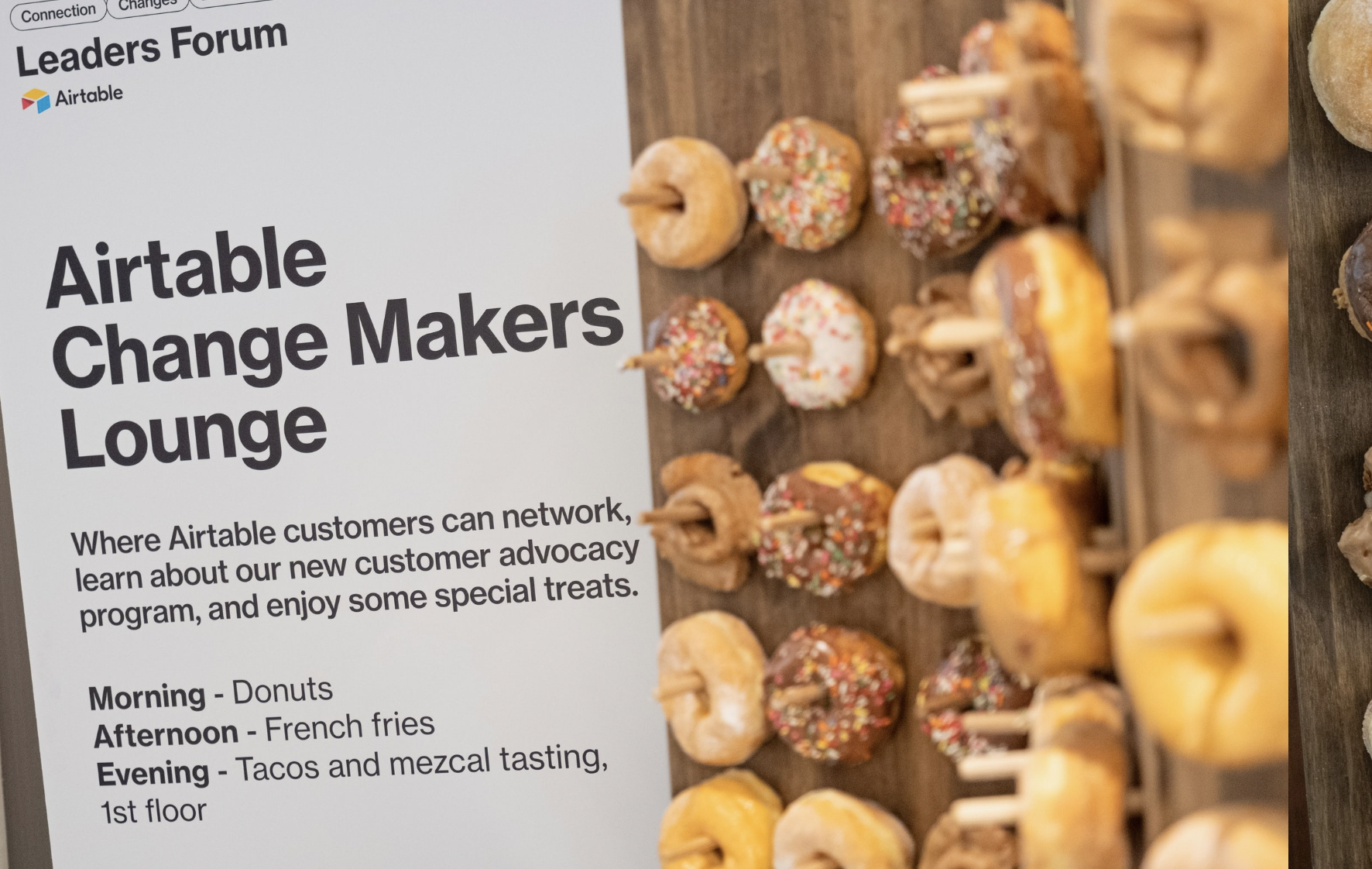
Real-World Example: When I was at Airtable, we didn't just "host a user conference." We told the story of transformation: from where customers were struggling (the problem) to where they could be with the right solutions (the possibility). Every session, every activation, every networking moment supported that narrative arc (and that red thread was “connection. changes. everything.” which made sense given we had just launched a category as a connected apps platform).
The result? Attendees didn't just consume content. They saw themselves in the story. And that's when they leaned in, and then shared broadly.
Your Action Step:
Before you finalize another agenda or book another speaker, ask yourself:
What's the narrative arc of my event?
Where are attendees when they arrive (emotionally and strategically)?
Where do I want them to be when they leave?
How does every element of my event move them along that journey?
My Key Principles:
Stories stick while features fade in memory
Narratives help customers reshare and remember what you convey
Executives approve when stories lead the way
Share-worthy tales that attendees photograph and post on social
What's your story? What can your brand do that no other brand can? What does your brand stand for?
U: Unforgettable Moments
People won't remember everything. Make sure they remember the right things.
Here's a hard truth backed by neuroscience: your attendees can't remember everything from your event. Their brains aren't wired that way.
But they will remember roughly three things. Your job? Decide what those three things are and design every other element to support them.
I call this the "Power of Three," and it's one of the most liberating constraints in event design.
Real-World Example: At a Google executive retreat, we could have filled three days with back-to-back sessions on product strategy, market trends, and operational updates. Instead, we identified our Top 3 moments:
The opening surprise (an exec skydiving into the welcome reception…yes, really)
The innovation workshop where teams prototyped solutions to real customer challenges
The closing campfire conversation (complete with a gourmet s’mores bar) where leaders shared their biggest lessons learned
Everything else? Designed to support these moments or get out of the way.
The result? Months later, attendees were still talking about that event. Not because it was packed with content, but because it was intentionally memorable and built around stories.
Your Action Step:
For your next event, identify your Top 3 memorable moments. Then ruthlessly evaluate every other element:
Does this support one of the Top 3? Keep it.
Does this dilute focus? Cut it or redesign it.
My Key Principles:
Magic that makes the mundane bright
Three memorable things attendees take away—deprioritize the rest
Obsessive hospitality and attention to detail
Experiences that feel one-of-a-kind regardless of budget
Priceless access that attendees can't secure themselves
C: Connection over Content
Peer-to-peer beats another paid speaker.
Here's what most event planners get wrong: they think attendees come for content.
They don't. They come for connection.
Don't get me wrong, content matters. But in 2026, your attendees can access world-class content from their couch. What they can't get virtually? Authentic human connection around shared challenges.
Real-World Example: At Airtable's first major user conference, we made a bold choice: 40% of the agenda was dedicated to peer-to-peer interaction. No speakers. No presentations. Just structured conversation, working sessions, and facilitated networking.
Our stakeholders were nervous. "People are paying to attend…shouldn't we give them more content?"
But here's what happened: attendees rated those peer sessions as the highest value parts of the conference. The unstructured conversations led to partnerships, problem-solving, and genuine community formation that lasted long after the event ended.
Your Action Step:
Audit your next event agenda. How much time is dedicated to peer interaction vs. one-way content delivery?
If it's less than 30%, you have work to do.
Key Principles:
Peer-to-peer beats another speaker
Tacit knowledge flows when people meet
Connect over shared humanity, pain points, and challenges
Community bonds when problems are solved in think tanks or share circles
"Me too" moments paired with aspirational real-world heroes
Pre- and post-event connection for continuous engagement beyond a moment in time
C: Curated Personalization
Generic experiences feel forgettable. Personal moments feel seen.
Personalization isn't about putting someone's name on a badge, or addressing them with their name in an email (though that's a good start). It's about creating moments that are genuinely relevant to each attendee's needs, interests, and journey stage.
When done well, personalization communicates: "We see you as an individual. We've thought about what you need."
Real-World Example: At a SoftBank portfolio CEO summit, we could have treated all 50 CEOs the same. But we didn't.
We created personalized welcome beverages and snacks stocked in their hotel rooms when they arrived based on research into each CEO's preferences. We curated networking introductions connecting people who could specifically help each other in advance and then in person. We offered afternoon and morning “adventure” options so attendees could choose sessions aligned with their company stage and industry but also based on interests so they could cross-pollinate in different ways.
The result? CEOs reported feeling deeply valued, not just as attendees, but as individuals and felt the summit was worth their time out of office.
Your Action Step:
Map out attendee personas for your next event. For each persona, identify 3-5 touchpoints where you can offer personalized options:
Track selection based on role or experience level
Content formats (workshops vs. lectures vs. peer discussions)
Networking matchmaking based on shared interests or challenges
Dietary preferences handled proactively
Communication style (some want detailed pre-reads, others prefer minimal prep)
My Key Principles:
Intention shows you truly care
Relevance makes attendees feel seen
Tailored touches everywhere so attendees can customize to meet their needs at the right time and place
Personal moments, not standardized experiences
E: Empathy-Driven Planning
When you solve for their needs first, your event becomes indispensable.
This one's simple but powerful: great events start with deep empathy for your attendees.
What keeps them up at night? What would make their investment of time and money feel worthwhile? What pain points will they experience at your event—and how can you eliminate them before they arise?
Real-World Example: When planning Google Cloud Next (a 30,000-person conference), we didn't just think about our logistics. We obsessed over attendee pain points:
Long lines? We created multiple registration areas and mobile check-in AND we added hackers giving away coffee and breakfast to hungry attendees while they waited.
Information overload? We designed quiet lounges for processing time and streaming option for those who were late and missed getting into the keynote.
Decision fatigue about which sessions to attend? We created clear tracks and personalized recommendations.
Women feeling lost without many peers? We created networking breakfasts and lunches for them to meet and navigate the event together as birds of a feather.
Every pain point we solved translated into higher satisfaction scores and better business outcomes.
Your Action Step:
About two weeks before your event, conduct an attendee journey audit. Walk through every touchpoint and ask:
What could frustrate attendees here?
What needs might they have that we haven't addressed?
How can we make this smoother, easier, more delightful?
Key Principles:
Listen closely to what attendees need and deliver on that
Understand their ROI, not just yours
Empathy plants the engagement seed—lead with solving their problem
Solve attendee pain points at the event; it translates to how you'll take care of their business pain
S: Surprise and Delight
Unexpected joy creates lasting memories—and powerful reciprocity.
Here's something fascinating about human psychology: when you exceed expectations in unexpected ways, you create reciprocity. People feel compelled to give back, even if just through deeper attention, openness, and engagement.
That gelato cart that appeared poolside at the perfect moment? That handwritten note waiting in their hotel room? That unexpected training session with an Olympian? These aren't just "nice touches." They're strategic tools for creating emotional peaks that become lasting memories.
Real-World Example: At a Google leadership offsite, we knew attendees would be exhausted after an intensive morning session. So we surprised them with a gourmet food truck festival for lunch—complete with their favorite childhood comfort foods, customized based on pre-event surveys we'd conducted.
The cost? Marginal compared to our overall budget. The impact? Attendees were reenergized, delighted, and emotionally primed for the afternoon's creative brainstorming. Plus, they associated Google with that feeling of being truly cared for.
Your Action Step:
Identify the top 3 pain points attendees typically experience at events (long lines, bad coffee, boring transitions, etc.). Design specific "delight moments" that turn each pain point into an unexpected pleasure.
Key Principles:
Unexpected moments spark joy
Wink-and-a-smile touches offer playful vibes that are the antidote to stress
Turning expected pain points into joy creates a huge expectation leap (but don't go the opposite way)
Delight, nostalgia, and comfort put people in the right frame of mind to tune in to what you have to share (needs are met)
Giving to attendees creates a psychological need to "repay" the giver, even if it's just listening or taking a call
S: Shifts (Strategic & Emotional Metamorphosis)
The ultimate measure of success: transformation.
Here's the question that should guide every event decision you make: What shift am I creating?
Not "What content am I delivering?" or "How many sessions am I including?" But: What belief am I transforming? What emotion am I evoking? What action will attendees take as a result?
Because events that don't create transformation are just expensive gatherings. The real ROI comes from change…in beliefs, behaviors, and business outcomes.
Real-World Example: When I designed events for SoftBank Vision Fund, we didn't measure success by attendance numbers or satisfaction scores (though those mattered). We measured it by shifts:
From skepticism about AI → to conviction about its transformative potential
From feeling isolated in their founder journey → to feeling supported by a community
From uncertainty about next steps → to clarity and commitment to action and implementation
Every element of the event was designed to create these specific shifts. And we could measure the results: partnerships and alliances formed, investments made, strategies changed.
Your Action Step:
Before planning your next event, create a transformation map:
LEFT SIDE (Arrival State):
What do attendees believe when they arrive?
What emotions are they feeling?
What behaviors or strategies are they currently using?
RIGHT SIDE (Departure State):
What do you want them to believe when they leave?
What emotions do you want them to feel?
What actions do you want them to take?
Every element of your event should move attendees from left to right.
My Key Principles:
Transform beliefs (from → to)
Emotions journey: Where are they when they arrive? What do they feel when they leave?
Strategic outcomes: The beliefs and emotions drive actions
Bringing It All Together: The SUCCESS Framework in Action
Here's why I love this framework: it's not about adding more to your event. It's about designing with intention.
You can have a two-hour workshop or a three-day conference. A 50-person dinner or a 5,000-person activation. The SUCCESS framework works at any scale because it's about how you design, not what you include.
Start with Shifts: What transformation are you creating?
Plan with Empathy: What do your attendees actually need?
Craft Your Story: What narrative arc supports the transformation?
Design Unforgettable Moments: What are your Top 3 memorable experiences?
Prioritize Connection: How are you facilitating peer-to-peer interaction?
Personalize Intentionally: Where can you show attendees they're seen as individuals?
Layer in Surprise: What unexpected delights will create emotional peaks?
When all seven elements work together, something magical happens. Your event transcends logistics and becomes an experience people don't just attend—they treasure, share, and act upon.
Your Implementation Challenge
Here's what I want you to do: Pick your next event and audit it against the SUCCESS framework.
For each element, ask yourself:
Story: What's my narrative arc? Does every element support it?
Unforgettable: What are my Top 3 moments? Am I protecting them or diluting them?
Connection: Am I prioritizing content delivery over peer interaction?
Curated: Where can I add personalization that truly matters?
Empathy: What pain points haven't I addressed?
Surprise: Where can I exceed expectations in unexpected ways?
Shifts: What transformation am I creating? Can I measure it?
You don't have to master all seven elements overnight. Start with one. Maybe it's getting crystal clear on your event story. Maybe it's building in more connection time. Maybe it's identifying your transformation goals before you finalize your agenda.
Pick one. Master it. Then add the next.
Because excellence isn't built in grand gestures—it's built in the accumulation of intentional choices that honor what events can truly be: not just gatherings, but transformations.
The Bottom Line
After 23+ years planning events for Google, AWS, SoftBank, Airtable and Cognition, here's what I know for sure:
The events people remember aren't necessarily the ones with the biggest budgets or the most famous speakers or the fanciest venues (though those things can help).
The events people remember, and more importantly, the events that create real business impact, are the ones designed with the SUCCESS framework in mind.
Stories that resonate. Moments that matter. Connections that last. Personalization that honors individuality. Empathy that anticipates needs. Surprises that delight. And shifts that transform.
That's the secret sauce. That's what takes events from good to legendary.
And now you have the blueprint to create it yourself.
You've got this.
XX,
Gianna
What I'm Loving This Week: And for all my favorite vendors, partners and products, visit: https://www.giannagaudini.com/gianna-recommends
Atomic Habits by James Clear If you've ever struggled to build better habits (or break bad ones), James Clear's Atomic Habits is the game-changer you need. I am obsessed with how he breaks down the science of habit formation into actionable, practical strategies that actually work, proving that tiny changes compound into remarkable results over time. I've applied his framework to everything from my morning routine to how I plan events, and it's transformed the way I approach both personal and professional growth. It proves excellence isn't built in grand gestures, it's built in the accumulation of small, intentional daily choices.
P.P.S Win a $200 Amazon Gift Card!
Follow @giannagaudini on Instagram, then email a screenshot of your follow to gianna@gaudini.com to be entered into our drawing. Winner will be announced February 13. Good luck!
Gianna's Gem: How to Slay a Cross-Functional Event Team Meeting
Hi there,
Last week, I wrapped up a massive product launch event that involved coordinating across seven different teams: marketing, sales, product, operations, creative, brand, and comms. Each team had their own priorities, timelines, and ideas about what "success" looked like.
Sound familiar?
If you've ever tried to plan a complex event with multiple stakeholders, you know the pain: the endless email threads, the meetings that spiral into debates about font choices, the decisions that get unmade three times before anyone commits, the endless Slack messages to try to regain clarity and “alignment” from a meeting that wasn’t well run.
But here's what I've learned after 15+ years of orchestrating events for Google, AWS, SoftBank, and Airtable: The quality of your cross-functional meetings directly determines the quality of your event.
When your meetings are productive, intentional, motivational, and efficient, your event gets delivered on time, on budget, and on brand. When they're unprepared, unengaging, or dominated by the loudest voice in the room? Your event suffers—and so does your team's morale.
So today, I want to share the exact framework I use to run cross-functional team meetings that actually drive results and save time rather than waste it. These aren't theoretical best practices—they're battle-tested tactics I use every single week to keep complex events on track while keeping my team engaged and energized.
Gianna's Gem: Great events don't happen by accident. They happen because someone facilitated the h*** out of the planning process.
The Pre-Meeting Foundation: Set Yourself Up for Success
The biggest mistake people make with cross-functional meetings? They think the work starts when everyone joins the Zoom. Wrong. The real work happens before anyone shows up.
1. Define Your Meeting's North Star
Before you send a single calendar invite, get crystal clear on what this specific meeting needs to accomplish. Not what it could accomplish. What it must accomplish.
I use this simple framework:
Purpose: Why are we meeting? (One sentence.)
Outcome: What decision or deliverable will we have by the end? (Specific and measurable.)
Success Looks Like: How will we know this meeting was worth everyone's time?
Example:
Purpose: Finalize the event agenda and assign session owners.
Outcome: A locked agenda with confirmed speakers and session leads for each slot.
Success Looks Like: Every attendee leaves knowing exactly what they own and by when. No "I'll think about it and get back to you."
When you're this specific upfront, you eliminate 90% of the scope creep and tangential conversations that derail meetings.
2. Invite Intentionally (Not Everyone Needs to Be There)
Here's an uncomfortable truth: Most meetings have too many people in them.
I know, I know—you don't want anyone to feel excluded. You want to be inclusive. But here's what actually happens when you invite people who don't need to be there:
Meetings take twice as long because everyone feels obligated to contribute something
Decisions get diluted because too many voices are weighing in on details that don't concern them or that they aren’t responsible or accountable for
The people who do need to be there get frustrated because their time is being wasted
My rule: Only invite people who either:
Need to make a decision in this meeting
Own a deliverable that will be discussed
Have critical context that impacts the decision
Everyone else gets a post-meeting summary. That's not exclusion—that's respecting their time. Those “I’s” aka “informed” folks on the RACI chart? Send them the recap since they don’t need to directly weigh in on a decision.
And this also saves money! I often ask an agency which team members need to be in stakeholder meetings, and which can be informed by their team leader in other stand-up meetings. Billable hours are real, so when you cut the folks required to attend meetings, they can be using your budget to actually get work done!
3. The Pre-Read That Actually Gets Read
You know what doesn't work? Sending a 12-page deck two hours before the meeting and expecting people to digest it.
You know what does work? A one-page pre-read that takes 5 minutes to review and actually prepares people to contribute.
Here's my template:
Meeting: [Name]
Date/Time: [Details]
Purpose: [One sentence] and What We'll Decide: [Bullet points]
Your Prep:
Review the attached [doc/deck/brief]
Come prepared to discuss: [Specific question]
If you have concerns about [topic], please flag them before the meeting
Background/Context: [2-3 sentences of essential context]
Open Questions Going Into the Meeting:
[Question 1]
[Question 2]
[Question 3]
We did this when I worked at Amazon, and while I didn’t love everything about working there, the pre-read culture was super helpful as it set a standard for preparing in advance. Sometimes, we’d even take the first 10 minutes of a call to let everyone read the “PR FAQ brief” as we called them. Ideally, an option to pre-read is best as it allows some processing time (which I often find leads to more productive, thoughtful discussions).
This format does something magical: it tells people exactly what to prepare and what they'll be expected to contribute. No surprises. No winging it.
Pro tip: I send this 24 - 48 hours before the meeting, not 2 hours. People need processing time, not panic time.
During the Meeting: Facilitation Tactics That Keep Things Moving
Okay, everyone's on the call. Now what? This is where most meetings fall apart. Someone dominates the conversation. Side debates erupt. Time evaporates. You end with "let's circle back on this" instead of actual decisions.
Here's how to avoid that:
1. Start with the "Why We're Here" Reminder
Don't assume everyone read your pre-read (they didn't). Don't assume everyone remembers why this meeting was scheduled (they don't).
I start every meeting the same way:
"Thanks for being here. Quick reminder on why we're gathered: [one-sentence purpose]. By the end of this hour, we need to [specific outcome]. If we accomplish that, we'll all be able to [impact on the event]. Sound good?"
This takes 30 seconds and orients everyone to the same goal. It also gives you permission to redirect conversations later: "That's a great point, but it's outside the scope of what we need to decide today. Let's table it for now."
2. Assign Roles (Yes, Even in a One-Hour Meeting)
Here's a tactic I learned from my time at Google that transformed how I run meetings: explicitly assign roles at the start.
The roles I use:
Facilitator (oftentimes me): Keeps time, manages the agenda, redirects conversations, ensures everyone is heard.
Decider: The person with final authority on the decision we're making. (This is critical—there can only be one. If you have co-deciders, you'll spend the meeting watching them negotiate in real-time.)
Notetaker: Captures decisions, action items, and key discussion points. (This should NOT be the facilitator. You can't facilitate and take notes simultaneously.) I am the WORST at trying to take notes while facilitating. Good news - Ai can now handle this for you. :)
Timekeeper: Watches the clock and gives warnings when we're approaching time limits for each agenda item.
When you name these roles out loud, people step into them. The Decider feels empowered to make the call. The Notetaker knows they're responsible for capturing outcomes. The Timekeeper will actually interrupt when you're over time.
Without explicit roles? Everyone assumes someone else is handling it, and nothing gets handled.
3. The Parking Lot: Your Best Friend for Staying on Track
You know those moments when someone brings up a valid-but-off-topic concern and you don't want to dismiss them but also can't afford to go down that rabbit hole?
Enter: The Parking Lot.
I keep a running "Parking Lot" doc visible during every meeting (shared screen or collaborative doc). When something comes up that's important but not urgent for this specific discussion, I say:
"That's a great point—let's add it to the Parking Lot so we don't lose it. We'll address it either at the end if we have time, or in a follow-up."
Then I literally type it into the Parking Lot doc so the person sees I'm taking it seriously.
This does two things:
The person feels heard (because they were)
The conversation stays on track (because we didn't derail)
And here's the key: You actually have to revisit the Parking Lot. If you say you will and then don't, people stop trusting the process.
The "Strong Opinions, Loosely Held" Framework
Cross-functional meetings often fail because people confuse collaboration with consensus. They think everyone needs to agree before you can move forward.
Wrong.
Here's what I tell my teams:
"We're going to have a discussion where everyone shares their perspective. Then [the Decider] is going to make the call. You don't have to agree with the decision, but you do have to commit to it once it's made. That's what 'strong opinions, loosely held' means—advocate for your position, but once the decision is made, we move forward as one team."
This gives people permission to “disagree and commit” without the pressure to achieve false consensus. And it makes the Decider's job clear: listen to all inputs, weigh the trade-offs, make the call.
5. Decision-Making Framework: When to Discuss vs. When to Decide
Not every topic requires the same level of discussion. But most meetings treat everything equally, which is why they drag on forever.
I use this framework to categorize agenda items:
Type 1 (Inform): No discussion needed. Just share the information and move on.
"Update: The venue contract is signed. Here's the link if you want details."
Type 2 (Input): We need perspectives before deciding, but one person will make the final call.
"We're deciding between three keynote speakers. Here are the options. Let's hear pros and cons, then [Decider] will choose."
Type 3 (Consensus): Everyone needs to align because the decision impacts all teams equally.
"We're setting the event date. This affects everyone's timelines, so we need full agreement."
Type 4 (Debate): We have significant disagreement and need to thoroughly discuss trade-offs.
"Marketing wants a big public activation. Sales wants an intimate client dinner. Let's discuss the strategy and decide."
Label each agenda item with its type. This tells people how to engage and how much time to allocate.
6. The "Two-Minute Drill" for Efficient Decision-Making
When you're trying to make a decision and the conversation is going in circles, I use the "Two-Minute Drill":
"Okay, we've heard a lot of perspectives. Here's what we're going to do: Everyone gets two minutes max to make their final case. Then we decide. No rebuttals, no back-and-forth. Just your clearest, most concise argument."
Then I set a timer (visibly, so people see I'm serious).
This forces people to distill their thoughts. It eliminates the filibustering. And it creates urgency that drives to a decision.
The Post-Meeting Follow-Through: Where Most People Drop the Ball
You had a great meeting. Decisions were made. Everyone left aligned. You're done, right?
Wrong. The meeting isn't over until the proper follow-up is sent.
1. The "Within 24 Hours" Follow-Up Email
Here's my template for post-meeting follow-up (which I send within 24 hours, always):
Subject: [Event Name] Meeting Recap + Next Steps – [Date]
Hi team,
Thanks for a productive meeting yesterday. Here's what we decided and what happens next:
DECISIONS MADE:
[Decision 1]
[Decision 2]
[Decision 3]
ACTION ITEMS:
Owner: Task: Due Date
Lucy: Finalize speaker lineup: Nov 20
etc.
PARKING LOT ITEMS (to address in next meeting or via separate discussion):
[Item 1]
[Item 2]
OPEN QUESTIONS:
[Question we still need to resolve]
NEXT MEETING: [Date, time, purpose]
Let me know if I missed anything or if you have questions.
Thanks,
Gianna
Why this works:
Decisions are clearly documented (no "wait, what did we decide?" confusion)
Action items have owners and deadlines (accountability)
Parking Lot items are acknowledged (people feel heard)
Open questions are named (transparency about what's still uncertain)
2. The Accountability Check-In
Here's where most cross-functional meetings fail: There's no accountability mechanism between meetings.
Someone commits to delivering something by Friday. Friday comes and goes. The next meeting happens, and suddenly we're all scrambling because the thing didn't get done.
My solution: The midpoint check-in.
If action items are due in two weeks, I send a quick Slack message one week in:
"Hey team—just checking in on action items from our last meeting. How's everyone tracking? Any blockers I can help clear?"
This does two things:
It reminds people of their commitments
It surfaces issues early, when there's still time to course-correct
No one likes being checked in on. But everyone appreciates not being blindsided by missed deadlines.
Keeping the Team Motivated: The Human Element of Cross-Functional Collaboration
Okay, we've covered the tactical stuff—agendas, roles, decision frameworks. But here's what really separates good meetings from great ones: how you make people feel.
You can have the most efficient meeting process in the world, but if people leave feeling unheard, undervalued, or uninspired, you've failed.
Here's how I keep teams engaged and motivated:
1. Start with Wins
Before diving into the agenda, I always spend 3-5 minutes celebrating wins from the previous week:
"Before we jump in, I want to call out a few wins: Marco, the sponsor deck you created is phenomenal—two sponsors have already signed on. Lucy, your quick thinking on the venue issue saved us a huge headache. Priya, the event copy you drafted got rave reviews from leadership."
This takes less than five minutes and does something magical: It reminds people that progress is happening. It builds morale. It shows that you notice their contributions.
2. Give Credit Publicly, Give Feedback Privately
If someone dropped the ball on a deliverable, don't call them out in the meeting. Pull them aside afterward:
"Hey, I noticed the floor plan wasn't ready for today's discussion. What happened? How can I help?"
But when someone does great work? Broadcast it.
"Everyone, I want to pause here and acknowledge the incredible job Emma did on this. She went above and beyond, and it shows."
Gianna’s Gem: Public praise, private correction. Always.
3. End with Energy, Not Exhaustion
Most meetings end with "Okay, I think that's everything. Thanks, everyone."
Weak.
I end every meeting with:
"Alright team, we crushed it today. We made [X decisions], we're on track for [milestone], and we're building something really special here. Thanks for bringing your A-game. See you next week."
This leaves people feeling accomplished, not drained. It reminds them why their work matters. It creates momentum instead of fatigue.
The Secret Sauce: Making People Feel Like Partners, Not Pe-ons
Here's the real truth about cross-functional meetings: People don't just want to be informed. They want to be involved.
When you treat people like order-takers ("Just do what I'm telling you"), they disengage. When you treat them like partners ("I need your expertise to solve this"), they lean in.
How I do this:
Instead of: "We need the booth design by Friday."
I say: "We're trying to create an experience that feels immersive but not overwhelming. You're the design expert—what do you think would work best?"
Instead of: "Marketing wants a big activation, but we don't have budget."
I say: "Here's the challenge: Marketing's vision requires $50K more than we have. How do we deliver the impact they want within our budget constraints? Let's brainstorm."
Notice the difference? In the first version, I'm assigning tasks. In the second version, I'm enlisting problem-solvers.
Gianna's Gem: When you invite people to solve problems with you instead of for you, you unlock their best thinking—and their deepest commitment.
The Framework in Action: A Real Example
Let me show you how this all comes together with a real example from a recent event.
The Challenge: We were planning a 500-person conference with tight timelines, limited budget, and seven cross-functional teams who all had different priorities.
The Meeting Structure:
Week 1: Vision Alignment Meeting
Purpose: Get everyone aligned on event goals and success metrics
Outcome: Agreed-upon vision statement and top 3 priorities
Format: I facilitated a discussion where each team shared their goals, then we identified overlaps and conflicts. By the end, we had a unified vision that everyone could rally behind.
Week 2-12: Weekly Working Sessions
Purpose: Make decisions on venue, agenda, budget, and logistics
Outcome: Locked decisions with clear owners
Format: Each meeting followed the same structure: wins from last week, decisions needed this week, action items with owners and deadlines, parking lot for future discussions.
Week 13: Pre-Event All-Hands
Purpose: Final alignment and team motivation
Outcome: Everyone clear on their role and pumped to execute
Format: Run-of-show walkthrough, Q&A, and a rousing "we've got this" closing.
The Result?
Event delivered on time, on budget, on brand
Zero last-minute scrambles or surprises
Post-event survey: 94% of attendees rated it "excellent"
Team morale stayed high throughout (no burnout or drama)
And here's the kicker: Multiple team members told me afterward that it was the smoothest event planning process they'd ever experienced.
Not because I'm a genius. Because I facilitated the hell out of our meetings.
Your Action Plan: Start With One Meeting
I know this feels like a lot. And you're probably thinking, "That's great for Gianna, but I don't have time to redesign my entire meeting strategy."
Fair enough.
So here's what I want you to do: Pick one upcoming meeting and try just three things:
Send a one-page pre-read 48 hours in advance with the meeting purpose, decisions needed, and what people should prepare.
Assign explicit roles at the start of the meeting: Facilitator, Decider, Notetaker, Timekeeper.
Send a follow-up within 24 hours with decisions, action items (with owners and deadlines), and next steps.
That's it. Three small changes.
And I promise you: your meeting will be more productive, your team will be more aligned, and you'll feel more in control.
Then, once you've experienced the difference, you can layer in the other tactics: the Parking Lot, the Two-Minute Drill, the midpoint check-ins.
Because here's what I've learned: Productive meetings aren't about working harder. They're about facilitating smarter.
And when you facilitate with intention—when you create structure, clarity, and psychological safety—magic happens.
Decisions get made. Deadlines get met. Teams stay motivated. And events get delivered with excellence.
Gianna's Gem: Your event is only as good as the meetings that planned it. Facilitate like your event depends on it—because it does.
You've got this.
XX,
Gianna
What I'm Loving This Week: And for all my favorite vendors, partners and products, visit: https://www.giannagaudini.com/gianna-recommends
Unreasonable Hospitality Dialogue Playing Cards
I’m a huge fan of playing cards to bond (current favorite is five card draw poker with my son) and also am famous for having conversations in my purse with me at all times for when you need to facilitate some engagement (I use them with my son’s friends all the time!)
Imagine my delight when I discovered these stunning playing cards that double as conversation card decks from Will Guidara's Unreasonable Hospitality… they've become my instant favorite for creating meaningful connection at events—and even at home.
Here's why I love them: They're beautifully designed conversation starters that go way beyond surface-level small talk. Each “royal” card poses a thoughtful question designed to spark genuine dialogue and connection. I've been using them at dinner parties, team offsites, and even networking receptions to help people move past "So, what do you do?" and into real conversations. Sometimes I let the guests discover that there are convo cards and other times I advise about how to use them.
The questions range from reflective ("What's a lesson you learned the hard way?") to playful ("What's your most unpopular opinion?") to aspirational ("What would you do if you knew you couldn't fail?"). They're the perfect tool for event planners who want to facilitate authentic connections without forcing awkward icebreakers.
I keep a deck in my bag for impromptu gatherings, and I've gifted several sets to clients who want to elevate their event experiences. At just $30, they're a game-changer for creating the kind of conversations people remember long after your event ends. Check them out here: https://www.unreasonablehospitality.com/products/dialogues-playing-cards
Because the best events aren't just well-planned—they're well-connected.
Gianna Gaudini is an event strategist, advisor, and author of the Amazon bestselling book "The Art of Event Planning." She's held leadership roles at Google, AWS, SoftBank Vision Fund, and Airtable, creating unforgettable experiences that drive business results. For more insights on creating exceptional events, visit GiannaGaudini.com or connect with her on LinkedIn.
Interested in having your event or venue featured in Gianna's Gems? Reach out at gianna@gaudini.com
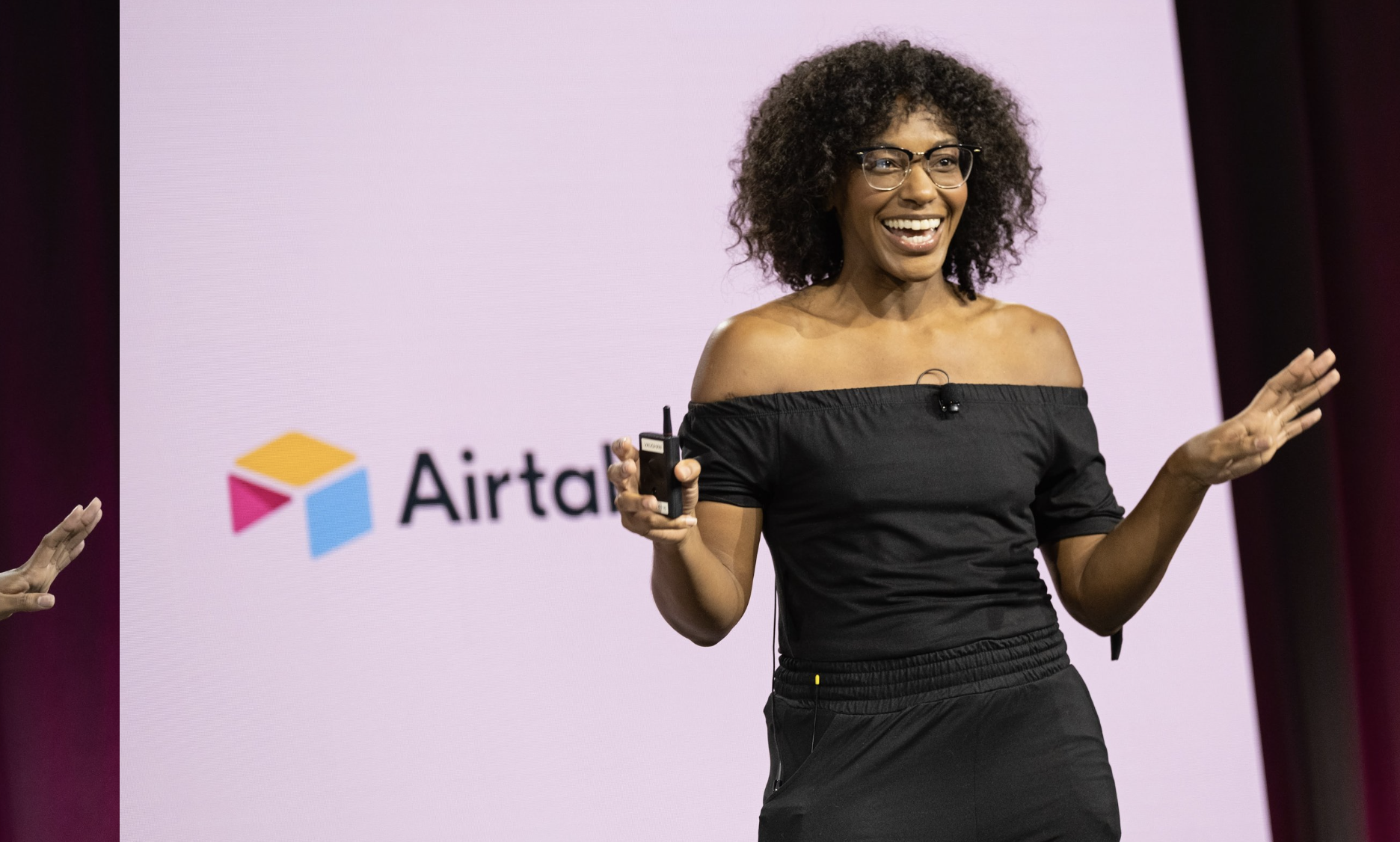
Gianna's Gem: How to Take Your Events to the Next Level
Hi there, and happy 2026!
I’m having a lot of conversations with clients who want to take their events to the next level - this is awesome! I love that events are back and there’s a desire to continue to optimize them. I wanted to share some of the secret sauce more broadly with you gems in hopes that it will give you some food for thought as you start planning what your event strategy looks like in 2026…
By now, if you’re reading this, you’ve likely nailed the basics. You’ve got your planning documents lined up, your venue locked in or contract in progress, and you know exactly what your stakeholders need. That’s the foundation—and it’s critical.
But here’s where the magic happens: once the logistics are sorted, the real question becomes
How do you make this event unforgettable?
Because here’s the hard truth: your event can be flawlessly executed down to the last detail, but if your audience walks away bored, disengaged, or—worse—disappointed, you’ve missed a massive opportunity. Usually an expensive one.
The difference between good event planners and legendary ones? They never settle. They push beyond the paint-by-numbers approach and tap into creativity to craft something extraordinary. And that’s exactly what I want to help you do.
1. Master the Art of Surprise and Delight
Here’s my challenge to you: For every event—from intimate birthday parties to massive corporate conferences—aim to surprise and delight each attendee at least once.
The most memorable events are the ones you can’t stop talking about. Science backs this up: our brains are wired to remember novel, surprising stimuli. That’s why you’ll never forget your first trip to your favorite city, but visits five and six blur together.
The element of surprise gives your events that prized place in people’s memories. But I’m not talking about any surprise—I’m talking about moments of delight that make people say
“Well that’s clever!” or “I can’t believe they went to such lengths!”
Real-World Example: While at Google, I faced one of my most stressful requests ever. A top exec who was passionate about aviation wanted to skydive into our executive retreat’s welcome reception. We pulled it off (though it gave me my first gray hairs in my 30s), and the impact was incredible. It showed his human, playful side and got attendees excited in ways no icebreaker ever could. I still remember him showing me how he had to duct tape his loafers to his feet since he forgot to change into his sneakers - talk about a humanizing and humorous exchange after such a daring feat!
Another time, when Google’s self-driving cars were brand new, we secured test drives for our event—but could only accommodate a handful of people during lunch. To make it equitable, I hid golden tickets Willy Wonka-style under random seats. Before lunch, we announced everyone should check their chairs. Nobody felt left out because it was completely random, and the lucky winners had an unforgettable experience.
2. Create Smooth Transitions (Adults Are Just Tall Toddlers)
If you have kids, you know how challenging transitions can be. Here’s a secret: adults aren’t much different. You need to give them compelling reasons to move and make the transition enticing.
My wedding story: At a certain point during cocktail hour, my dad appeared brandishing a real saber. Everyone wondered what was happening as he corralled guests for the toast wielding what was more or less a sword. Then he raised the “sword” and used it to saber a champagne bottle—distributing champagne to guests in glasses bearing their table numbers. A potentially awkward transition became one of the wedding’s most memorable moments - the male guests couldn’t stop talking ot my Dad and asking questions about how he learned this trick.
Other transition tactics:
• Hire a local marching band to parade attendees into the general session
• Use a sleight-of-hand artist as a “Pied Piper” to lead people to the next venue
• Play energizing pump-up music or make dramatic announcements
• Deploy food (the ultimate motivator)—ice cream carts, churro stations, popcorn, anything mobile that people will follow
The golden rule: Always pull your audience toward the next experience. Never push them.
3. Eliminate Pain Points Before They Happen
Great events anticipate attendee needs before they arise. This means thinking through every possible friction point in the attendee journey.
Start with the basics:
• Clear signage (people shouldn’t have to search for anything)
• Comfortable seating (invest in quality chairs for long sessions)
• Temperature control (always err on the side of slightly cool)
• Accessible power outlets and WiFi that actually works
• Dietary accommodations clearly labeled and plentiful and strategically placed to minimize wait time and lines
• Quiet spaces for people to meditate and recharge
Pro tip: About a week before your event, conduct a deep-dive attendee journey audit. Walk through every single touchpoint and ask:
“What could go wrong here? How can we make this smoother?” It’s not always fun, but it works. Every. Single. Time.
4. Design for All the Senses:
The best events engage all five senses, not just sight and sound.
Sound: Give your event its own soundtrack. Background music during arrivals can energize or calm attendees. Walk-on music for speakers sets the tone. Think about how music transforms movies—your event deserves the same treatment.
Smell: Hotels spend millions on signature scents. You can use fresh pine to invigorate, or fresh-baked cookies to lure people to your booth. I’ve even created signature scents for events and given take-home candles to guests.
Taste: Food creates powerful emotional responses. Ask yourself: Do I want energizing food? Comfort food? Communal sharing? I once attended an evening keynote where guests were served champagne and caviar as they entered the general session—immediately setting an elevated, celebratory tone for the entire conference. I’ve also had wild success with cooking demos that captivate the senses and also are great at team building (like baking bread or making pizza in a woodfired oven).
Touch & Sight: Consider everything from the texture of materials to lighting that shifts throughout the day. These details compound to create an immersive experience that feels luxurious, relaxing, brings the outdoors in, or sets the right tone you’re evoking.
5. Evoke Intentional Emotions
Speaking of evoking - Surprise and delight should be first on your priority list, but they can’t be the only emotions your attendees experience. The best planners understand how to tap into the full range of human emotions.
Remember: Actions are inspired by emotions. If you want attendees to follow through on your call to action, identify what you want them to feel—this will influence what they think and do.
Nostalgia is incredibly powerful. Sequoia’s camping-themed CEO retreat taps into summer camp memories. WIZ’s booths always feature nostalgic references like Blockbuster video or a Sleepover party. Salesforce’s Trailhead events use camping themes complete with animals and projection-mapped waterfalls. When I need to evoke nostalgia, I host s’mores-making dessert receptions around a campfire—it reminds people of storytelling as kids and helps them bond.
Excitement and celebration can be created through unexpected elements—like that champagne and caviar entrance I mentioned earlier.
Trust and comfort are built through clear communication, comfortable spaces, and attention to attendee well-being.
The Bottom Line
Taking events from good to legendary isn’t about having a bigger budget or more resources. It’s about never settling for good. It’s about thinking beyond the checklist to create moments that surprise, transitions that delight, and experiences that engage all the senses.
Start with one thing. Pick one element from this list and implement it at your next event. Then build from there. Excellence isn’t built in grand gestures—it’s built in the accumulation of small, intentional choices.
The secret to life-changing, maybe even world-changing events? Simplify how much you’re doing, and take the RIGHT moments from ordinary to extraordinary.
And now you’ve got a few techniques to do exactly that.
XX,
Gianna
What I’m loving this week: And as a reminder, you can find all my favorite partners and products here.
Inspiration for the new year from the soul: I met David Fischette at a BizBash Leaders Summit in Puerto Rico several years ago and was instantly drawn to his energy. He has a style and charisma about him that is magnetic and we went on to become industry friends and partners. I was thrilled to purchase his first book which is the perfect antidote to the winter doldrums - a bone broth for the soul. Hello, Fine Friends is a collection of real-life reflections, with each short chapter capturing a moment of wonder, gratitude, vulnerability, or revelation — the kind that often passes unnoticed in the rush of life.
This book is a companion for the quiet moments, which I am embracing in January — a collection you can open anywhere and always find something that meets you right where you are. Every story stands alone, yet together they reveal a journey of creativity, friendship, and personal growth. Each piece invites you to pause, reflect, and ask yourself how you might see, feel, or respond differently in your own life. These are simple stories about ordinary days, offered in hopes that they might spark extraordinary thoughts.
---
Gianna Gaudini is an event strategist, advisor, and author of the Amazon bestselling book “The Art of Event Planning.” She’s held leadership roles at Google, AWS, SoftBank Vision Fund, and Airtable, creating unforgettable experiences that drive business results. For more insights on creating exceptional events, visit GiannaGaudini.com or connect with her on LinkedIn.
Interested in having your product or venue featured in Gianna’s Gems? Reach out at gianna@gaudini.com
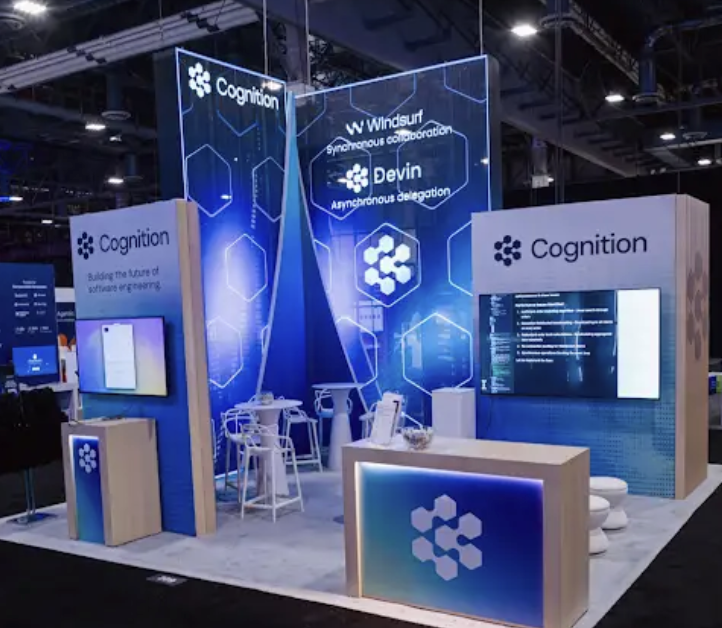
Gianna’s Gianna's Gem: How We Cut Through 60,000 Attendees at AWS re:Invent With a Poker Tournament
Hi there,
Last week, I attended the “Super Bowl of tech events”, AWS Re:Invent. An event I formerly planned while on the AWS Training and Cert team, and now as a consultant, help clients attend and stand out in meaningful ways. It’s an event that is a necessary evil (IMHO) as there’s the cost in NOT showing up when your competition is there, but it’s also extremely challenging to get attendee attention in an event with 60K attendees and 500 events happening simultaneously.
This year, I wanted to try something different…an executive event so magnetic that attendees would remember it days later. The concept? A poker tournament that proved sometimes the best business conversations happen when you're betting on a pair of jacks.
There's a reason why tech executives—from the All-In podcast hosts to Silicon Valley's most successful founders—are obsessed with poker. It's not just a game; it's a masterclass in decision-making under uncertainty, reading people, managing risk, and knowing when to go all-in. Poker mirrors the executive experience itself: incomplete information, calculated bets, and the ability to maintain composure when the stakes are high.
Let me break down why this event succeeded in executive engagement—and how you can apply these principles to your next high-stakes gathering.
The Hook That Actually Hooked Them
Here's the thing about executive events during massive conferences like re:Invent: your audience is drowning in dinner invitations and cocktail hours. Everyone's offering drinks. Everyone's promising "networking." So how do you stand out?
Gianna's Gem: The best event invitations don't promise networking—they promise an experience that’s engaging and offers a clear CTA (call to action).
This event led with a poker tournament, and the prize was worth playing for: two US Open tickets and VIP hospitality (valued at $3K). As one attendee shared with me during the cocktail hour, "That's what got my attention." Not another wine-and-cheese reception. Not another "please come network with us" ask. An actual, competitive, engaging activity with a prize that signals "we know you're successful, and we're offering something worthy of your time in an intimate setting where we’ll also feed and entertain you."
Poker is also a "birds of a feather" signal. When you invite executives to a poker tournament, you're not just offering entertainment—you're curating a room of people who share a common language, appreciate strategic thinking, and understand the thrill of calculated risk. It's instant bonding through shared values.
The psychology here is brilliant. Poker tournaments create what behavioral economists call "active participation"—you're not just showing up, you're invested. You're thinking. You're engaged. And most importantly? You're sitting next to someone for extended periods, which is how real relationships actually form.
Layering Delight and elevating emotion strategically: The Magician Element
But here's where this event went from good to unforgettable: we brought in a magician. Not just any magician—a skilled performer who wove card tricks into the poker theme and created awe and delight before the tournament got started. The laughter and delight that rang out in the air when he shocked and awed the most discerning and cerebral executives set the mood that this was going to be a memorable event of Executive caliber. PS - Dennis is my favorite magician in residence from The Battery and you can book him using a discount code for my Gems here.
Second, we had an AI-generated portrait station where attendees could get custom caricature drawings generated by a bot in real-time. This wasn't just entertainment; it was experiential. While guests waited for their portraits, they naturally networked and filmed the cute bots (and then shared on their social feeds). When they received their drawings, they immediately pulled out their phones to share on social media—tagging the event, tagging each other, creating organic buzz that extended far beyond the room.
Gianna's Gem: The best events create moments of unexpected delight that disrupt the "just another corporate dinner" narrative and elevate emotions which later translate to brand affinity as your brand is associated with positive emotions and experience.
Think about the emotion this creates. You're at a business event, but suddenly you're experiencing genuine wonder. That magician isn't just entertainment—he's a pattern interrupt. He's creating that "you had to be there" moment that makes attendees want to share the experience. It's story-telling-worthy without trying too hard. It's memorable without being gimmicky.
The tie-in to the poker theme shows intentionality. This isn't random entertainment; it's curated to enhance the narrative of the evening. Cards. Strategy. The element of surprise. It all coheres.
The Psychology of Premium Food & Drink
Now let's talk about what happened before and after the tournament during the 7-8pm and 10-11pm reception windows. This is where the strategy is in the details and execution. The menu was enticing and premium:
Raw bar
Grilled and carved tomahawk steaks, salmon
Poke Bar
High quality passed appetizers
Premium wines, cocktails and ports
Gianna's Gem: Exceptional food and wine aren't luxuries at executive events—they're neurochemical strategies for building trust and closing deals.
Here's what most people miss: when we share exceptional food and drink, our brains release oxytocin—the bonding hormone. Cortisol drops. People feel like they’re being taken care of and feel gratitude. That executive who was skeptical about your pitch? They just shared a perfectly seared tomahawk steak and bourbon with you while discussing their favorite vacation spot. You're no longer vendor and client—you're two people who just had a memorable experience together.
The raw bar and premium wines signal something else crucial: "We value quality, and we value you." These choices say, "We're not cutting corners on this relationship."
And let's be honest—at a massive conference like re:Invent, where attendees are running between sessions and grabbing whatever they can, offering a genuinely excellent meal solves a real pain point. You're not just feeding them; you're rescuing them from another mediocre beer and pizza experience.
The Intimate Architecture of Poker Tables
Here's something I love about a poker tournament for Executive event design: poker tables force intimate conversation.
Unlike cocktail receptions where people drift and network superficially, poker creates what I call "enforced intimacy"—you're literally sitting shoulder to shoulder next to people for extended periods. But here's the magic: rather than feeling stuck at a dinner table next to people, you actually start to bond at these tables and get to know the other players in a more authentic (rather than forced) networking setting.
Gianna's Gem: The best business relationships aren't built in 30-second elevator pitches—they're built in 30-minute conversations where business happens to come up naturally.
While you're focused on your cards, conversations naturally spring up around your kids, your company challenges, your golf game, your thoughts on the keynote you just saw. The poker becomes the vehicle for the conversation in a subtle way.
The reception windows (7-8pm pre-tournament and 10-11pm post-tournament) were strategically set as well and intended to give our sales and leadership opportunities to circulate, make introductions, and capitalize on the goodwill created by the experience. People who just had fun together are far more receptive to business conversations and naturally start inquiring more about the products (people psychologically feel a need to repay positive gestures).
Giveaways That Keep Giving
The event didn't stop when guests left. Three smart takeaways ensured the evening had durability for our brand:
AI-generated caricature drawings - Every attendee left with a personalized piece of art. This wasn't just a standard giveaway; it became another interactie component of the experience that delighted people, generated social posting/videos of the cute AI drawing bots, and became a conversation starter that sits on someone's desk for months after the event, reminding them of the positive experience they had wth our brand.
Custom card decks - Branded but tasteful, these reinforce the poker theme while serving as a practical item people will actually use and see regularly (and over the years) as a reminder of our event, whether they’re used for playing card games or performing magic tricks!
The US Open tickets prize - This created social sharing opportunities throughout the event ("Who's winning?" "What's at stake?") and post-event as the winner celebrated their prize on social and via word of mouth.
We created a physical prize for the Poker Tournament winner (DM me for a photo of what this was!) so they could place it proudly on their desk and likely share about it on social and with many other people they encountered daily in meetings, etc.
Gianna's Gem: Great event swag isn't about randomly placing your logo on merchandise that will likely be chucked —it's about creating physical reminders of the emotional experience you created together.
These weren't random tchotchkes. Each item tied back to the experience and served as a memory anchor. Months from now, when that executive sees their caricature or shuffles those custom cards, they're not thinking about your product—they're remembering how you made them feel.
The ROI of Experiential Executive Events
Let's talk business impact. Events like these cost more than a standard dinner. The magician, the premium food, the prizes, the custom giveaways—it adds up. So why is it worth it?
Because you're not buying dinner—you're buying mindshare.
At a conference with 60,000+ attendees and hundreds of competing events, you created the one people actually attended and talked about / shared about afterwards. You created the one that felt exclusive without being exclusionary (we had different levels so everyone felt they could participate, and others who just wanted to watch as spectators which was also entertaining). You created real conversations, not forced networking.
And here's what research consistently shows: deals happen when relationships exist. Relationships happen when shared positive experiences create trust. Trust happens when people let their guard down. And people let their guard down when you create an environment that's genuinely enjoyable—not transactional.
Key Takeaways for Your Next Executive Event
If you're planning a high-stakes executive event, here's what this poker tournament teaches us:
1. Lead with the hook, not the ask
Don't invite people to "network." Invite them to compete, experience, enjoy.
Make the experience the story, not your company.
2. Layer your experience strategically
Activity (poker tournament) = engagement and enforced conversation
Surprise element (magician/AI photo bot) = delight and shareability
Premium F&B = trust-building and pain point elimination
Structured timing (pre/post reception) = sales opportunities
3. Design for the story they'll tell
"We went to another vendor dinner" vs. "You won't believe the poker tournament they threw"
Which story would you rather have attendees telling?
4. Create memory anchors
Physical items (caricatures, card decks) that trigger positive recall
Prizes that generate social proof and aspiration
Moments (card tricks, winning hands) that become "you had to be there" stories
5. Solve real problems
At a massive conference, great food solves the "I'm exhausted and haven't eaten well" problem
At a week of networking, structured activity solves the "another awkward cocktail reception" problem and adds some play, delight and awe into the long week
Memorable experiences solve the "how do we stand out" problem
The Bigger Picture
What I love most about this event is that it understood something fundamental: in an age where everyone's doing "immersive experiences" and "activations," sometimes the most innovative thing you can do is create genuine human connection.
Poker isn't new. Magic isn't new. Great food isn't new.
But combining them thoughtfully, with strategic timing, premium execution, and authentic hospitality? That creates something your competitors can't easily replicate—because replication requires understanding not just what you did, but why it worked.
Gianna's Gem: The best events aren't the ones with the biggest budgets—they're the ones where every dollar spent ladders up to a cohesive experience that makes people feel something.
This poker tournament didn't just feed executives and hope for the best. It created an emotional journey: anticipation (the invite), excitement (the competition), delight (the magic), connection (the intimate table conversations), satisfaction (the food and wine), and lasting impression (the takeaways).
That's not event planning. That's experience design. And in the world of high-stakes executive engagement, that's what separates the forgettable from the unforgettable.
In a world where AI can automate so much, the experiences we create—the moments of genuine connection, delight, and human warmth—become more valuable, not less.
So the next time you're planning an executive event, ask yourself: Am I designing an obligation or an experience? Am I offering another dinner or a story they'll want to tell?
The answer to that question might just determine whether your event gets forgotten by Tuesday or remembered for years.
What I'm Loving This Week: Monet
Speaking of revolutionizing the events industry, I'm thrilled to announce that I've joined an early stage but very hot event tech startup, monet.io as an advisor.
Here's what really blows my mind: Monet can generate entire showfloor layouts for conferences and expos—something that traditionally takes weeks of back-and-forth with venue teams, agencies, sponsors, and operations. The platform doesn't just create a generic floor plan; it uses intelligent algorithms to recommend optimal sponsor booth placements based on traffic flow, sponsor tier, and strategic visibility.
Think about what this means for event planners managing large-scale conferences: instead of manually juggling sponsor requirements, attendee flow, and venue constraints in CAD software or PowerPoint, Monet does the heavy lifting while you focus on the strategic decisions. It's like having an expert event designer and operations manager working 24/7 on your team.
For sponsors, this means better ROI—their booth placement isn't arbitrary, it's data-driven. For attendees, it means better navigation and experience. For planners, it means hours (sometimes days) of work condensed into minutes.
If you're managing complex events—especially in the enterprise space where showfloors, sponsor management, and multi-stakeholder coordination are involved—I encourage you to check out what the Monet team is building. They're not just creating software; they're creating space for event professionals to do what we do best: design experiences that matter. Drop me a line if you want an intro and a Gianna’s Gems VIP discount on their product.
Learn more at monet.io
Gianna Gaudini is an event strategist, advisor, and author of the Amazon bestselling book "The Art of Event Planning." She's held leadership roles at Google, AWS, SoftBank Vision Fund, and Airtable, creating unforgettable experiences that drive business results. For more insights on creating exceptional events, visit GiannaGaudini.com or connect with her on LinkedIn.
Interested in having your event or venue featured in Gianna's Gems? Reach out at gianna@gaudini.com
GIANNA'S GEM: GIANNA'S GEM: Why Smart Event Leaders Never Source Venues Alone
Hi there,
As you read last week, finding the right venue can be more strategic than one might think for events. As I’m thinking about the coming year and kicking off strategic planning with my clients, Third Party Event Contracting and Venue sourcing are top of mind! Let’s break down how to make your venue search more time and cost efficient, effective, and strategic so you can spend more time on the things you love.
Now…Here's what separates sophisticated event leaders from overwhelmed ones: they understand that venue sourcing isn't a task to muscle through on your own—it's a strategic opportunity that demands the right partner at the right time. Whether you're evaluating 15 cities for a leadership summit or negotiating complex event meeting space for a multi-day conference, how you source determines not just what you pay, and what contract terms you secure, but what you're able to create.
The most successful planners I know approach venue sourcing like master architects approach construction: they know when to leverage technology for efficiency and when human expertise becomes non-negotiable. Let me break down why going it alone costs you more than just time—and how the right sourcing strategy actually costs you nothing.
Your Strategic Partner Is Your Secret Weapon for Budget Optimization and Seamless Execution.
When you try to source venues directly without a strategic intermediary, you're leaving money on the table in ways that compound quickly:
You're paying retail rates. Hotels price differently based on who's asking. A planner calling directly gets standard rates. An experienced intermediary with established hotel relationships and volume leverage gets preferential pricing that can mean 15-30% savings on your total budget.
You're missing negotiable concessions. Waived resort fees, complimentary meeting space, food and beverage minimums converted to cover room rental, early check-in for VIPs, upgraded suites, complimentary site visits—these aren't advertised perks. They're negotiated wins that require knowing what's possible, what's standard, and what language unlocks them. And often, the relationships involved matter when these concessions are requested.
You're absorbing hidden time costs. Every hour you spend comparing proposals, chasing down availability, clarifying contract terms, and managing revisions is an hour you're not spending on the strategic work that actually moves your event forward.
You're navigating without market intelligence. Which properties over-promise and under-deliver? Which sales teams are responsive versus those that ghost after signing? Which venues have hidden costs that appear only in final invoices? Intermediaries carry this intelligence—you're starting from scratch every time. Many of these intermediaries have site visited the properties or helped other clients with events and have insights that will prove golden when it comes to decision and execution time.
The Real Estate Agent Model: Premium Service That Costs You Nothing
Here's what transforms sourcing from expense to advantage: like real estate agents, professional venue intermediaries are paid commission by the hotel, not by you. The hotel has already budgeted for this commission as a standard cost of doing business—it's baked into their sales structure whether you use an intermediary or not.
When you work with an intermediary (like my sourcing partners and I) you get:
Preferential rates we negotiate through our relationships and volume
VIP treatment and concessions that aren't available to direct bookers
Expert guidance through complex venue vetting and contract negotiation
Complimentary site visit coordination and on-property support
Protection and advocacy if issues arise before or during your event
The hotel pays our commission from their existing budget. Your rate doesn't increase—in fact, it typically decreases because of the leverage we bring. This isn't an added fee; it's a standard industry practice that works in your favor when you know how to use it.
Think of it this way: would you buy a house without a real estate agent simply because "it's free to contact the seller directly"? Of course not—you'd miss critical negotiation opportunities, market insights, and protective advocacy. The same logic applies to venue sourcing, where the financial stakes are often just as significant.
When to Use AI Platforms: The Power of Exploratory Efficiency
Not every sourcing scenario demands a human intermediary—and knowing when to leverage technology is part of strategic sophistication. This is where AI-powered platforms like BoomPop, become invaluable (p.s. check our Gianna Recommends section below for more on why they are my fave online venue/event planning platform).
I’m prud to say I’m an advisor to BoomPop because they've solved a specific sourcing pain point brilliantly: they're perfect for smaller, less complex events where speed and efficiency matter more than intricate negotiation. That’s why sometimes I recommend an intermediary human planner to my clients, and other times I recommend BoomPop. No need to compete here - below is a breakdown on when to use AI and when to go with a human touch:
Use an ai platform for sourcing like BoomPop when:
You're in exploratory mode. Comparing pricing and availability across multiple regions or cities to determine feasibility? BoomPop's AI can surface options across geographies instantly, giving you the market intelligence you need to make strategic location decisions without spending days chasing down quotes.
Your event is straightforward. A one-day offsite with a single meeting space, AV, and standard F&B? This is BoomPop's sweet spot. Their platform streamlines sourcing for events that don't require complex breakout configurations, multiple function spaces, or extensive customization.
You don't need (or don't have time for) site visits. For secondary events, recurring team meetings, or situations where you're familiar with the market and just need efficient booking, BoomPop removes friction and saves you valuable planning hours.
Budget and time efficiency are top priorities. BoomPop can save you both money and coordination time for straightforward events, giving you a clear comparison of options without the back-and-forth of traditional sourcing.
The platform works beautifully as your first pass for exploratory research or your complete solution for simpler events. It's smart technology doing what technology does best: making straightforward processes faster and more transparent.
When Humans Become Non-Negotiable: Complex Events Demand Expert Partners
But here's where the equation changes: as your event complexity increases, human expertise shifts from "nice to have" to "essential for success." This is where my partner and I step in—and where the return on working with experienced intermediaries becomes exponential.
You need a human intermediary when:
You require significant concessions. Waiving meeting space rental fees, converting F&B spend to cover room costs, eliminating resort fees, securing complimentary suite upgrades—these aren't checkbox requests. They require relationship capital, market knowledge, and negotiation finesse that only comes from years of partnership with properties. We know which properties have flexibility, which concessions are realistic, and how to structure requests so hotels say yes.
Your venue needs are complex. Multiple breakout rooms, varied function space configurations, intricate AV requirements, phased arrivals, VIP accommodations, welcome receptions, closing dinners—when your event has layers, you need someone who can vet venue capabilities thoroughly and ensure operational feasibility before you commit.
VIP treatment matters. Site visits with decision-makers require white-glove coordination. Key stakeholder accommodations need to be flawless. Leadership expects seamless experiences. When reputation is on the line, you need an intermediary who commands respect at properties and ensures your group receives priority treatment.
You're navigating high-stakes negotiations. Contract terms, attrition clauses, cancellation policies, force majeure language—these aren't boilerplate details. They're risk management tools that protect your budget and your organization. We negotiate these terms as advocates for you, not as neutral parties hoping for a quick close.
You need a strategic advisor, not just a booking agent. Which venue aligns with your event objectives? How do you evaluate trade-offs between location, cost, and experience? What hidden operational challenges should you anticipate? These aren't transactional questions—they're strategic ones that benefit from seasoned perspective.
The Strategic Sourcing Decision Tree
Here's how sophisticated event leaders think about sourcing partners:
For exploratory research planning simple offsites and creating event websites/reg all in one platform → BoomPop
👉 Fast, efficient, budget-friendly, perfect for straightforward needs and executing a straightforward platform all in one
For complex, high-stakes, or VIP events → Human intermediaries (like us)
👉 Negotiation power, concession expertise, relationship capital, strategic guidance
For multi-phase programs → Hybrid approach
👉 Use BoomPop to explore options and narrow the field, then bring in human expertise to negotiate final terms and manage complex logistics
The common thread? Never source alone when partnership creates measurable advantage. And since that partnership costs you nothing—just like a real estate agent—the question isn't whether you can afford an intermediary. It's whether you can afford not to have one.
What This Means for Your Next Event
Every venue decision is actually three decisions in one:
Where should we host this event? (Market selection)
Which property best serves our objectives? (Venue evaluation)
How do we optimize budget while maximizing experience? (Negotiation strategy and relationship)
The right sourcing partner—whether AI platform or human intermediary—transforms these from overwhelming variables into strategic advantages. You gain market intelligence, preferential pricing, expert negotiation, and time back to focus on what actually makes your event successful: the experience you're creating for attendees.
The most successful events don't just happen—they're sourced strategically, negotiated expertly, and executed with the kind of partnership that makes complexity look effortless.
Questions about this? Book time here: 👉 intro.co/giannagaudini
Take my venue negotiation Master Class: 👉https://www.giannagaudini.com/learn-from-me
Gianna Gaudini is an event strategist, advisor, and author of the Amazon bestselling book "The Art of Event Planning." She's held leadership roles at Google, AWS, SoftBank Vision Fund, and Airtable, creating unforgettable experiences that drive business results.
What I’m Loving This Week: And for all my favorite vendors, partners and products, visit: https://www.giannagaudini.com/gianna-recommends
Better Events Podcast Curious about what it really takes to succeed in the world of corporate events? I had the pleasure of chatting with industry peers and leaders, Logan Clements and Mary Davidson on their Better Events Podcast to discuss:
How to design with intention.
Attendee journey frameworks
Common gaps hotels overlook when serving planners
Career shifts for those looking to level up
What sets corporate events apart and how to break into the space
Whether you’re a nonprofit pro or an event planner eyeing corporate gigs, have a listen for practical advice and behind-the-scenes insights from my career.
Listen on Spotify: https://lnkd.in/gKqYTpRN or
Apple Podcast: https://lnkd.in/gac2Qzhr
Psst - listeners also can get 20% off my masterclass with the code: GiannaVIP applied at checkout. https://lnkd.in/g7dby54r
Gianna Gaudini is an event strategist, advisor, and author of the Amazon bestselling book "The Art of Event Planning." She's held leadership roles at Google, AWS, SoftBank Vision Fund, and Airtable, creating unforgettable experiences that drive business results.
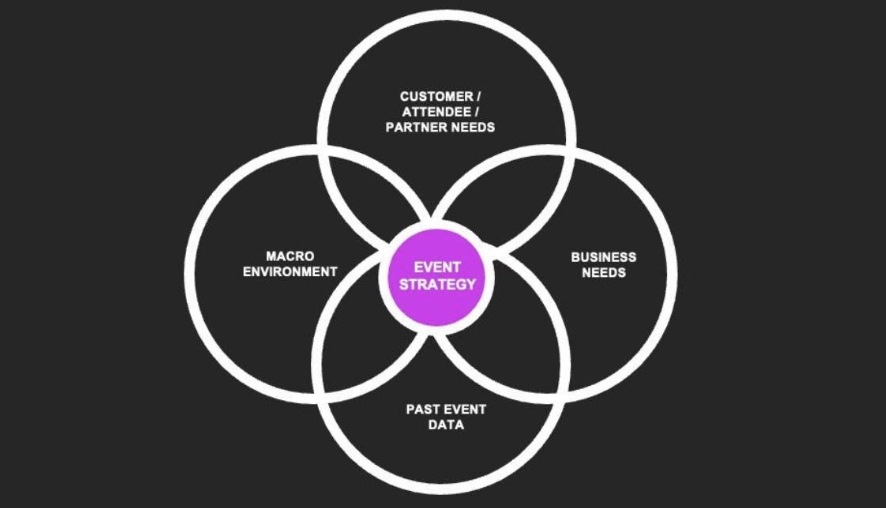
Gianna’s Gem: Stop Running Events. Start Building A Portfolio That Moves The Needle.
Hi there,
If you're reading this in Q4, you're in the perfect position to get ahead of the curve. While most event teams are scrambling to close out this year's calendar and reactively filling next year's dates, the truly strategic organizations are using this window to step back and build an intentional portfolio for the year ahead.
This is exactly why Q4 is my favorite time to work with clients—there's still time to influence budgets, challenge assumptions, and architect a portfolio that's tied to business priorities before you're locked into legacy commitments and resourcing pressures. The difference between organizations that plan their portfolios in Q4 versus those that piece them together in Q1? About six months of strategic advantage, clearer ROI stories, better sponsorship opportunities and pricing, and the confidence that comes from knowing every event on your calendar has a defensible reason for existing. Let's talk about why that matters and how to make it happen
The Business of Events vs. The Events Business: Why Strategic Portfolio Planning Is Your Competitive Edge
Here's something that I’m thinking a lot about lately: the difference between just running events and strategically deploying a portfolio of experiences that moves the business needle. After years of leading events at Google, Airtable, AWS, and now consulting with AI, VC and tech companies of all sizes, I've seen too many organizations treat their event calendar like a random collection of activities rather than what it should be—an integrated, purposeful channel designed to guide audiences through every stage of their relationship with your brand.
Let me tell you why this matters more than ever, and how to get it right.
The Fundamental Shift: Speaking Business Language, Not Just Event Language
Most event teams are stuck in what I call "the events business"—focused on logistics, budgets, task lists, and execution. Yes, those things matter. But they're table stakes. The transformational leap happens when you shift to "the business of events," where strategy leads, outcomes drive decisions, and every single experience is purposefully designed to achieve specific business results.
This isn't semantic wordplay. It's the difference between being seen as a cost center and being recognized as a revenue and relationship driver. When you speak in business language—pipeline acceleration, customer lifetime value, market penetration, brand equity—now you’re driving real outcomes for your company, not just executing someone else's vision. I’ll never forget at my very first agency role, my CEO, Dave Mana, told me “Never be an order taker”. 22 years later, I have never forgotten that and help my clients and agencies also think more strategically rather than tactically.
Your Event Portfolio Is Not Just A Calendar—It's An Integrated Ecosystem
Let’s clear up a misconception: An event portfolio isn't a calendar of things happening. It's an integrated series of events, specifically selected and engineered to motivate audiences to act at each stage of their relationship with your company.
Think about that. Every event should have a strategic reason for existing based on where your audience is in their journey with you. The customer journey has fundamentally changed, and we're now responsible for the entire lifecycle—pre-sale and post-sale, acquisition through expansion, awareness through advocacy.
Your flagship customer conference? It's phenomenal for deepening relationships with existing customers, building community, and driving adoption. But it's actually one of the least effective ways to reach new prospects. That reality should fundamentally shape how you allocate resources, when you plan hosted conferences during your sales cycle and the split between your brand and business goals and how you’ll achieve them with each type of events.
Regional roadshows? They're your secret weapon for prospect acquisition. Go to where your customers and prospects are instead of expecting them to travel to you.
Third-party industry conferences? Fish where the big fish are. They’re powerful for brand awareness, thought leadership, meeting new customers and nurturing your executive prospects and also reassuring existing customers that you're still relevant in the market. Plus, there’s an opportunity cost of NOT showing up to these when your competitors are there in a big way.
The Portfolio Planning Process: Three Strategic Steps
After conducting countless portfolio assessments with different size organizations, I've refined this into a systematic approach that actually works. To distill it down into a high level overview:
Step 1: Current State Assessment—Know Where You Stand and What Else is Happening in the World
This is where brutal honesty meets strategic opportunity. You need two critical inputs:
The Macro Environment: What are the industry trends? What are competitors doing with their event strategies—where are they exhibiting and at what level? What's their hosted event approach? What geographical and event marketing trends are shaping the landscape?
The Internal Assessment: Your current event strategy, goals, and actual results. The reality of your portfolio by event type and customer journey stage. Your spend distribution between owned and third-party events, and within sponsorships, your ratio of booth investment to activation investment.
The intersection point between these two assessments is where your event strategy should be built. Complete an honest portfolio assessment for your current mix. Are you too heavily invested in one area? How does your current distribution compare to your overall marketing objectives?
This moment of clarity is gold. I've watched organizations realize they're spending 70% of their budget on customer-focused events while their biggest business challenge is new logo acquisition. That's a strategic misalignment that no amount of execution excellence can overcome.
Step 2: Develop Clear Portfolio Objectives—Connect Events To Business Strategy
This is where you get rigorous about prioritization and allocation. The key question isn't "What events should we do?" It's "Given our business priorities, where should we concentrate our investment?"
Pick your priorities. Choose two primary dimensions from: Product, Objective, Industry, Audience Type, Geography, or Department. You cannot be all things to all people. The companies that try to evenly distribute their event investment across all dimensions end up creating mediocre impact everywhere instead of market-moving momentum somewhere specific.
Ask yourself the hard questions (or have someone like me guide you through them):
What's the right balance of objectives? (Awareness vs. lead generation vs. pipeline acceleration vs. customer adoption vs. brand awareness, vs. loyalty and advocacy)
Who are our priority audiences?
What are our priority industries and geographies?
Which press and/or analysts matter most? Which partners and competitors?
Which products or solutions are most important right now?
What about pure brand plays?
What other marketing campaigns are we planning for the year that events can feed into?
Once you have clarity on prioritization, establish your recommended distribution. I typically see effective portfolios allocating investment between owned and third-party events based on their acquisition vs. retention goals, then layering in spend by marketing objective to ensure balance.
Gianna’s Gem: A general rule of thumb is that earlier stage companies typically spend 60% of their budget on third party hosted events and 40% on owned events, whereas more mature companies switch to 60% budget spend on owned events vs. 40% spend on third party events.
Step 3: Select Appropriate Events—Format Matters More Than You Think
Now comes the tactical execution of your strategy. Three critical steps here:
Select the correct event formats based on what you're trying to achieve. Roadshows for prospect acquisition. Customer conferences for community building and expansion. Third-party conferences for awareness and ecosystem alignment. Digital events or field marketing training days for scalable education.
Invest time and budget in activating accordingly. A strategic portfolio with poor execution is just an expensive plan. Your activation approach should be as thoughtfully designed as your strategy.
Establish consistent evaluation criteria so you're comparing events against objective standards rather than gut feelings or political pressure. Every event should be measured against the same framework aligned to your portfolio objectives.
Gianna’s Gem: There is NO BAD DATA, so no matter what, measure what happens at your events and you will walk away learning something - marketing gold!
Why This Matters: The Value Proposition of Strategic Portfolio Planning
When you approach your event program as a strategic portfolio rather than a collection of activities, everything changes:
Your investment decisions become defensible because they're tied to business priorities
Your team can communicate impact in language executives actually care about
You can identify gaps and redundancies that are draining resources
You create a framework for saying no to events that don't serve your strategy
You shift from reactive to proactive, from tactical to strategic, from cost center to growth driver
The organizations I work with that embrace portfolio planning don't just run better events—they fundamentally transform how their companies view and value the event function. They earn seats at the strategy table because they speak strategy language and deliver measurable business outcomes.
The Bottom Line: Strategy + Execution = Sustainable Event Excellence
Strategic portfolio planning isn't about making your event calendar more complex. It's about making it more intentional and repeatable. It's about having the clarity and conviction to invest heavily in the experiences that will genuinely move your business forward, and the discipline to divest from those that won't and optimize along the way based on what you learn.
This is the work that separates good event programs from truly exceptional ones. This is how you build sustainable excellence rather than scrambling event to event, quarter to quarter, wondering if your events are really achieving the results you desire and are worth the investment.
Some strategies are worth the investment in getting right. This is one of them.
What I'm Loving This Week: And for all my favorite vendors, partners and products, visit: https://www.giannagaudini.com/gianna-recommends
The Inner Game of Tennis by W. Timothy Gallwey
I love playing tennis… but that’s not what drew me to this book. The Inner Game of Tennis revolutionized my understanding of performance under pressure, and it's become one of the most influential books in my approach to both events and strategic planning. Gallwey's central insight is that your biggest opponent isn't external—it's the interference you create in your own mind.
He introduces the concept of Self 1 (the conscious, telling self) and Self 2 (the unconscious, doing self). Self 1 is the voice that judges, criticizes, tries to control every detail, and creates performance anxiety. Self 2 is your natural ability, trained reflexes, and intuitive capacity to execute at a high level when you get out of your own way.
Why I loved it: This framework completely transformed how I approach high-stakes planning and execution. The best event strategists I know have learned to quiet Self 1's anxiety and trust their trained judgment. They've done the work (the portfolio assessment, the stakeholder interviews, the data analysis), and then they trust themselves to synthesize that into clear strategic direction without overthinking it into mediocrity.
They know that peak performance comes from relaxed concentration rather than tight control. That's the mindset shift that allows you to present bold portfolio recommendations to executives without hedging, to make tough prioritization calls and to execute with conviction.
For anyone managing complex strategic initiatives, this book offers a mental framework that reduces interference and amplifies your natural strategic capability. It's taught me that confidence isn't the absence of doubt; it's the ability to act decisively despite it. Read it. Trust yourself. Execute brilliantly.
Ready to assess your current portfolio and build a strategic roadmap that connects your events to business impact? Let's discuss how portfolio planning can transform your program from successful to indispensable.
Book me here 👉 intro.co/giannagaudini
Let me guide your team 👉https://www.giannagaudini.com/learn-from-me
Gianna Gaudini is an event strategist, advisor, and author of the Amazon bestselling book "The Art of Event Planning." She's held leadership roles at Google, AWS, SoftBank Vision Fund, and Airtable, creating unforgettable experiences that drive business results.
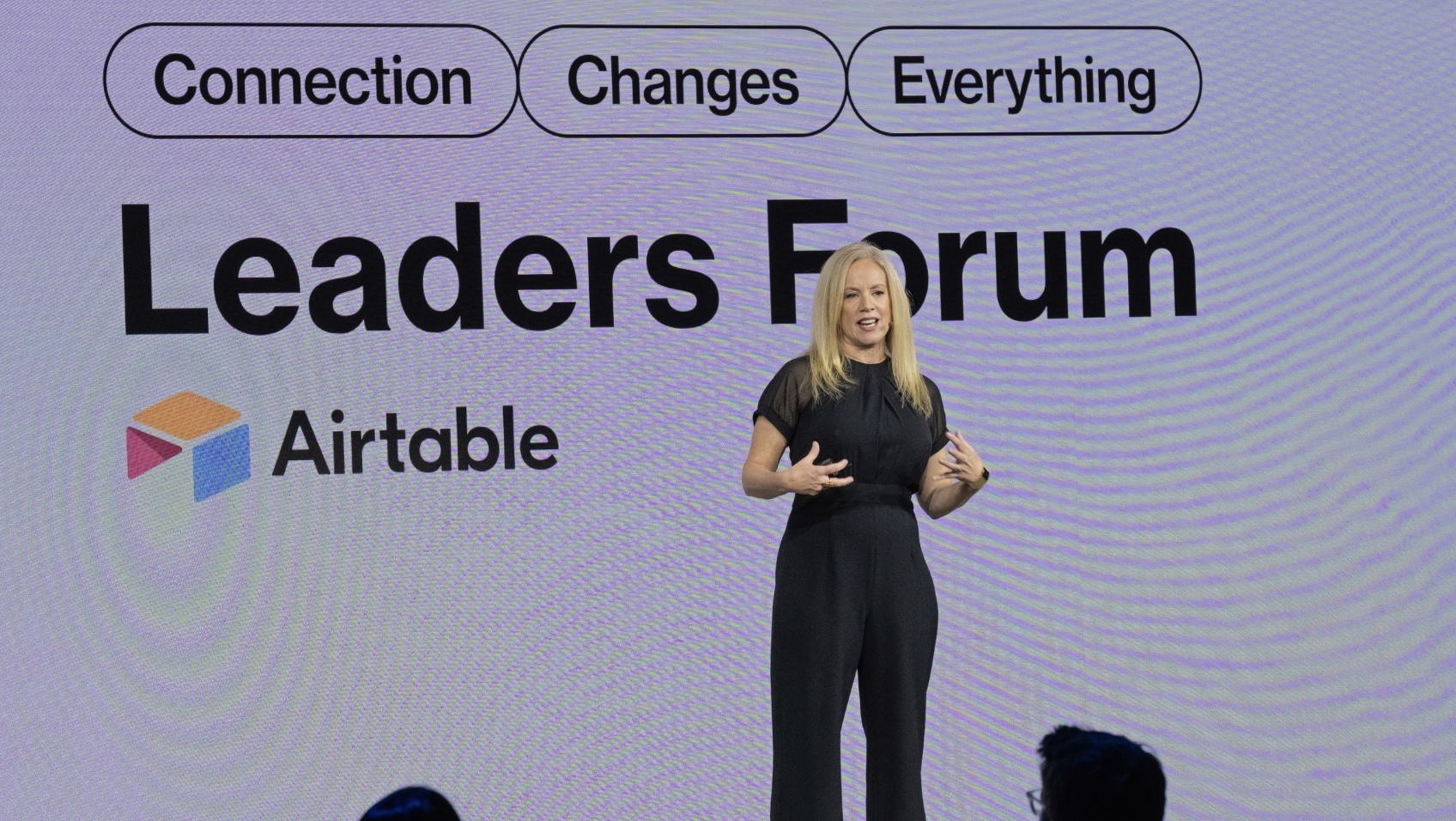
Gianna’s Gems: The Last Event You'll Ever Need to Justify to your CFO
Hi there,
From speaking to podcasting to planning…I'm buzzing with energy about the conversations around experiential design and measurable ROI. Here's the truth that every tech leader needs to hear: your attendees are drowning in sameness, and traditional conferences aren't cutting through the noise anymore.
The companies winning today aren't just hosting events—they're taking attendees on a journey that offers transformation, catharsis, and true value for the time their attendees dedicate to attending.
Why "Elevated Experiential" Isn't Just Buzzword Bingo
The difference between a traditional tech conference and an elevated experiential event isn't about adding fancy installations (though those help with certain brandbuilding and social sharing objectives). It's about fundamentally shifting how attendees interact with your content and each other.
Traditional tech conferences are information-focused. Attendees sit, listen, network awkwardly over watered-down, luke-warm coffee (if it hasn’t run out), and forget 80% of what they learned by Tuesday.
Elevated experiential events prioritize immersion and meaningful connections. They create emotional resonance with attendees that translates into lasting business impact.
Think multi-sensory experiences that reinforce key messages, unexpected moments of delight, white space in the agenda to reflect and connect, and event spaces designed for authentic relationship building. Success isn't measured by how many butts were in seats or scanned—it's measured by engagement quality and lasting impact.
Here's why this distinction matters: People remember experiences far better than presentations. When attendees participate rather than just observe, they retain more and apply learnings back at work. In a crowded conference landscape, experiential events stand out and create buzz that extends well beyond the event dates.
The Google Cloud Next Blueprint: Turning Conferences into Destinations
At Google Cloud Next, we didn't just host a conference—we built a world for attendees to enter and explore. Every year, we ideated a red thread theme to guide the entire experience. In 2018, our World's Fair theme transformed Moscone Center into a "campus" that invoked the energy, innovation, and promise of the future. The concept was to instill exponential hope and potential for a Google Cloud-empowered enterprise.
The magic was in the details: We created cohesion between disparate spaces through strategic branding and human-based wayfinding. Every environment was dynamic and celebratory, elevating the usual keynote-demo-training formula. Attendees encountered imaginative art installations, local culinary delights, and hands-on experiences like an AI MBA basketball demonstration.
The Showcase strategy: We divided the expo into 7 intentional zones with 80 custom interactive vignettes. Each installation provided product overviews through contextual narratives designed to evoke curiosity and conversation. These weren't just product demos—they were story-driven experiences that connected keynote content to real-world applications.
The Avenues concept: Inspired by effective civic planning, we created pathways within expo halls that hosted mini breakout pods, bookable meeting spaces, sponsor activations, and communal networking lounges. This wasn't accidental—it was architected community building.
From Demo to "Holy Sh*t" Moment: The Dev Conference Code Constellation
Want to see how we transform standard product demos into experiences that people can't stop talking about?
At our dev conference for one of my AI startup clients, we wanted to bring AI coding power to life in a way that was tactile, interactive, and left a lasting impression—all created with the help of their ai product.
The Code Constellation: We created a large fabric surface embedded with soft glowing constellations, where each star represented a function, variable, or coding language. As attendees pushed the fabric surface, their touch "connected" stars to reveal their own personalized code constellation. This installation perfectly mirrored how the company helps people connect ideas faster, clean up complexity, and accelerate clarity—turning scattered thoughts into beautiful, working logic.
The result: Attendees could literally feel the magic of AI amplifying their personal powers. We didn't just tell them about the product—we let them experience transformation in their hands.
This is what I mean by moving from "what" to "why" before tackling "how."
The Data-Driven Experience Design Framework
Here's how I use analytics not just to measure success, but to design better experiential moments from the start:
The Four-Bucket Strategy: I assess each of the below four buckets and how they impact what we want to invest time and resources into.
Business goals
Attendee goals/ROI
Macroeconomic environment
Historical data
Then, I establish clear weighting between brand goals and business goals so teams understand investment priorities as we map the experience (i.e. we want 80% brand and 20% business-related).
Real-time optimization: I track engagement through event apps, social listening, and direct feedback. Remember my Diet Coke example at Google Think events? When an attendee started posting about wanting Diet Coke, we pivoted quickly and made it happen. Listen to what your attendees are saying in real-time and lean into that energy.
Personalization at scale: Like how TED allots a certain dollar amount ot attendees to spend on “buying” their own swag from their premium store to take home in a gifted suitcase (which they ship home for you). When you make attendees feel seen individually within a large-scale experience, that's when magic happens and why they remember you for years to come.
Historical data as crystal ball: I use past event data to predict what will create memorable moments and eliminate pain points. The Google Next food court redesign came from analyzing three years of attendee complaints about lunch logistics.
Beyond Vanity Metrics: What Actually Matters
ROI-driven decision makers want proof that experiential investments drive business results. Here's what I track beyond traditional attendance numbers:
Social proof and word-of-mouth: Are you getting organic social mentions? How are people describing your event when no one's asking them to? I got a quote from a Leader I support saying other marketing leaders were asking how we created such an impressive experience on budget—that's gold.
Relationship temperature: Are executives from prospect companies still talking about how much they enjoyed the event months later when deals are up for renewal? Are analysts and press writing positive things about you after the event?
Next-step optimization: How does the event improve subsequent interactions? Are people more likely to attend demos, read emails, or take meetings after your experiential touchpoint?
Community amplification: What is your community saying organically? Brand affinity is a leading indicator of customer lifetime value.
Look beyond vanity: Sure, you can track social shares and demo completions, but dig deeper. What is that engagement really doing for pipeline and revenue?
Breaking the Panel-and-Keynote Prison
Tech events default to panels and keynotes because they feel safe. But safe doesn't stand out, and standing out is more valuable than blending in.
My framework for format innovation:
Don't make your event another meeting: How do you make experiences co-creative and exciting for people to choose to attend?
Energy-driven scheduling: People are more creative at night. That's why we served champagne, caviar, and chocolate before the opening keynote at our women's summit.
The 70:30 rule: 30% prepared content, 70% audience-led content. Read audience energy and engagement cues, then adapt.
Un-conference formats: Fishbowl discussions and Customer Share Circles create space for authentic peer learning that attendees can't get anywhere else.
Surprise and delight: At Goop events, they didn't announce special guest speakers for the closing keynote so people stayed engaged until the end.
The Trust Economy: Why Venue Partnerships Make or Break Experiences
Working with amazing properties like The Four Seasons or Auberge and other brands I love isn't just about prestige—it's about partnership that elevates every touchpoint.
Build relationships before you need them: I invest time in understanding venue capabilities, challenges, and goals before event planning begins.
Create win-win scenarios: We gave venues positive exposure, donated items they needed that we purchased anyway, and made their jobs easier by understanding approval processes upfront.
Collaborative enhancement: Utilize hotel partnerships for enhanced F&B experiences, bringing outdoor elements indoors and vice versa. Attendees are happy, and I’ve often had the hotel decide to adopt the requests we made into their evergreen menus and experiences for guests.
Proactive problem-solving: No last-minute requests. Every detail planned and communicated in advance so the focus onsite is on attendee experience, not logistics firefighting. De-risking and scenario planning is good for the hotel, for your team and your attendees.
Share the success: I always allow venues and agency partners to share in the recognition. Success is never a zero-sum game. Every event manager who’s ever gone above and beyond will receive an email to their manager from me, and other tokens of gratitude for their teamwork and effort.
The Cost of Playing It Safe
Here's what analytical, ROI-driven decision makers need to understand: the cost of NOT creating memorable experiences in competitive markets is exponentially higher than the investment in getting it right.
Breaking through the noise is more valuable than making zero impact in a crowded space. There's no such thing as "bad data" when you dare to be different, test, and iterate based on results.
Ruthless editing and prioritization: What will drive the most ROI, and what can you cut? Maybe breakfast or florals aren’t worth the budget if you can invest in an unforgettable closing experience instead.
Scale beyond the investment: Ensure your experiential elements can scale beyond the event through video content, case studies, campaigns, and roadshows. One great installation can fuel marketing for months.
Word-of-mouth multiplication: When you show executives something they've never seen before that inspires awe while using your product, they become your most credible salespeople.
This is why people invest in art—because beauty, surprise, and emotional connection create value that compounds.
The Transformation Formula
At the core of every successful experiential event is a simple truth: we're not just moving people from Point A to Point B. We're creating space for them to have catharsis and transformation.
Start with your event brief focused on what you want attendees to feel before everything else. Where are they emotionally when they arrive, and where do you want them to be when they leave? After you nail the feeling, then focus on what you want them to think, and finally, what you want them to do.
Moving from 'what' to 'why' before tackling 'how' is the difference between events people attend and experiences people can't stop talking about.
Your competitors are still hosting conferences. You have the opportunity to architect transformation.
The question isn't whether you can afford to invest in elevated experiences. The question is whether you can afford not to.
What I’m Loving this week: For all my favorite vendors, partners and products, visit: https://www.giannagaudini.com/gianna-recommends
Event Platform and podcast: If you're serious about creating experiential events that drive measurable business impact (and keeping your sanity while doing it), Bizzabo deserves a look. They're not just a registration platform—they're a true Event Experience Operating System that supports the entire journey from planning through post-event analysis.
Learn more:Bizzabo.comand Listen to my episode that dropped last week:Experiential Event Planning & Cognition
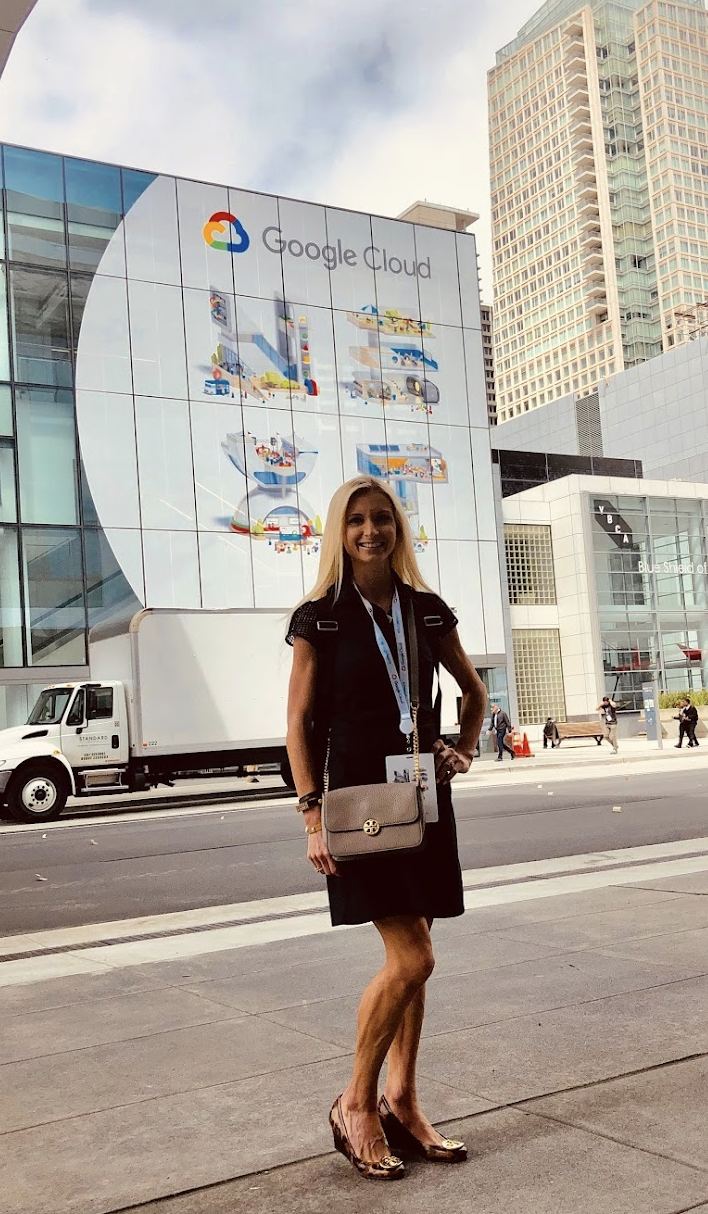
Gianna's Gems: What Executives Want from Events - Cracking the C-Suite Code
Hi there,
Last week I had coffee with a CMO who told me "I get 50 event invitations every month. I attend exactly three."
This conversation reinforced a topic I love to discuss - what truly motivates C-suite executives to not just attend events, but to engage, connect, and ultimately take action with your brand. After working with dozens of executives and analyzing the most successful corporate events I've planned, I've uncovered the secret sauce that transforms good events into game-changing experiences for the corner office crowd.
Getting Inside the Executive Mind: Understanding the C-Suite Personality Matrix
Here's the truth about executives: they're not all cut from the same cloth. Each C-suite role comes with distinct motivations, pressures, and success metrics that directly impact what they find valuable in an event experience.
The CEO: The Visionary Connector CEOs are constantly balancing strategic oversight with the need to stay ahead of industry disruption. Research shows that only 10 percent of Fortune 250 CEOs have marketing experience, which means they're often looking for ways to understand markets and customers better. They attend events to:
Gain strategic insights that could reshape their industry landscape
Position themselves as thought leaders and in their space
Build relationships with other visionary leaders
Stay informed about disruptions that could impact their long-term strategy
The CMO: The Growth Unifier CMOs are being moved to executors of strategy rather than being the ones to help create the strategy, making them hungry for content that elevates their strategic role. They're seeking:
Data-driven insights that demonstrate marketing's ROI impact
Networking and partnership opportunities with other growth leaders
Cutting-edge tools and technologies that can transform customer experiences
Validation of their strategies from successful peers
The CTO: The Innovation Scout CTOs attending events focused on artificial intelligence may learn about potential applications of AI in their industry, enabling them to explore new avenues and drive innovation. They're motivated by:
Technical insights with authorities in the space on emerging technologies before they hit mainstream
Peer discussions about implementation challenges and solutions
Opportunities to scout talent and partnership opportunities
Understanding how technology trends will impact business strategy
The CRO: The Revenue Accelerator Today, only 11 percent of Fortune 100 companies have a CRO, making this role particularly focused on proving value. They attend events to:
Learn about tools and strategies that can directly impact pipeline growth
Network with potential customers and partners
Stay ahead of sales and marketing technology trends
Share best practices with other revenue leaders
The Executive ROI Equation: What Motivates Attendance
The Bottom Line Truth: A little over half of CEOs believe that event marketing generates more ROI than other marketing channels. But what does ROI mean to executives attending events?
Time ROI: Executives value their time like gold. They need to know that attending your event will deliver insights they can't get elsewhere, in a format that respects their packed schedules.
Relationship ROI: The connections they make must be at their level and directly relevant to their challenges. Meet your peers at your career level for 4–5 hours in a private environment with high-quality content.
Learning ROI: The content must be immediately actionable and ahead of the curve. They want to walk away knowing something their competitors don't or getting access to someone they couldn’t get access to otherwise.
Strategic ROI: Everything must tie back to business outcomes. Abstract concepts and experiential without clear business applications simply won't cut it.
Making Events Irresistibly Memorable: The Magic Multiplier Approach
Remember my mantra: "How can I make this moment more magical?" This question becomes even more powerful when applied to executive events, because these leaders experience dozens of events that all start to blur together.
The Arrival Transformation: Instead of standard check-in, create a moment of recognition. Have a concierge approach them by name before they even reach registration. "Ms. Chen, we've been looking forward to your insights on AI transformation." This simple acknowledgment that you know who they are and why they matter sets the entire tone.
The Content Elevation: Executives don't want to hear about what happened last quarter—they want to understand what's coming next year. Structure content around:
Exclusive data and insights not available elsewhere
Peer-to-peer case studies from comparable organizations
Interactive scenarios where they can apply learning in real-time
Access to thought leaders they couldn't normally reach
Stories from other CXO’s who have gone through challenges and how they navigated them (crisis stories are always hot here, even though controversial, i.e. the CEO whose company was cyber-hacked)
The Network Navigation: The main goal is to find those CEOs who inspire and motivate you, believe in what you believe in, share similar values and know your industry. Create structured networking that goes beyond cocktail hour:
Curated introductions based on shared challenges or interests
Small group dinners with specific topics and skilled facilitators - I love a Jeffersonian Style to ensure everyone at the table is engaged
"Office hours" and book signing with keynote speakers for intimate Q&A sessions
OCTO (Office of the CTO) members setting up meetings to delve into personal strategies
Follow-up facilitation to help maintain valuable connections
High-End Networking Activities in the am before content such as group biking, racing, etc.
Creating the Next Action Catalyst
The difference between a good event and a great one isn't just what happens during the event—it's what happens after. Here's how to create momentum that leads to business action and will make sure your investment drives real impact:
The Strategic Takeaway: Design a personalized action plan for attendees. I once did this for Google Performance Ad marketing and we created a custom website for every Exec with relevant videos, use-cases specific to their vertical, industry, region, etc. and a vanity link. To make it EXTRA special, we made a custom bobblehead of their “Androidified” self (email me to learn more about this separately) with a link to the website on the base, so they could sit it prominently on their desk and be reminded of us daily. What exec can resist putting a custom Android version of themselves on their desk? It worked brilliantly and we won a marketing Gold award plus closed more business than any other Exec event had that year.
A simplified version could be a personalized debrief / action document for them with:
Three key insights they gained
Two strategies they want to implement
One person they want to continue conversations with
Specific next steps with timelines
What they want you to check in with them on in 3 months, 6 months, 12 months.
The Continuation Strategy: Within 48 hours, send a personalized follow-up that includes:
Any photos of their specific participation moments or of them (they will use, share, etc and best if your logo is also somewhere in there!)
Contact information for the people they connected with (with permission)
Relevant resources based on the sessions they attended
An invitation to an exclusive follow-up meeting, event or community (more on this below)
The Community Connection Create an ongoing executive community that extends far beyond the event. CEO peer advisor board meetings offer a comprehensive suite of opportunities for growth and leadership development. Here’s further proof by Fast Company that these communities really drive business impact. This could include:
Monthly peer advisory sessions
Exclusive private slack channel or Whats app
Early access to industry insights
Quarterly intimate dinners
Mentorship or Coaching Cohorts
De-Risking Executive Attendance: The Guarantee Strategy
Executives are risk-averse with their time. Here's how to remove every barrier to their attendance:
The Value Guarantee: Offer a specific, measurable value promise: "If you don't walk away with at least three actionable strategies that could impact your quarterly results, we'll personally conduct a follow-up strategy session at no cost."
The Agenda Transparency: Share detailed learning objectives and outcomes for each session. Let them see exactly what they'll gain and why it matters to their specific role.
The Peer Validation: Share attendee lists (with permission) showing other executives at their level. Successful CEOs understand that networking is essential, and they want to know the quality of their peer group.
The Incentive: Offer something they must attend to receive (i.e. we won’t be record the session as it’s chatham house rules), or I’ve once sent attendees one bespoke cufflink or shoe (really anything with a pair works here) but they had to attend the event to receive the other.
Successful Event Formats by Executive Type
For CEOs: The Strategic Salon
Intimate groups of 12-15 CEOs maximum
Half-day format respecting their time constraints
Chatham House rules for candid conversations
Focus on long-term trends and strategic challenges
Anything that focuses on de-risking and expanding company growth and building partnerships and alliances
Include a private dinner component for deeper relationship building
Example: A "Future of Ai" breakfast series where 12 CEOs spend 3 hours discussing industry disruption, followed by quarterly follow-up dinners.
For CMOs: The Growth Lab
Interactive workshops with real-time application
Case study deep-dives with peer Q&A
Lots of networking - CMO’s tend to be more extroverted and into experience/mingling than some other C levels (CHROs as well)
Demonstrations with hands-on experience
ROI measurement and other workshops
Remember - CMO’s plan events, so the experience should be high quality and top notch and potentially also offer content about event strategy and marketing mix
Example: A "Marketing ROI Accelerator" where CMOs work through real scenarios using new attribution models, with immediate takeaways for their teams.
For CTOs: The Innovation Showcase
Technical deep-dives with live demonstrations
Peer-to-peer troubleshooting sessions
Early access to emerging technologies
Security and implementation-focused content
Small group problem-solving sessions
Access to “Office Hours” with your technical team and products
Example: An "AI Implementation Intensive" featuring live coding sessions, security workshops, and peer advisory groups tackling real implementation challenges.
The Ripple Effect of Executive Event Excellence
When you create truly magical experiences for executives, the impact extends far beyond the event itself. These leaders become advocates who:
Refer other high-level executives and their teams (champions) to your future events
Engage more deeply with your brand and solutions
Provide case studies and testimonials that attract similar leaders
Become advisors and partners in your continued growth
70% of consumers expect tailored experiences, and executives are no different—except their expectations are exponentially higher. They want experiences that honor their expertise, respect their time, and deliver value that matches their investment.
The most powerful feedback I've ever received from an executive event wasn't about the celebrity speaker or the luxury venue. It was from a CEO who said: "For the first time in months, I left an event feeling energized instead of drained. Every conversation was valuable, every session was relevant, and every connection was meaningful. This is what executive events should feel like."
That's the ultimate power of understanding what executives truly want from events. It creates experiences that don't just fill calendars—they transform businesses.
What I’m Loving this week: For all my favorite vendors, partners and products, visit: https://www.giannagaudini.com/gianna-recommends
Calistoga Motor Lodge
Don't let the "motor lodge" name fool you – this Hyatt property is a masterclass in casual luxury that perfectly captures Calistoga's laid-back wine country + hipster vibe. I had the pleasure of visiting the property this past weekend and was pleasantly surprised by this little known gem. What makes this place so special is how thoughtfully they've reimagined the classic motor lodge concept with young, hip touches that don't feel forced or trendy. From the moment you arrive, you're greeted by genuinely warm service and delightful surprises: pour-over coffee setups in every room, a wood-fired pizza oven that's actually put to good use, fresh local food programs, and evening s'mores kits paired with a cozy bonfire. The property strikes that rare balance of being sophisticated yet approachable, with both adult and kids' pools ensuring everyone in the family (or your team) feels welcome.
The rooms themselves are spacious and impeccably clean, featuring sleek furnishings that feel more boutique hotel than roadside motel, plus private patios that make you want to linger with your morning coffee or evening wine. For companies planning offsites or families seeking that wine country experience without the Four Seasons or Solage price tag (both literally less than two blocks away), this is your sweet spot. The Calistoga Motor Lodge proves that affordable doesn't mean sacrificing style, service, or those special touches that make a stay memorable – it's exactly the kind of place that makes you want to extend your trip by another night.
Gianna's Gems is a weekly exploration of ideas that transform the ordinary into the extraordinary. If you found this valuable, please share it with a fellow event professional, and subscribe for more insights delivered directly to your inbox.
Want more? Take My Master Class or Book a 1:1: intro.co/GiannaGaudini
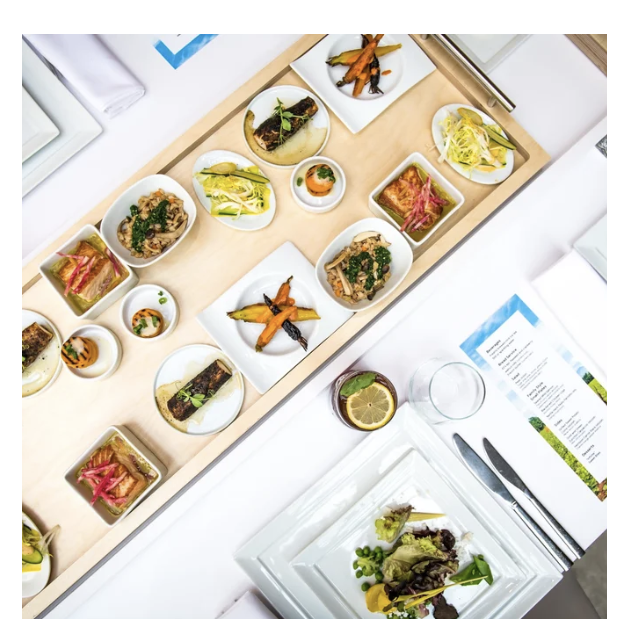
Gianna's Gems: Build Better Habits (and Events) Using Systems
Hi there,
At a family dinner this week, we were playing "conversation jenga” (it’s fun when you need a way to get your kids to be more cogent) and one question was “what warning sign would you come with”? We joked that my husband’s would be “warning: I won’t remember any of this or arrive on time” but that did launch us into a conversation about why our house runs so smoothly despite this funny fact. (p.s. email me if you want to know what my warning label would be according to my husband!)
So why some of us seem to effortlessly stick to our goals and stay highly organized at work and in life while others struggle to make it past day three of our latest "transformation" and can never seem to juggle it all effortlessly? The secret? It's not a superpower... It's systems.
The Magic in Making It Visible
Here's your first gem: make your goals impossible to ignore. I'm talking about that water bottle sitting pretty on your desk, the meditation cushion in the corner of your bedroom, the vision board above your desk or that "PAUSE" sticky note on your laptop screen.
When our goals are visible, they become part of our environment's conversation with us. Every time you see that water bottle, it's a gentle nudge saying "hey there, let's hydrate." No mental energy required - just a simple visual cue that keeps you on track. I recently wanted to start drinking more pure water rather than bottled water, so I started filling a pretty mug with clear, filtered water and leaving it in my fridge. Every time I opened the fridge, I saw that cute mug, and took a sip rather than grabbing a bottle - so simple!
Your Future Self is Your Best Decision Maker
Harvard Business School dropped some serious research that changed how I think about planning: when we make decisions for our future selves, we make better decisions.
Think about it - when you're planning your meals on Sunday for the week ahead, you're choosing grilled salmon and roasted vegetables. But when you're hangry at 7 PM on Tuesday? Hello, Uber Eats! Your future-focused self has clarity that your in-the-moment self simply doesn't have.
This is why successful people batch their decisions. They choose their outfits the night before, meal prep on Sundays, and yes - they plan their events and habits in advance when their judgment is crystal clear. This is also why I engage in mental rehearsal and micro-intention setting. When you have a pre-mortem about how you want a day, a meeting, a tennis match to go in advance, you mentally prepare your body to perform optimally the way you want it.
Planning = Your Secret Weapon Against Decision Fatigue
Every decision we make throughout the day depletes our mental energy - from what to wear to what to eat to whether we should work out. By the time evening rolls around, we've run out of “adaptation energy” or the equivalent of fumes and can’t perform/respond at our best or make smart decisions.
But here's where planning becomes your superpower: it eliminates micro-decisions and lowers what researchers call "activation energy." The less energy it takes to start something, the more likely you are to actually do it.
When you plan your day / week ahead of time, you're not deciding if you'll work out or meditate - you're just showing up to the appointment you made with yourself. The decision was already made by your clearer, more intentional past self.
The Simple System That Doubles Your Success Rate
Ready for this? Setting a simple alarm for what you want to do makes you twice as likely to follow through. Seriously - studies on everything from quitting smoking to starting exercise routines show this works.
Chevron used to have an ergonomic practice of locking their employees out of their computers once an hour so they’d be forced to take a break. Genius!
Have you ever noticed how spas and acupuncture never have good wifi (hint…it’s intentional because they want you to tune out and get zen!)
It's not just about remembering (though that helps). It's about creating a moment where you consciously choose your goal over whatever else is competing for your attention. That alarm becomes your accountability partner, your gentle coach, your reminder that this matter to you. I also create calendar alerts for things I want to remember because I know myself well enough to know I’ll be checking my email and will see the alert. It’s sadly true but it works for me!
Environment Design: Make the Right Choice the Easy Choice
Here's the truth: willpower is overrated and unreliable. The real strategy for success is in designing your environment so well that good choices become automatic.
Get the tempting stuff out of sight, out of reach, and out of mind. If you're trying to eat healthier, don't keep ice cream in the freezer and expect to win that battle every single night. If you don’t want to scroll instagram, get it off the home screen of your phone!
The same principle applies to your plans. If you want to work out in the morning, lay out your workout clothes the night before, pre-set the coffee and pre-pack your lunch to save am time and set an alarm to get to bed early enough so you’ll have energy in the morning. If you want to read or journal more, keep a book on your nightstand and charge your phone in another room.
How This Transforms Your Event Planning Game
Let's talk about how these same systems completely revolutionize your event planning, whether you're hosting a dinner party, planning a birthday, or organizing a corporate event.
Project Management Systems
Tools such as Asana, Monday.com, Airtable, or Google Suite enable event teams to track tasks, deadlines, and dependencies across multiple stakeholders, ensuring nothing falls through the cracks and maintaining clear accountability throughout the planning process.
Instead of keeping your event ideas floating around in your head, or on a multitude of emails, slacks and documents, create a planning hub. I use this as a central source of truth for all collaborators to contribute to to manage simultaneous workstream deadlines, run-of-show, assets that need to be shared, calendars, and documents all in one centralized location so nothing gets missed.
The key is to re-iterate one source of truth and consistently direct people to keeping everything there. It pays off in spades when you’re trying to find something in a hurry, or needing to reference an obscure piece of information from the previous year’s event.
Your Future Event-Planner Self Knows Best
Remember that Harvard research? It's everything when it comes to events. When you're planning your friend's baby shower three weeks out, you're choosing thoughtful games and a beautiful brunch spread. When you're planning it the night before? You're panic-ordering pizza or trying to get your brother-in-law to be the photographer and praying for the best.
I like to conduct a pre-mortem with my clients a week in advance of the event to walk through the event plans minute by minute and poke holes in all aspects of the attendee journey and team onsite roles. This gives us time to make any last minute changes to maximize success onsite and nothing slips through the cracks.
Plan your events when you're in your most creative, unstressed headspace - not when you're already feeling the pressure. Your future-self decisions will always be more thoughtful, more personal, and honestly, more fun.
I intentionally block time on my calendar for writing (these Gems!) and building creative and strategic plans. I found that when I used to try to do this at the end of the day, I didn’t have the “adaptation energy” left for it, so I now save all my less strenuous tasks and emails for that time and it’s made a huge difference in my productivity and creative output.
Templates That Eliminate Event Decision Fatigue
Here's where event planning gets genius: create templates for different types of events to repurpose. I have my product launch brief template, my "Milestone Birthday Celebration" template, and my "Trade Show Brief" templates in addition to various others and can repurpose then time and time again to kick start strategic planning.
By creating a template every time you need to create something new, you’re no longer starting from scratch and getting overwhelmed by infinite possibilities in the future. You’re pulling from proven systems and customizing from there. It's like having a personal event-planning assistant who knows exactly what works.
The Event Alarm System That Actually Works
Set specific alarms for your event planning milestones! "Send Invites Today" calendar alert two weeks out. "Grocery Shopping for the Dinner Party" calendar alert three days before…It’s a simple tool to ensure you don’t miss it on your to-do list.
This isn't just about staying on schedule - it's about breaking down what feels like one enormous task into manageable, timed actions, setting a date to be reminded when to do them, and clearing that mental space for what’s most urgent and timely.
Pro-Tip: build some “flex time” so each alarm is a gentle nudge keeping you on track without the last-minute panic.
Environment Design for Effortless Hosting
Set up your spaces in advance so hosting feels effortless. The night before your event, arrange the furniture, set out menu cards, test your playlist (and charge your devices), and prep whatever you can do in advance.
When your guests arrive, you're not frantically finishing last minute touches and can greet them as the serene host you aspire to be and your guests deserve. Your environment is designed for success, and you get to actually enjoy the event you worked so hard to create.
When hosting dinner parties, I purposely prep items that can “cook” while I’m socializing with guests like a roasted chicken and veggies. I have a dessert like a cheese and chocolate board I can whip out of the downstairs fridge and have ready in an instant rather than having to pre-plate everything. This maximizes what my guests and I want out of the experience - more quality time together!
Your Challenge:
Pick one area where you want to build a better habit or improve your planning and apply these systems:
Make it visible in your environment
Plan it when you're feeling clear and motivated
Set a simple alarm or reminder
Design your space to support success
Remove obstacles and temptations
Remember, sustainable change isn't about perfection - it's about creating systems that work with your human nature, not against it. You're not broken if willpower alone hasn't worked for you. You just needed better systems.
What I’m Loving this week: For all my favorite vendors, partners and products, visit: https://www.giannagaudini.com/gianna-recommends
EVA Entertainment - A Rising Star Worth Your Attention
My followers have been asking about the entertainment booking platform I frequently use, and there's exciting news to share! EVA has just been named to the prestigious 2025 Inc. Magazine Inc. 5000 list, ranking an impressive #1,149 overall and #123 in software. What started as two college students' bold vision to disrupt entertainment booking has now become one of America's fastest-growing private companies. This incredible milestone showcases what happens when innovative thinking meets a fearless team and a community ready to revolutionize events. The best part? EVA can now book talent nationwide, even if your city isn't currently featured on their platform. Ready to experience their game-changing service? Reach out using my exclusive PromoCode EVAGVIP to receive 10% off your booking plus VIP customer service. Trust me, this is the future of entertainment booking, and you'll want to be part of it!
XX,
Gianna
P.S. Check out my book, The Art of Event Planning or book a session with me here 👉 intro.co/giannagaudini
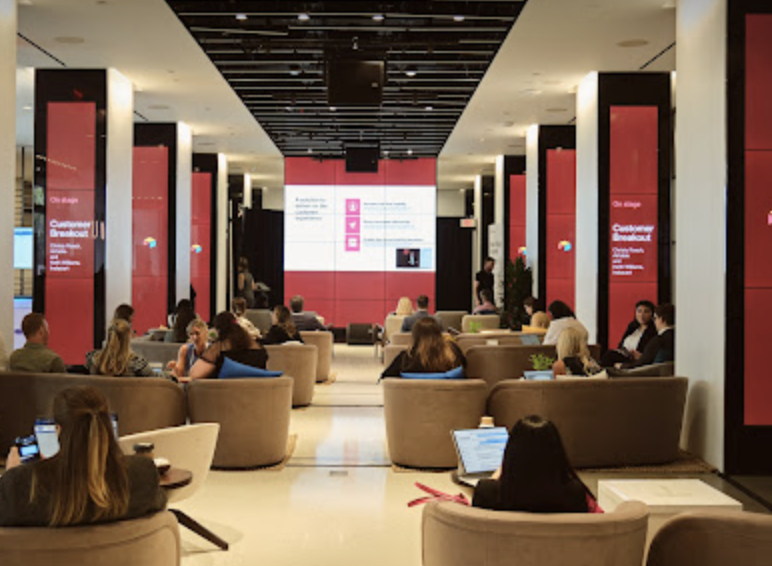
Gianna's Gems: The Ultimate Guide to Planning Your Inaugural Customer Conference
When community becomes currency and customers become your biggest champions
Hi there,
There must be something in the air…I’m getting so many requests for building inaugural event strategy (which I love because that’s my sweet spot!). Maybe it’s Marc Cuban’s prediction that’s going viral:
"Within the next 3 years, there will be so much AI, in particular AI video, people won’t know if what they see or hear is real. Which will lead to an explosion of f2f engagement, events and jobs.”
Which Leads to the Golden Question: Why Host a Customer Conference?
Your customers are more than revenue numbers—they're your biggest advocates, your product development partners, and your most valuable source of authentic testimonials. A well-executed customer conference transforms these relationships from transactional to transformational.
Your conference becomes the physical manifestation of your community. It's where feature requests turn into collaborative discussions, where customer success stories inspire prospects, and where your team gains invaluable face-to-face feedback that no survey can capture. More importantly, it positions your company as a thought leader and creates an annual touchpoint that customers anticipate and plan around and that activates your internal team to launch products for.
Think of it as relationship ROI—you're investing in deepening connections that compound over time. Customers who attend your conference typically have higher lifetime value, lower churn rates, and become vocal advocates who drive organic growth through word-of-mouth marketing.
The Readiness Litmus Test: When You're Ready (And When You're NOT) Ready to Host your Own Conference
You're Ready When:
Customer Base Maturity: You have at bare minimum of 500-1000 active customers with 50+ who would genuinely be excited to attend. Your customer success team can identify your superfans without hesitation.
Internal / External Resources: You can dedicate 4-10 full-time team members + budget to bring in agency/contractor support for conference planning for 6-12 months without compromising core business operations.
Budget: You have executive buy-in and a realistic budget of $500K minimum.
Customer and Industry Content: Your customers have compelling success stories, your product team has exciting developments to share, and your industry has enough depth for meaningful educational sessions.
Operational Stability: Your product is stable, your customer support is strong, and you're not in the middle of major organizational changes or funding crises that could risk event cancelation - much less embarrassing and costly to pull out of a tradeshow you’re sponsoring than to have to email hundreds of attendees and refund them if ticketing/sponsorship plans are in place..
Pump the Brakes When:
Premature Product and Community: You're still figuring out product-market fit, or your customer base is too small or geographically scattered. If you can't confidently fill 200+ seats with engaged customers, wait.
Resource Constraints: You're bootstrapped to the bone, just raised a Series A and need every dollar for growth, or your team is already stretched thin on core deliverables.
Timing Troubles: You're planning a major product pivot, dealing with significant customer churn, or facing internal instability. Conferences amplify your current state—make sure it's one you want to broadcast.
Unrealistic Expectations: You expect the conference to be immediately profitable or solve fundamental business challenges. First conferences are investments in relationships, typically not revenue generators in the first few years (trust me, this was true event when I was building Google Cloud Next!).
Customer Conference Pros and Potential Drawbacks
If you’re falling into the “Green Light” category above, get excited because there are some extremely compelling upsides to hosting your own conference:
Customer Loyalty Amplification: Face-to-face interactions create emotional connections that digital touchpoints simply cannot replicate. Attendees become your most vocal advocates.
Product Development Gold: Direct customer feedback in a concentrated setting accelerates product roadmap decisions and validates development priorities.
Revenue Acceleration: While not immediately profitable, conferences typically drive 20-30% higher customer lifetime value and significantly de-risk contract renewals among attendees.
Brand Authority: Positions your company as an industry leader and creates content and case studies that fuel marketing efforts year-round.
Audience Control: Like hosting your own wedding, you get to control the audience, meaning you can control the perfect mix of customers, prospects, press, and friendlies that will benefit your marketing and sales efforts (but make sure you know what you’re doing here!)
However, hosting your event must be done with strategic mastery and an experienced team to avoid these potential downsides:
Financial Risk: First-year conferences rarely break even. Plan on budgeting for a 6-figure investment with intangible returns that materialize over 12-18 months.
Execution Complexity: Event planning and owned conferences require a specialized skill. Underestimate the logistics and you risk damaging customer relationships or embarrassing yourself as a brand instead of strengthening both.
Resource Cost: The resources dedicated to conference planning could be invested in product development, sales, or other growth initiatives with more predictable returns. There’s always a tradeoff so make sure this is the best use of everyone’s time and that you’re repurposing as much of the work done on the content as possible.
Expectation Management: Once you host a conference, customers/company executives will expect it annually. Consider committing to a recurring investment and a memorable name and logo lockup that will build its own recognition over years to come (i.e. Dreamforce, AWS re:invent, Google I/O).
Measuring Success: The ROI Metrics That Actually Matter
Gianna’s Gem: When it comes to Hosted Customer Conferences, I recommend focusing on a few key metrics and weighting them in terms of importance to help prioritization.
Forget vanity metrics like social media mentions. Focus on these strategic indicators:
Customer Health Metrics:
Net Revenue Retention among attendees vs. non-attendees (6-12 months post-event)
Customer churn reduction percentage for conference participants
Expansion revenue (cross-sell, upsell) generated from attendee accounts within 12 months
Customer advisory board participation
Product Development Acceleration:
Number of product improvements implemented based on conference feedback
Time-to-market reduction for features validated during customer sessions
Customer satisfaction scores for new features developed from conference insights
Sales & Marketing Leverage:
Cost per lead for prospects who attended vs. other channels
Conversion rates from conference-generated leads over 12-month period
Customer advocacy metrics (referrals, case study participation, speaking opportunities)
Brand and Strategic Relationship Indicators:
Executive-level relationship establishment (C-suite), Press/influencers in attendance
Press and Analyst articles/reviews
Customer testimonials generated
NPS score above 80 (remember, word of mouth from promoters is extremely valuable)
Success Strategies: The Tactical Playbook Outline
It’s impossible to share all my knowledge with you in one post, but below is an overview of what you want to think about as you start building the strategy for your inaugural event.
Optimal Conference Length & Format
Sweet Spot: 1 - 1.5 days maximum for inaugural conferences (keep in mind how much content you will need to fill up that many days, and effort/resources involved in each session). Best practice: Day 1 focuses on keynotes, product announcements, education and inspiration, Day 2 on hands-on workshops and networking, an Un-Conference, or an Executive Track. Avoid conference fatigue while maximizing value density.
Content Framework: 70% customer-led or unconference content (case studies, panel discussions, peer learning), 20% company / product updates and roadmap sharing, 10% partner/sponsor/external content. Remember: Customers attend to learn from peers, not to be sold to. They want to see and learn from others like them, and care less about a paid speaker they could find on YouTube.
Sponsorship Strategy Without Soul-Selling
Partner Integration: Limit sponsors to 3-5 strategic partners who genuinely add value to your customer experience. Think complementary partners who will attract your target audience and help drive registrations, not competitors.
Revenue Realism: Sponsorships should cover 20 - 30% of costs maximum, focusing on value exchange rather than pure revenue generation. I.e. consider what else your sponsors offer you other than revenue: credibility, audience generation, content generation, for example.
Sponsor Activation: Integrate sponsors into educational content or experiences rather than giving them isolated sales pitches and booths. I like strategically planning my food/beverage so that I offer about 50% of what I’m planning to sponsors as MPOs (i.e. coffee shop/break, branded coffee/tea stations, popcorn and gelato pop ups, smoothie bars, beer garden).
Ticket Pricing Psychology
In most cases, I wouldn’t recommend charging for your inaugural conference as driving attendance is one of the biggest challenges without additional cost as a hurdle. However, it CAN help you drive more qualified RSVP’s and also reduce attrition, but the key is a super strategic plan that’s thought out well in advance.
Price Strategy: Charge enough to ensure commitment ($200-$500 for customers, $800+ for prospects) but not so much that it excludes smaller customers. Consider tiered pricing based on company size.
Early Bird Advantage: Offer 30-40% early bird discounts to drive early commitment and help with planning logistics. Create urgency with limited early bird quantities offered ideally 6 months in advance.
Customer Appreciation: Consider complimentary tickets for your top 10-20 customers as relationship investments, —perceived value matters, plus that will also ensure you have the right audience at your event (you can also leverage these champions for customer testimonials onsite and other opportunities).
What’s the Draw: Make sure you market the ROI attendees will get for attending. It helps to lock in key speakers, sponsors and attendee company logos before marketing more broadly and have a clear value proposition. Another strategy is to create a letter to add to your website intended for people to use for approval to attend.
Attendance Optimization and Venue/Location
From venue size to attrition, attendance planning is another exercise in strategic planning. Below are a few key tips to keep in mind:
Target Range: Aim for 100-300 attendees for your inaugural conference. Small enough for intimate networking, large enough for diverse perspectives and viable economics.
Audience Mix: 70% existing customers, 20% qualified prospects, 10% partners and industry influencers. Maintain the customer-centric focus while creating networking value.
Registration Strategy: Open registration 4-6 months before the event with a strong email campaign, personal outreach from customer success teams, and executive-level invitations for key accounts.
Geographic Strategy: Choose a location within 1 hour drive for 60% of your customer base. Focus on cities/regions where the majority of your customers or target industry is located (and you may need to split the conference between two regions at smaller sizes)
Venue Considerations: Hotels and conference centers offer turnkey convenience but lack personality. Unique venues (museums, historic buildings, corporate campuses) create memorable experiences that generate social sharing and lasting impressions, but be aware - they often require more cost to bring in infrastructure and outside catering/AV.
So…How Far in Advance Should We Start Planning?
That is the golden question. Gianna’s Gem: Do not attempt to host your own Customer Conference unless you have ample time for strategic planning, audience acquisition, and locking a venue. Here’s an example timeline:
6-12 Months Out: Secure venue, establish budget, and assemble planning team. Begin customer research on preferred topics and speakers. Secure hotel room blocks and negotiate group rates if needed.
6 Months Out: Secure keynote speakers, launch sponsorship outreach, and create preliminary agenda. Begin marketing content creation.
4-6 Months Out: Open registration, announce speaker lineup, and launch promotional campaigns.
3 Months Out: Finalize logistics, conduct content read-throughs and send attendee communication sequences.
1 Month Out: Shift focus to experience optimization, staff training, and contingency planning. Create detailed run-of-show documents and backup plans.
2 weeks - Pre-Cons, Rehearsals
Gianna’s Gem: Your inaugural customer conference is not a marketing event—it's a relationship investment that pays dividends in customer loyalty, product insights, and brand authority. Success isn't just measured in immediate revenue but in the strength of connections formed and the strategic intelligence gathered.
The companies that nail their first customer conference create an annual tradition that becomes a competitive moat. The ones that rush into it without proper preparation risk damaging the very relationships they're trying to strengthen.
Your customers are ready to celebrate your shared success—make sure you're ready to host them properly.
What's your biggest concern about planning your first customer conference? The logistics, the budget, or the customer expectations? Send me a note or reach out for a strategy session.
What I’m Loving this week: For all my favorite vendors, partners and products, visit: https://www.giannagaudini.com/gianna-recommends
I attended an event at The Battery last month featuring Dr. Ishan Shivanand, born a monk and now an author, doctor and a globally recognized expert in mental health and meditation. He was extremely captivating, moving, witty, and moved me so much, I had him sign my book and have started attending his nightly meditation sessions, even sharing a couple with my son. If you’re interested in his book, The Practice of Immortality, a Monk’s Guide toDiscovering Your Unlimited Potential for Health, Happiness, and Positivity, I highly recommend it. You can learn more at Yoga Of Immortals. He also hosts a nightly ten-minute meditation (the next one starts on June 22nd). Reach out if you’d like me to share the link or put you in touch.
XX,
Gianna
P.S. Want to pick my brain?
Book me here 👉 intro.co/giannagaudini (check out the feedback from others who have worked with me as well in the reviews!)
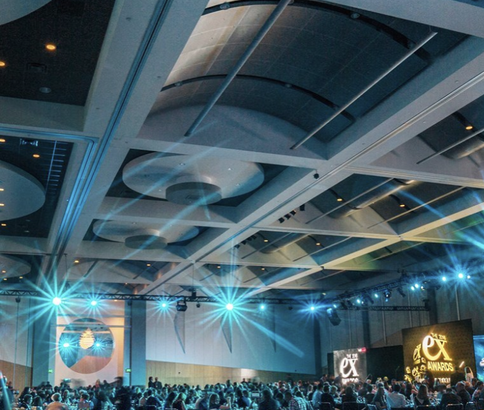
The Art of the Strategic “No”: Finding Balance in a "Yes" Industry
Hi there,
In our world of events and hospitality, "yes" isn't just a word – it's practically embedded in our DNA. "Of course we can add 50 more guests!" "Yes, we can change the entire floor plan the night before!" "Absolutely, we can accommodate every single dietary restriction!" Our ability to make the impossible possible, to turn every client's dream into reality, is what makes us exceptional at what we do.
But here's the truth I've learned (and admittedly still working on) after years of managing everything from intimate retreats to large-scale corporate events: That same superpower of saying "yes" that makes us brilliant at our jobs can also become our greatest personal and professional obstacle. If you find yourself having a hard time sleeping at night because you have so many ideas or tasks floating through your brain, read on for strategies to better balance out your life so that you can manage your energy to gain exceptional results personally and professionally.
When Your Professional "Yes" Becomes Your Personal Default
Many of us wear our "yes" mentality like a badge of honor. We pride ourselves on being the person who can handle it all, fix everything, and never turn down a request. It becomes more than a professional skill – it transforms into a core part of our identity. Soon enough, we're saying yes to joining three different industry boards, planning the school fundraiser, providing free career advice and taking on side projects that leave us running on empty.
The Hidden Cost of Being Everything to Everyone
Recently, I watched a brilliant event planner friend try to simultaneously coordinate two weddings, a corporate retreat, and a charity gala – all while serving as the regional chair of an industry association. The result? She confided to me that she was frustrated in herself for making simple mistakes she'd never made before, her health was suffering, and none of her projects were getting the meticulous attention to detail that had built her reputation in the first place. Her over-commitment wasn’t allowing her to reach her full potential, and she nearly burned out in the process. This isn't just about time management – it's about energy conservation and impact maximization.
Embracing the Power of Strategic No's
When you say no to the good, you create space for the exceptional. This isn't about becoming a "no person" – it's about becoming intensely selective about your yesses. Think of it as curating a premium marketing portfolio rather than running a discount store of scattered efforts.
Example 1: A good friend of mine is a highly respected investor. He says “pass” on most opportunities I send his way, and do I disrespect him at all for this? Not at all! If anything, I respect that he doesn’t swing at every pitch and instead is highly selective about who he’ll even have a preliminary conversation with knowing how valuable his time is. And when I asked him what he likes least about his day he told me “nothing - I love my life!”. Boom.
Example 2: I frequently lead Agency RFP processes for clients. I’ve had situations where agencies have said yes, even though they were unqualified for the project or were too busy to properly address the RFP requirements, ultimately tarnishing their reputation when they didn’t deliver quality work or effort. On the other hand, when an agency turns down an RFP because they’re too busy, or because they don’t think they’d be a strong fit, I often respect them MORE and am more inclined to want to work with them in the future! Bonus points if they recommend another agency that might be able to help me - that’s abundance mindset and it works brilliantly.
The Art of the Gracious No
So how do we say no without burning bridges? Here's what I've found works: First, acknowledge the value of the request. "This sounds like an exciting initiative" shows you've actually considered it rather than dismissing it outright. Then, be transparent about your priorities. "I'm currently focused on our Q1 campaign launch, which requires my full attention to ensure its success." This demonstrates professional commitment rather than personal reluctance. Finally, offer alternatives when possible: "While I can't take this on, I'd be happy to connect you with Sarah, who specializes in this type of project."
Here's a practical framework for event and hospitality professionals to master the art of selective commitment:
The Why: your mission statement to keep you honest when it gets hard to say no:
To protect your highest-value priorities and relationships
To maintain the quality of your core work
To preserve your mental and physical well being
To keep your creative energy fresh for innovation
To maintain your professional reputation for excellence
Identifying What Deserves Your Yes: Before committing, ask yourself:
Does this align with my current professional trajectory?
Will this opportunity still seem valuable six months from now?
Does this build on my core strengths or key relationships?
Can I give this my full attention and best work?
Is the potential return worth the time investment?
Strategies for Saying No Gracefully
The Gratitude Method: "Thank you so much for thinking of me for this opportunity. I'm honored to be considered..."
The Honesty Approach: "I want to be upfront – my current commitments mean I couldn't give this project the attention it deserves."
The Future Opening: "While I can't take this on right now, I'd love to be considered for similar opportunities after Q2 when my schedule opens up."
The Alternative Solution: "While I need to decline, I'd love to connect you with [name] who specializes in this type of event and might be available."
The Clear Calendar Response: "I've committed to focusing on [specific project] through [timeframe], and I need to honor that commitment to ensure its success."
When to Make Exceptions: Consider saying yes when:
The opportunity aligns perfectly with your long-term goals
It connects you with key industry leaders or dream clients
It allows you to develop a crucial new skill
The project genuinely excites you and you have the bandwidth
It's a clear stepping stone to bigger opportunities
Gianna’s Gem: Remember, a "no" to someone else is a "yes" to yourself and your priorities.
The goal isn't to say no to everything – it's to be intentional about your yeses so they serve your bigger vision.
Each time you consider a new commitment, ask yourself: "If I say yes to this, what am I saying no to?" This simple question can help clarify whether an opportunity truly deserves your time and energy. Your ability to deliver exceptional experiences depends on having the time and energy to give each project your best. Sometimes, the most professional thing you can do is decline gracefully.
The Reward of Selective Focus
When you master the art of saying no, something magical happens. Your best work gets better. Your stress levels drop. And ironically, people begin to value your "yes" even more because they know it comes from a place of genuine commitment rather than obligatory agreement.
Remember, every time you say no to something that's merely good, you're saying yes to the possibility of something great.
So the next time you feel that familiar pressure to say yes, pause and ask yourself: Is this the best use of my energy and expertise? Your future self – and your marketing results – will thank you for having the courage to be selective.
What ONE THING I’m Loving This Week: For all my favorite vendors, partners and products, visit: https://www.giannagaudini.com/gianna-recommends
I’ve been having a lot of conversations with people lately around meditation and the benefits it provides, including clarity on your goals and how to get laser focused on your priorities while calming your mind so you’re not a chaotic swirl of stress in this hectic world. My favorite meditation book is by guru, Emily Fletcher, founder of Ziva Meditation, called Stress Less, Accomplish More and it’s meditation for high energy folks - aka, my type of meditation. In Stress Less, Accomplish More, Emily teaches a powerful trifecta of Mindfulness, Meditation, and Manifesting to improve your personal and professional performance, clarity, health, and sleep. You’ll learn how to cultivate Mindfulness through brief but powerful exercises that will help you stop wasting time and getting crystal clear on your personal and professional goals for the future.
“We meditate to get good at life, not to get good at meditation.”—Emily Fletcher
XX,
Gianna
P. S. Need to chat? Book a 1:1 using my link for Expert advice on intro: intro.co/GiannaGaudini
Gianna's Gems - Your Brain Needs a Break!
Hi there,
As a biology minor, (and Huberman Lab podcast fan) I love brain science… so I was thrilled when a reader shared this great article with me and suggested I work it into one of my blogs (thanks Trish Sowinski!). I hope this will spark interest in the way you think about breaks – both for your own productivity as well as when planning events. I promise, breaks will actually lead to more optimal results for you, even if it’s counter-intuitive in our always-on, more is more culture.
The Science of Stress and Breaks
Alright, let's get our nerd glasses on for a minute. Microsoft teamed up with some brainiac researchers to study what happens to our brains during back-to-back virtual meetings: It's not pretty.
Here's the TLDR:
Back-to-back meetings can lead to stress buildup over time. It's like trying to stuff too many sequins on a dress – more is not more.
This stress shows up as beta wave activity in the brain. Think of beta waves as the "I'm stressed and overthinking everything" waves.
But here's the kicker: Taking even a short break between meetings allows the brain to "reset," reducing this beta activity.
In other words, breaks aren't just nice to have – they're essential for keeping our brains from turning into a frazzled web of stress and chaos.
Why Event Planners Need Breaks (Like, Yesterday)
Now, this research might be about virtual meetings, but let's be real – our job is basically one long series of meetings, calls, and high-stress tasks. We're juggling vendors, client and stakeholder expectations, and trying to create magic out of thin air. If anyone needs a brain break, it's us!
When we don't give our brains a chance to reset:
We might miss crucial details or make silly mistakes
Our creativity takes a nosedive (bye-bye, innovative event concepts)
Our stress levels skyrocket faster than a champagne cork at midnight which might make us more susceptible to illness (not good for the project), or giving us a short-fuse (not good for relationships)
By trying to squeeze more in, you may ultimately end up with results that are suboptimal or worse, that you regret which causes you MORE lost time in the long run.
The Art of the Strategic Break
So, how do we give our brains the breather they're begging for? Here are some of my tips, backed by science:
The 10-Minute Rule: Microsoft's research showed that taking even a 10-minute break between meetings can help your brain reset. So, when you're scheduling your day, build in those 10-minute buffers!
Pomodoro Method: I love using this for task-blocking during the day. You set a timer (like a red tomato one, hence the name) for 25 minutes, and focus 100% on one task. When the timer goes off, you must take a break and do anything to unwind for five before starting the next task block (like watching Marcel the Shell on youtube - don’t judge).
Meditation / Yoga: The study found that meditation between meetings led to more relaxed brain patterns. Try a quick mindfulness session using apps like Calm or Headspace. Yoga Nidra Deep Rest is another great method my husband swears by, though I’ve never gotten into it (sorry honey!)
Nature: Step outside for a quick walk. Research shows that nature can boost creativity and reduce stress. Bonus: If you weed your garden, you also get beneficial probiotics from the soil which will also reduce stress and enhance well being!
Move: Do some stretches, calf raises, or strike a yoga pose like cat-cow to improve blood flow and circulation. Getting your blood flowing helps your brain too!
Social Time: Chat with a colleague or friend. Human connection can work wonders for your mood and productivity. Five minutes of taking a break to connect may end up saving you time in the end by refreshing and re-engaging you after a pause. Plus, if you add in some laughter, it is a natural antidote to stress.
Putting It Into Practice: Event Agenda Edition
Now, let's apply this brain-saving wisdom to event agenda planning:
Build in breaks for your attendees. I recently spoke with an event planner who said her client cut all the breaks/social elements out of an internal event to “optimize the ROI by jamming in as much content as possible”. The result? Attendees were not engaged, didn’t learn as much or enjoy the event as much as they did previously (as indicated by survey results) and they didn’t even save much money by cutting the breaks and fun elements.
Vary session lengths to keep energy high. Mix it up with some shorter, punchier sessions and nix the 60 minute keynotes. My favorite formats to mix in include:
Lightning sessions where each speaker just has five minutes to get their concept across giving you a “snack” rather than a full deep dive.
Community-share-circles featuring customers sharing their personal stories and opening up discussion with fellow customers/prospects
Crowd-sourced content and unconferences
AMA’s
Talk-Show format
Include "reset" activities between sessions – like meditation or stretching breaks, “sandboxes” where attendees can explore interactive, sensory experiences, or even having quiet rooms for people to chill out and nap or get a foot massage to recharge!
Give an hour and a half (or more) for meal times so people aren’t rushed and have time to eat, socialize, even do a quick walk before sitting down for the next session. Plus, this is when many of the most important connections are made, not during content sessions, so don’t skimp on the meal breaks.
Consider adding nature elements or outdoor sessions if possible. Fresh air and greenery does wonders for the mind and keep people awake, inspired, and engaged.
The Gianna Gem Takeaway
Remember, taking breaks isn't just self-care – it's a science-backed strategy! It's like giving your brain a mini-spa day between the chaos of event planning and I can guarantee it’s going to make you feel better and do better in the long run than powering through like a martyr.
The next time you're tempted to eliminate a break to save time, remember what the brainiacs at Microsoft discovered. Your events (and your stress levels) will thank you!
Keep shining and giving that beautiful brain of yours the breaks it deserves.
~Gianna
P.S. I'd love to hear your favorite ways to take a break or incorporate breaks into your event planning. Drop me a comment or slide into my DMs with your best brain-refreshing tips! Let's create a revolution of well-rested, super-creative event planners!

Cost, Schedule, Features - Pick Two.
I've been spending a lot of time with founders, product marketers and most recently attended the 2024 Engineering Leadership Conference, which has me thinking a lot about a phrase my father (A former CTO and engineering leader) shared with me when I was early in my career. So this week’s Gianna’s Gem is all about trade-offs and how you can apply this phrase to stakeholder management for event planning!
The phrase he taught me was: "Cost, Schedule, Features - Pick Two!"
The concept is well-known in project management and product development (my husband’s profession). It's often referred to as the "Project Management Triad" or the "Triple Constraint."
To break down how it can apply to event planning, here is an overview of the Triad:
Cost: The budget or resources allocated to the event.
Schedule: The time frame for planning the event.
Features: All the details, bells and whistles, features, demos, breakout sessions, gifting, you name it!
The theory behind "Pick Two" is that in any project, you can optimize for just TWO of these factors, but doing so will inevitably affect the third.
For example:
If you want to stay on or below budget, and stick to the event’s planning schedule, you might have to reduce the event quality or the details, bells and whistles that you’re planning.
If you want all the fun details AND a quick turnaround, it’s possible, BUT, it’s going to cost you more (you can always throw more labor at things!) This one I use often when I get requests to keep adding on, and when I share that YES, it’s possible, but will cost more budget, the requests are usually mitigated.
If you want all the fun details BUT at a low cost, you may need to sacrifice your timeline or event date (ie. plan your wedding on a Wednesday rather than a prime Saturday!)
When working with clients and stakeholders, rather than saying no to requests, which rarely goes over well and isn’t a win-win, I instead suggest trying this approach.
Most stakeholders understand that it's unrealistic to expect an event to be cheap, produced on-time, on the ideal date and fully featured with zero sacrifice.
This principle will help your team make informed decisions about event priorities and to set realistic expectations. It's a reminder that compromises often need to be made in event planning and execution.
Below is a detailed example for those who want more than the TLDR:
EVENT: Annual Tech Industry Conference
Cost:
Venue rental: $50,000
Catering: $30,000
AV equipment: $15,000
Speaker fees: $25,000
Marketing: $20,000
Staff: $10,000
Total budget: $150,000
Schedule:
Planning phase: 6 months
Event duration: 2 days
Post-event follow-up: 1 month
Features:
500 attendees
5 keynote speakers
20 breakout sessions
Networking cocktail hour
Product demonstration area
Live streaming of main sessions
Mobile app for attendees
Professional photography and videography
Let's look at how "picking two" might affect the third:
Scenario 1: Prioritize Cost and Schedule
Reduce budget to $100,000 and keep the 6-month planning timeline
Features affected: Fewer attendees (350), 3 keynote speakers instead of 5, 15 breakout sessions, no live streaming, simpler mobile app
Scenario 2: Prioritize Schedule and Features
Keep the 6-month timeline and all planned features
Cost affected: Budget increases to $200,000 to accommodate all features in the short timeline (e.g., rush fees, premium venue booking)
Scenario 3: Prioritize Cost and Features
Keep the $150,000 budget and all planned features
Schedule affected: Planning phase extends to 9 months to allow time for cost-effective solutions (e.g., early bird discounts on venue, time to negotiate with vendors)
Pretty simple, isn’t it? Cost, Schedule Features…Pick Two.
Happy prioritizing!
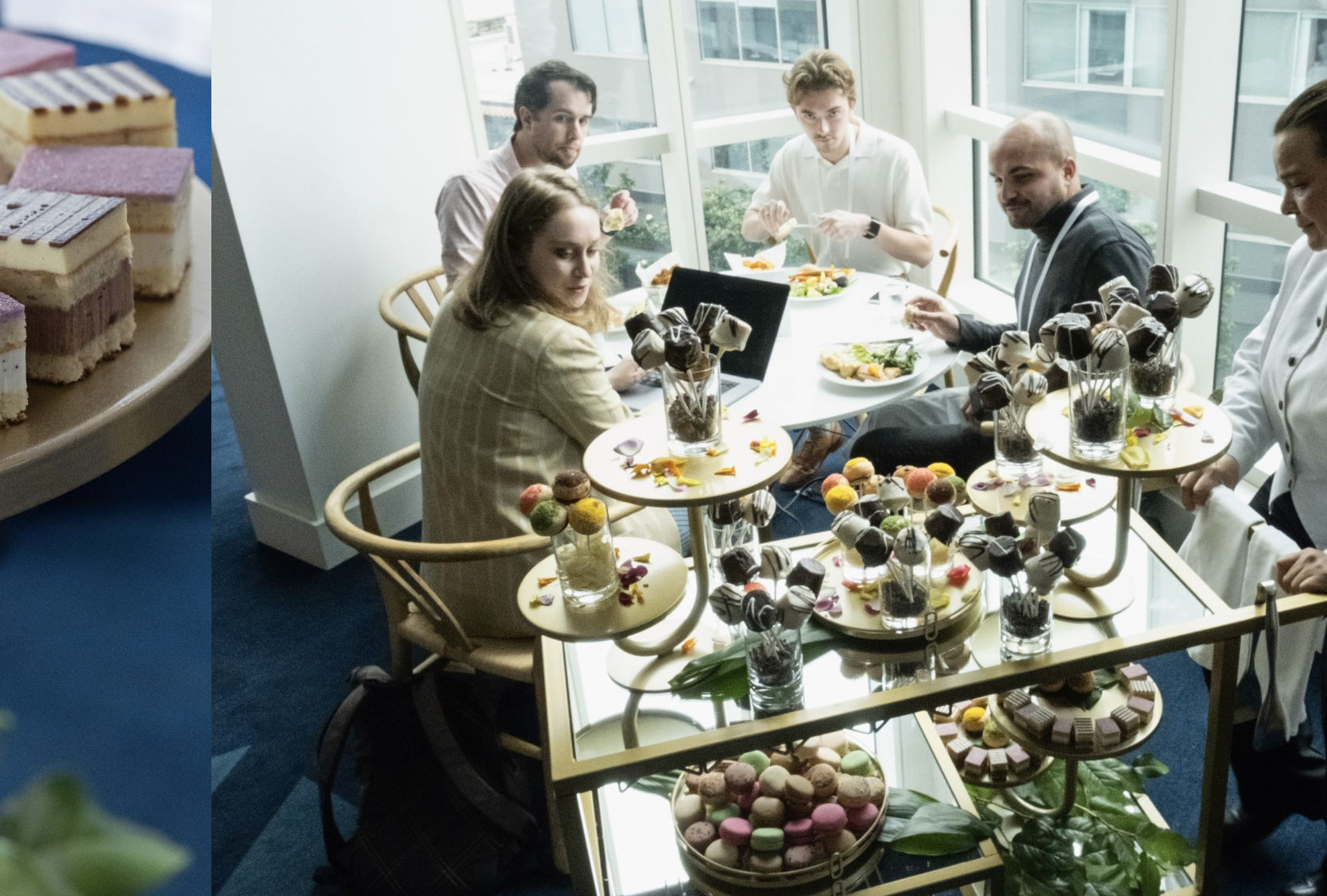
Offsites are the New Offices - How to Optimize Them
This week’s Gianna’s Gem is on Optimizing your Offsites.
But First…Why they Matter:
Forbes recently published a study that 81% of corporate millennials consider in-person communication to be vital to their success. With the new reality of remote-first workplaces, offsites become a critical bridge to drive collaboration and business success.
Offsites are beneficial for creating new relationships or creating cross-functional alignment, and also strengthening current relationships within one’s own team/org.
Offsitesinspire new ways of thinking and ideas that will help a company succeed. Remember my post about Steve Jobs getting his best ideas while on vacation? There’s something about stepping out of our regular environment and away from our computers that enables our minds to find the space to think bigger and more boldly, especially when we can brainstorm and feed off other colleague’s ideas. In fact, ~34% of workers have claimed getting their most creative ideas while on a company retreat.
Fun Fact: Company retreats have been so successful in forming bonds and promoting innovation, that some companies are considering purchasing destinations to provide offsites throughout the year.
If I’ve convinced you that offsites are important for your company’s growth and employee productivity and retention, read on for how to optimize them:
Offsite Optimization Step 1: Establish a Theme to Focus Agenda and Activities
Depending on the demographic, size of the group, location, budget, etc, it’s helpful to establish a theme/purpose for each offsite to help tie the experience together. Here are some examples:
Adventure: Promotes team-building and bonding and also inspire problem-solving muscle-building. Great for extraverted and competitive teams like Sales, and also for teams from the same org. Activities could include:
Escape rooms, Ropes courses, Scavenger hunts, Kayaking, Hiking, bike touring, bob-sledding, dude-ranch activities
Leverage speakers like Mount Everst climbers or other athletes who have blazed trails, or have former olympic or well-respected athletes lead an activity session for a special magical moment (I’ve had Olympic swimmers, bikers and runners lead Executives in group exercise in the am before and it was a peak experience for them)
Thematic enhancements: Make your own trail mix bar, personalized bandanas and/or cowboy hats, ice baths, branded canteen water-bottles
Creative: Excellent for creative, brand, comms, or experience teams (also engineers), teams with more introverts, or executives
Art classes (painting, pottery, etc.), Cooking, mixology or winemaking, Improv/comedy workshops, Music-making, weaving, writing class, etc.
Use an icebreaker on a related theme such as: Visit an art gallery and have everyone share which is their favorite painting and why.
Gifting - custom aprons, label/bottle wine produced by the team in a custom “blend”
Volunteering / Give-Back: Great for people/comms teams, holiday offsites and organizations who value giving back to community (also great for brand building)
Community service i.e. home-building, graffiti cleaning, mentoring local students, Environmental clean-up efforts, or team shopping competition for family’s wish-lists around the holidays
If you’re in a local community for the event that is not your own, welcome local vendors in for a “local gift bazarre” and allocate a certain amount of budgetfor purchasing a gift from local vendors. If the offsite is in your own community, donate any materials/food/swag from the event to local community afterwards.
Wellness: Great for teams who have just completed a major project, event, initiative and need some R&R. Also great for teams who are burned-out or need to recharge.
Ideas include: Yoga or meditation retreats. Spa days, acupuncture (they even have mobile acupuncture now), sauna/ice bath, healthy foods and beverages: spa water, mock-tails, bone broth bar, make you brown tea sachets, or foraging in the forrest for adaptogenic herbs and flowers to add to food
Gifting may include: branded eye masks, heating pads, scented essential oils (or blend and take home from the event), and healthy snacks/treats.
Offsite Optimization Step 2: Establish Goals and Priorities:
Assigning a weight to each goal which will help advise how you structure the agenda:
What % of the offsite if dedicated to bonding/teambuilding?
What % of the offsite if dedicated to business needs (strategy, education/training, creative ideation, etc)?
What % should be focused on cross-fuctional networking?
Offsite Optimization Step 3: Establish Your Budget, Planning Timeline and Plan for Execution:
Determine your budget (per attendee) and then you can back-into which locations, dates, and activities are realistic for your team/company. This helps reduce the amount of options + constraint often leads to better focus and creativity.
Establish dates for the offsite, lock them in via contract/calendar holds and start planning communication and logistics backwards from there. Make sure you get a save the date and RSVP out ASAP to confirm attendance so you don’t pay an attrition penalty.
Determine whether to use an event pro (like me) to assist with strategy/planning, or leverage internal team, or an external offsite planning SAAS platform (see Gianna Recommends for vendor suggestions)
Offsite Optimization Step 4: Evaluate the Success of your Offsite, and establish a frequent cadence of offsites
The end of your offsite is only the beginning! Make sure you measure the success of the offsite (email me if you need help with how to do this), so you know what resonated most/least with attendees.
Establish an annual offsite calendar/cadence so you can get ahead of booking optimal dates/locations, maintain a drumbeat of social connection, innovation and company bonding, reduce budgeting (further out usually means better rates), and signal to attendees that this is a normal operating expectation.
In summary, when planning, consider: Team preferences and personalities, company culture and goals, budget constraints, balancing teambuilding with productive outcomes, and be careful that the offsite is inclusive to everyone attending.
Happy summer campers!

The ONE thing that will make your event successful!
Hi there!
90% of what makes an event or gathering successful is put in place beforehand. True or false?
If you answered true, you’re correct!
By the time your event rolls around, you should be sleeping soundly knowing you’ve put everything in place for a successful event.
That simply means you’ve taken the appropriate steps to de-risk it, and now have the mental bandwidth to quickly quash any last minute curveballs thrown your way (and we know there are always one or two!)
But how can you ensure the right plans are in place beforehand, you might ask?
So glad you asked because I’m about to share my secret sauce with you …
My planning process that builds the following:
“Prime” your attendees before they get onsite so they know what to expect, what to prepare, and what you’re going to deliver.
This ensures everyone shows up with the right intentions, goals, and also helps ensure you’re reducing day-of attrition by giving people a heads up on what is expected of them and what they will get out of the event. It’s an art, and I can help you with this.
Plan a 2-hour attendee-journey session with everyone involved (key stakeholders, agency, cross-functional team members, an event consultant, etc.) to ensure you poke holes at every aspect of the experience.
Where might there be pain? If there are any pain points, turn them into surprise and delightful moments instead.
i.e. at registration offer people wellness shots and protein balls with conversation cards attached with toothpicks to assuage their hunger and boost their immune system (and also strike up a reason to get them chatting)
Where are you lacking clarity? If there is anything left unanswered, make sure you figure that out onsite. You want to walk into your event knowing you’ve alleviated 100% of the outstanding questions so you’re not scrambling onsite.
This can be as simple as: If the product team is demo’ing a product to attendees, knowing who’s taking notes and capturing the questions the attendees are asking so Sales can follow up. (hint: Maybe pair a member of Sales with Product demo-ers so they can take notes and follow up with more detail to close or accelerate the deal after the event).
Think of your opening and ending with intentionality. It’s true - people remember the beginning and ending of experiences and a crucible moment, so get them right.
(i.e. ask attendees to write a note to themselves that they want you to mail to them in 6 months. This gives you an excuse to reach out to them after the event while also reminding them of how thoughtful you are and what a great time they had at your event).
Whatever you do, don’t start or end the event with logistics! There’s nothing that makes me cringe more than an Executive starting off their keynote with housekeeping notes!
Take care of these before people enter the general session, or at the very minimum, have an Emcee handle them so the keynote can make a big slash at the cognitive hallowed ground that is the first 1-5 minutes of the session.
Need more help with your event?
I can audit your event plans, lead your attendee journey audit session, help you strategize how to intrigue people and capture their attention before, during, and after the event.
Reach out and book time to share what you need help with via my calendly here: calendly.com/gianna-gaudini.