
The Art of Event Planning - Chapter ELEVEN Part 2 Sneak Peak!
This is only level one; the next level is total audience engagement. This requires planners to pose more questions to attendees ahead of time on social media or via live polling. On a personal level, you can get involved by reaching out to audience members on industry-centric LinkedIn groups and asking challenging questions that make viewers think deeply about what they want from your event. You can preface these questions with a few lines regarding what your brand would like to communicate, and if commenters express different viewpoints, I encourage you to explore these further. These dialogues will serve as great intel when curating event content.
Tis the Season for Giving! As a small gift, I’ll publish the final free chapter of my book this final month of 2020 in hopes it will keep those in the event and hospitality industry inspired. I hope Chapter ELEVEN, Part 2, “WHAT TO EXPECT IN THE FUTURE” from my book, The Art of Event Planning will resonate with everyone, as we look ahead towards 2021 with hope. For those who purchase my book as a gift this month, please contact me via my website (giannagaudini.com/contact) if you’d like me to mail you a signed sticker to include in your book.
Chapter Eleven - Part 2 - What to Expect In the Future
The Art of Event Planning, Pro Tips from an Industry Insider
The next level is total audience engagement. This requires planners to pose more questions to attendees ahead of time on social media or via live polling. On a personal level, you can get involved by reaching out to audience members on industry-centric LinkedIn groups and asking challenging questions that make viewers think deeply about what they want from your event. You can preface these questions with a few lines regarding what your brand would like to communicate, and if commenters express different viewpoints, I encourage you to explore these further. These dialogues will serve as great intel when curating event content.
A number of new companies have cropped up for this very reason—Mentimeter, Glisser, and Buzzmaster, to name a few. Buzzmaster is a particular industry favorite as of late, since it fosters interactions with talented thought provokers and audience members in real-time. The “BuzzMasters” are all journalists or experienced event managers, who pose unexpected questions to the audience as the event unfolds, helping to facilitate sessions and create a buzz. They also sort through data and curate the most interesting comments during and after the event and find the best stories to share. Tools like this typically have a feature that sends tactful push notifications to communicate with audiences. According to a study by Localytics, 52% of smartphone users have push notifications enabled on their devices, which means half an audience can be reached during an event, and driven towards purchasing decisions or other actions.
Of course, as with all things, moderation should be practiced when interjecting into the attendee experience, even with goodwill tech. The reality is, we live in a world where marketing infiltrates every part of our lives, and there’s a fine line between spamming and informing our guests. Sending push notifications to inform an attendee of a newly opened session that matches his or her profile can certainly prove helpful, but studies have shown that sending an attendee more than ten push notifications in one day has negative effects. You certainly don’t want to drive anyone to disable their notifications since it’s a quick way to communicate need-to-know updates, so be ultra-selective when planning push-communication and be sure to put in some “per user limits.” If it’s obvious that you’re delivering value to your audience members through the form of promo codes for discounted meals and swag, than push away. But remember, when someone installs your event app, they are trusting you. It’s up to you to keep that promise.
In the darkly comical indie film, Ingrid Goes West, a young woman becomes infatuated with an Instagram-famous blogger named Taylor. Ingrid becomes so entranced by Taylor’s seemingly flawless life, she starts mimicking Taylor’s every move. When Taylor posts a picture of her breakfast at a bagel place, Ingrid stops by the same joint later in the day. Taylor quotes a passage from her favorite book, and Ingrid orders it right away. The events depicted in the film might be hyperbolic for cinematic purposes, but they aren’t too far off from reality. Influencers have played a role in promotion for a while now, and their eminence isn’t fading. Artisanal avocado toast will eventually not be the most popular food posted on social media, but influencers have changed the way brands think about marketing and promotion and look to be around for at least a little while longer.
Since consumers have unlimited freedom and choice over the content they view, brands struggle to target their audience members over a growing number of platforms. For this reason, influencers who have considerable reach now have a monetary value that can be worked into planning budgets. As of 2019, an Instagram influencer’s monetary value is calculated at $1,000 per 100,000 followers. YouTube sensations are said to be worth $100 for every 1,000 views they receive on videos. I recommend taking a look at companies like Traackr, Klear, and HYPR to help you evaluate which influencers will represent and serve your brand best. When an influencer embodies your brand and has great reach to your target demographic, you’ll be able to inspire attendees to look further into your product or services by working with the influencer to produce captivating content on a new medium. When done right, this attributes credibility to your brand and gives your upcoming event organic exposure through the influencer’s top channels.
On another note, companies should be increasingly aware of accounts that are propped up with purchased fake followers. The goal of influencer marketing is to find digital celebrities who have all obtained an organic following and appreciate a steady growth rate. Brands should partner with people they believe embody a similar ethos and style. Since Instagram deleted bot accounts in September, 2016, the influencers who purchased fake followers saw a sharp drop in “popularity.” A number of companies were established to detect whether influencers have had any unnatural drops or large, sudden bumps in followers. InstaCheck, for example, is designed to detect fake accounts by analyzing a user’s engagement, spam, and overall activity growth. If it seems like the influencer continued to purchase fake followers in the aftermath of the Instapurge, InstaCheck will highlight this. When evaluating an influencer, it’s helpful to understand growth rates yourself. At or below 2% is considered poor, while above 7.5% is very good. You can see why a growth rate of 61.6% seems completely unrealistic and suspicious. Of course, if an account becomes popular after the owner does something to produce a viral response, it’s a different story. For this reason alone, doing a preliminary online search on top candidates should be the first step you take in this process.
Another growing trend in the event planning landscape is the use of projection mapping. Imagine entering a convention center and being totally immersed in a rejuvenating experience: you hear the sweet sounds of birds and crickets, and even feel the warmth of sunshine on your skin. Instead of registration tables and flat walls, you see a colorful forest growing before your eyes—greenery of all shades, swaying flowers and shrubs, flitting wings from lovely birds. Is it a mirage? No! It’s an augmented reality experience, created by an intricate array of projectors and a state of the art sound system.
Devices can now light up practically any surface and turn everyday structures and building sides into 3D interactive displays. Projection mapping helps us event planners incorporate truly transformational design elements into any space we see fit. It cuts the cost of creating scenic wall displays, and can create entertaining distractions for guests if they’re waiting in line. Some venues have started projecting scenes of dancers and acrobats as attendees wait to be seated. The whole process of creating the mapping is sort of like painting with light: designers can add textures, colors, and imagery to the entirety of an environment. Practically anything can be projected—from sponsor carousel branding, to cinematic narratives that include subtle advertisements for products. Because there are no real limits to what you can do with projection mapping, event planners are free to stretch their imaginations and come up with truly inventive displays. Whether it be a 3-D map of sponsor booths, a social media wall, or an interactive art display, the technology is flexible enough to meet a variety of objectives.
Furthermore, venues themselves can also benefit from projection mapping. While many event venues offer audio and visual equipment, most do not offer creative solutions to the most common challenge faced by event planners: space customization. Adding projection mapping enables venue managers to create unique experiences without physically altering the venue itself. This is already happening at the Sydney Opera House, courtesy of the artist Jorn Utzon, who has created an overwhelmingly popular initiative to give the building human expression. Right now, the venue is decked out with projection mapping and features new, jaw-dropping transformations daily. Any non-white and non-flat surface shows advertisements, art videos, and decorations. In other parts of the world, regular run-of-the-mill conference spaces now boast projected windows that show views of world-famous buildings and natural wonders. Venues can charge a lot more for their space with views of the terraced gardens of Capri, or even a close-up glimpse of the pockmarked moon, than those who still sport plain, uninspired walls.
Finally, we thankfully hear the words diversity and inclusion far more than we did ten years ago, but we still have a long way to go with this important initiative. There's a lot that event organizers can start doing right now to exceed societal expectations and facilitate truly inclusive experiences. Bringing in more attendees from different backgrounds means bringing a diverse array of insights into the event space, too. After all, diversity is much more than race and ethnicity. We need to think about it this way: It includes people of different ages, physical abilities, genders, education levels, and more.
Fortunately, at every step of the event organization process, there are more opportunities than ever for event organizers to promote diversity. At the event registration screen, for example, give attendees the option of choosing a gender neutral prefix (Mx.), in addition to the standard options of Mr., Mrs., or Ms. The addition of a checkbox is by no means a final point since it simply serves to identify some members of the community. In terms of taxonomies related to gender, sexuality, and so on, including this step is just what some expect to see. One of the best ways to make diversity front and center at your event is to dedicate a session or panel to it. In fact, diversity panels and sessions have become increasingly popular in recent years. When holding them, there are several things to keep in mind:
Make sure that your panel speakers are involved with other programming as well and not simply invited, as this can be perceived as “tokenism.”
Be deliberate with your diversity programming—asking why diversity is important should simply start the talk off.
Probe deeper with content beyond diversity, career, and work-life-balance.
Above all, think of how you can extend the conversation outside of your event and into future discussions. The conversations shouldn’t just stop once the session ends. Try making room for additional dialogue in vibrant online and offline event communities. Being truly inclusive means going above and beyond simply sourcing diverse speakers and targeting a broader attendee demographic.
Make it a goal to bring on more diverse vendors to support your event, from small local caterers to women-owned businesses. These vendors will likely add more authenticity to your efforts and offer a unique perspective to enhance your DEI (diversity, equity, and inclusion) programming. At a Women’s Leadership conference, I made sure to hire all women-owned vendors, from caterers and the production agency, all the way to the photographer and miscellaneous contractors. During the conference, when one of our senior female leaders interviewed a famous young YouTube performer, she actually commented on how cool it was that the sound engineer was female. She said she’d never worked with a female sound engineer, but was inspired by the level of thought we put into our inclusive staff. When you’re focusing on serving an underrepresented demographic, make sure you have people on your team who identify with them, so you can gut check all your event decisions and make sure they will be positively received by attendees.
Technology and consumer expectations will continue to evolve, but certain fundamentals will always remain. As people engage with companies across industries, their expectations for what constitutes a good customer experience stays grounded in the obvious: People want to feel like they’ve been heard, inspired, and educated, and that the company involved genuinely cares about them.
In the coming years, experts will figure out how to incorporate personalization into all facets of an event or experience: how to bring together disparate data sources, how to deliver one-to-one experiences that connect across channels, and how to leverage machine learning to power truly personalized concierge service. Now that the one-to-one dream is attainable, we will see this filter throughout our own organizations, too.
With 80% of event planners saying their jobs encompass more experience creation than just two to five years ago, we shouldn’t feel overwhelmed by all the new technology available, but rather embrace it, and lean into its presence. Think about it this way: As complex as machine learning, facial recognition, and data algorithms are, the purpose of any one of these trends is not to intimidate us, but to enhance our capabilities and the experience for our guests. Whether we achieve richer experiences via technology that enhances the attendee experience or maximizes the way we spend our time as planners, or by standing behind socially responsible initiatives that matter to our audience, these movements are elevating standards and empowering the industry to push the boundaries of face-to-face experiences.
Conclusion
By now, you have an idea of what it takes to craft successful events and hone these skills into a thriving career. There are so many paths this unique field may lead to, and I hope you are prepared for an exciting and fulfilling journey. When creating experiences that will touch people and make lasting memories, I challenge you to try something new and push the boundaries of experiential engagement. It is within your capability to create the most memorable experiences possible, leaving impact long after guests have said their final goodbyes.
While much of this book outlines my professional career, I believe event planning affects everyone. Reflecting back on my own life, many of my memories are anchored by events; birthdays, holidays, weddings, baby showers, celebrations, dinners, and graduations... memories are a universal part of being human. I sometimes think I’m a “memory weaver” with each event I plan, be it a dinner at my home, or a conference for 30,000 people, creating a fabric that is rich and textured. Virtually everyone will attend an event or host an event at some point in their life, and my overarching principles are the common thread that ties them all together.
If I’ve inspired you or taught you something you find useful, please share my book with the people you care about in your life. Friends, families, college friends, colleagues. Anyone who can benefit from being able to better design their life and the events that help cement key moments forever. Remember, you are the event planner of your life!
I love hearing from readers. If you’d like to get in touch, you can find me at Giannagaudini.com. Send me a note! Who knows, perhaps we’ll plan an event together someday. And, if you liked this book, please help support me by leaving a review on Amazon, Goodreads, or Bookbub.

Create Strategic, Engaging Virtual Events
Start with big picture goals: When kicking off your virtual event, always start with the question: What can we achieve through a virtual event that we wouldn’t be able to achieve via a live event? If you can solve this question, you’re already on the way to having a great virtual event by making the most out of this platform.
Example scenario: If you are hosting an event for 500 investors and founders and your main goal is for them to have as many 1:1 meetings with each other as possible, that would be very challenging to pull off in an actual venue given limited meeting rooms available (believe me I’ve bee there and even built 25 meeting rooms in one venue once!). However, with a digital platform like Hopin, that has a feature for “serendipitous” networking matches created instantly with attendees who are participating at the same time, you are able to achieve that goal.
It’s July, 2020, and becoming clear that most live events are most likely not happening again until 2021. The most ubiquitous phrase in every company’s lexicon is now “should we pivot to virtual, and how”? Now, the key to planning successful virtual events is to ask the question: Can my virtual event achieve or exceed the goals of my previously scheduled live event? If your answer is no, I encourage you to perhaps find a different marketing medium to meet your objectives (podcast, content marketing, blogging, video on demand, etc). However, if you’ve decided to go the way of virtual, please read on for strategies to make your event successful and add a ton of value to your organization by driving engagement that can be measured.
Start with big picture goals:
When kicking off your virtual event, always start with the question: What can we achieve through a virtual event that we wouldn’t be able to achieve via a live event? If you can solve this question, you’re already on the way to having a great virtual event by making the most out of this platform.
Example scenario: If you are hosting an event for 500 investors and founders and your main goal is for them to have as many 1:1 meetings with each other as possible, that would be very challenging to pull off in an actual venue given limited meeting rooms available (believe me I’ve bee there and even built 25 meeting rooms in one venue once!). However, with a digital platform like Hopin, that has a feature for “serendipitous” networking matches created instantly with attendees who are participating at the same time, you are able to achieve that goal.
Make it a co-creator experience:
Attendees should be able to participate in the event in some way in order to keep their attention and also to keep them interested in tuning in live rather than just waiting to watch the recording on-demand.
Example scenario 1: By asking your speakers to make use of a polling function, Q&A and chat features, the speaker can actually use data from the audience to steer the conversation so it’s more relevant and engaging to the attendees. And this is another example of how virtual can sometimes be better than live (it’s a lot harder to take an instant poll from the audience at a live event).
Example scenario 2: Offer attendees virtual event backdrops they can try out while live at your event (this only works if they tune in for it!) or offer a digital photo booth that they’ll then want to share on social platforms.
Lead with Top Tier Content:
With virtual events, there’s nothing to pad the attendee experience if the content isn’t great. No fancy food and beverage, cocktails or great entertainment to make attendees forgive a lackluster keynote session. With virtual, your speakers and topics are what will draw attendees to the event and also have to carry it.
Consider: If you’re pivoting a live event to virtual, consider using some of the budget that you will no longer be spending on things like transportation, lighting, food/beverage, florals on attracting better speakers. Not only will this attract greater attendance to your event, but you can negotiate terms with these speakers so that they’ll help promote your event pre and post via their channels with thousands of followers. You can also leverage post-event recorded video content for future marketing initiatives and use the speaker’s brand and status to draw more page views.
Don’t promise a recording:
At live events, attendees seldom assume the event will be recorded for later viewing, nor do they need to since they’re typically tuned in while at the event. However, with the content saturation right now, many attendees these days will register for an event and then simply wait until the content is available on-demand to view at their leisure. While this isn’t the worst thing, it won’t promote engagement at your event and could also cause you to lose valuable opportunities to connect your attendees live with a virtual sales team, sponsors, and also capture their questions, polling and survey responses, all critical data to leverage.
Consider: Always record the event, but don’t indicate that you’re doing so. You could also even message to attendees that they should tune in live because the event recording is not being shared (you can always release snippets of the recordings at a later date should you need or want to).
Virtual events definitely provide opportunities for success and can even delight and build your brand affinity. These are just a few considerations to get you started and help you think through how to make the most out of the current situation. If you are interested in more ideas, please feel free to contact me at gianna@gaudini.com, or visit me at giannagaudini.com.

Virtual Events Content Strategy Pro Tips
Content has always been king. But for virtual events competing in a saturated space, with the catering, venue, and other hospitality flourishes becoming superfluous, planners are forced to focus on content now more than ever before. I’ve always encouraged my clients and key stakeholders to start with the content of an event and then build the experience around it to create one cohesive narrative. All too frequently, planners begin with the details when really those should fall into place only in the last phase of planning. Smart brand strategists and event planners know that they shouldn’t be losing time planning the content strategy and selecting speakers for their 2020 and 2021 events, regardless of whether they know if they’ll be virtual or not. By locking in your agenda now, you can better market your event to your target audience, and save the date for your attendees and speakers, rather they’ll be showing up live or virtually.
How to create a strong content strategy, source speakers strategically and engage your attendees with unique formats.
Let’s Lead with Content:
Content has always been king. But for virtual events competing in a saturated space, with the catering, venue, and other hospitality flourishes becoming superfluous, planners are forced to focus on content now more than ever before. I’ve always encouraged my clients and key stakeholders to start with the content of an event and then build the experience around it to create one cohesive narrative. All too frequently, planners begin with the details when really those should fall into place only in the last phase of planning. Smart brand strategists and event planners know that they shouldn’t be losing time planning the content strategy and selecting speakers for their 2020 and 2021 events, regardless of whether they know if they’ll be virtual or not. By locking in your agenda now, you can better market your event to your target audience, and save the date for your attendees and speakers, regardless of whether they’ll be showing up live or virtually.
So... what makes great content and how should you go about building it for your event?
Great content does one if not all of the following things:
Offers a unique opinion, even if a controversial one. Can you offer a perspective that people can’t find on Google, or one that will surprise and maybe even delight them?
Educates the viewer. As my industry peer, Giana Ciapponi puts it “Great content should make you feel smarter afterwards”. In order to build brand equity, you want your attendees to feel the time they invested in your event was valuable and left them with useful takeaways or new insights.
Builds trust in the brand. You want to make sure your speakers and messaging are aligned with your values and the values of your attendees.
Bonus if content is engaging and participatory: People feel more like part of a community or more aligned with a brand if they can contribute to a shared experience. By offering opportunities for two-way dialogue at events, you give your attendees more of an “experience” rather than an on-demand non-synchronous content experience. Read on for more ideas about how to engage your audience.
So... what’s the best approach to finding the right speakers for your event?
Identify your attendee personas: Identify the demographic and psychographic of the people who will be consuming your content. What are their values, their beliefs, their motivations? What are their ages, genders, and occupation? By building out personas of your attendees, you can then tap into what types of experiences and speakers would engage them (or repel them), a definite brand don’t.
Draw inspiration from a different realm: For instance, professional athletes are often appealing to those in the startup world as they push themselves to elite status achieving the “impossible” but in a physical rather than mental capacity. By offering inspiration from a different realm, your attendees can be delighted and inspired by a unique point of view.
Find speakers that want to support you and are an authentic fit for your brand. If you’re a business, your customers can be great speakers if they will evangelize your brand and share real live experiences with other potential customers, especially if they have a unique and interesting story to tell. If you’re selling an herbal sleep aid, perhaps an influencer like Arianna Huffington would be a natural fit since she is such an advocate for sleep health and well-being and also inspirational.
Launch Partnership. Consider professionals who are getting ready to launch a product, publish a book, or release an album. Not only will this build excitement and offer your attendees an exclusive “preview” but often means you can negotiate little to no speaker fee in exchange for publicity.
Leverage your network. If you can identify a great speaker, chances are either you or one of your stakeholders is connected to them. By leveraging your network, you not only make a warmer introduction to the speaker, but the likelihood of them reducing their rates or volunteering to join your event as a speaker pro bono increase dramatically.
So...how do you build engaging formats?
You’ll quickly lose the attendee’s attention if all they see is a talking head on “zoom”, so mix up the format to make sure your audience wants to stay tuned in. Here are a few ideas and pro tips that can be executed on any budget:
Host an intimate fireside chat with two speakers from totally different industries. Often the dynamic between speakers makes or breaks the experience so make sure you rehearse with both speakers together in advance.
Drive viewer engagement by including the audience in the conversation. Platforms such as RuntheWorld offer a “grab the mic” feature where attendees can virtually “queue up” to ask live questions during a session. Adding in live polls or trivia questions is another way to make sure your attendees aren’t tuning out. Platforms such as Hopin or Buzzcast can execute these seamlessly.
Host an AMA (ask me anything) with a visionary speaker or top executive that attendees want access to. Use a platform with question features (see above) for best execution.
Offer a VIP “backstage pass” to select attendees to chat with the speakers in an intimate virtual group.
Host a diverse panel with different perspectives. There’s nothing worse than having panel after panel of all white males that will turn some attendees off and hurt your brand’s reputation. When hosting a panel, make sure to select speakers that will have different views and come from different backgrounds so the conversation will be lively and inclusive.
Try a lightning round where ten speakers each talk for two minutes each and then split off to lead breakouts that attendees can select based on the two minute “overview”.
To sum it all up, remember that content is like storytelling. Your entire virtual event should have a clear story arc with a beginning, middle and end, and should work to communicate your overall messaging, engage, educate and have a point of view. Finally, after having spent so much thought on your agenda, make sure you’re properly capturing your content and have a distribution plan in place so you can repurpose it on your social channels, website, and in marketing materials for the future. If you’d like to learn more about building an engaging content plan or creative ways to source great speakers, you can reach me at Gianna@Gaudini.com.
How Impossibility Clause Can Save Your Budget and Reputation
Smart planners should be prepared with how to use the Impossibility Clause to get out of financial obligations should the COVID-19 pandemic make it impossible to host their event and also how to negotiate a bullet-proof contract for future events. Many of you commented that you found my last blog on contract negotiation tips helpful. As a continuation, this blog will cover additional legal considerations planners and businesses should keep in mind as we move into the next phase of the pandemic. I’ll outlined a key strategies and clauses to help you navigate how to get the Force Majeure Clause to work in your favor using the “Impossibility clause” so you can minimize the impact a pivot in your event strategy has on your company’s bottom line and have the savvy to reschedule your event with the right protection in place
With each passing month, more and more events are being pushed into 2021, or canceled altogether. Smart planners should be prepared with how to use the Impossibility Clause to get out of financial obligations should the COVID-19 pandemic make it impossible to host their event and also how to negotiate a bullet-proof contract for future events. Many of you commented that you found my last blog on contract negotiation tips helpful. As a continuation, this blog will cover additional legal considerations to keep in mind as we move into the next phase of the pandemic. I’ll outlined a key strategies and clauses to help you navigate how to get the Force Majeure Clause to work in your favor using the “Impossibility clause” so you can minimize the impact a pivot in your event strategy has on your company’s bottom line and reschedule your event with the right protection in place. Please note that these recommendations are based on my own personal experience and do not reflect the recommendations of any legal counsel.
What is the Impossibility Clause? The impossibility clause can help you if you’re in a situation whereby an “Act of God” such as a pandemic or natural disaster, makes it “impossible” for a vendor or venue to provide services as you intended them at the time both parties signed the contract.
What does it mean if you can prove “impossibility”? Having the right foundation and legalese in place to prove impossibility means that if you have to cancel your event because it’s impossible to host it in the current environment, you’re released from any financial obligation, pay no penalty, and might even qualify for a refund for any previous deposits.
Now, the KEY to being able to tap into impossibility clause, is by setting up your contract or communication with the other party with the proper language to begin with. By adding the right language, it’s a lot easier to prove that the venue or vendor is not able to deliver services as planned and saves you a costly litigation process. Below are my tips for what to add when you’re contracting to make sure you’re covered:
Consider adding language such as: “Any emergency that prevents at least 25% of the group’s attendees from attending the meeting.” This clause is particularly relevant during this COVID situation if you have international attendees that might not legally be able to travel to your event, or that have to quarantine for 14 days once crossing into your country’s border.
Clearly spell out in your contract the details of your event and get as specific as possible when it comes to numbers of guests and details that the venue or vendor must be able to fulfill. For example, list out how many attendees you will need to seat in a keynote session, at meals, evening events, whether attendees are international, etc. That way, even if a venue (for example) could technically host 50 guests spaced 6 feet apart in a keynote session, but you need to be able to seat 150 attendees in the keynote, you could argue impossibility.
Add in language that also includes impossibility kicking in if attendees are not able to safely arrive at your venue via available method of transportation. This would take into account safety of airplanes during a pandemic, quarantine holds for crossing borders, or high risk groups that are advised against taking public transit to get to your event and have no other way to get there.
Make sure that you add in specified timing in your force majeure clause that allows for cancellation without penalty. For example, if you add into your contract: “up to 90 days”, it would cover the group at any point in that timeframe. So if, for example, at 90 days out from a meeting, the local government was not allowing meetings at hotels, and the group wanted to terminate under force majeure in order to move the meeting, but the hotel says “Don’t worry, our hotel will be open when your meeting starts.” The group can reply that by then it will be too late to move their meeting should they need to. This supports you being able to proactively move or cancel your meeting without penalty.
Here is a sample legal clause you can add to your contracts to protect you:
“The parties’ performance under this agreement is subject to acts of God, war, terrorism, disaster, strikes, civil disorder, curtailment of transportation facilities, any situation beyond the parties’ control that prevents or similar emergency beyond the parties’ control which makes it impossible, illegal, or impracticable to hold or host the meeting, prevents 25 percent of attendees from being able to attend the meeting, or which otherwise materially affects a party’s ability to perform its obligations under this Agreement. In the event of a force majeure incident, the group may invoke the force majeure clause and terminate the contract without liability up to ninety (90) days prior to the meeting dates in order to have adequate time to relocate the meeting, if necessary.”
What to do if you didn’t get the right language in your contract? First of all, it happens. Virtually nobody predicted this pandemic coming, and we’re all learning as we go. The best thing you can do when you realize you may need to tap into an impossibility clause is get in writing (email works fine) all the details of your event that are needed in order for the venue or vendor to provide services. If you can get them to agree to that in writing, even if it isn’t in the contract, it will be much easier to prove impossibility if you have to involve a legal team. I also recommend researching local news and ordinances to get an idea of reopening trends in and whether it’s highly likely that it could be impossible for your event to take place. It’s also worth it to get an outside counsel’s advice. A couple thousand dollars spent on professional help can save you hundreds of thousands when navigated properly.
In conclusion, impossibility clause is best used if you can prove that it is impossible for a vendor or venue to provide services you agreed to in the manner you agreed to when signing a contract. If you have any questions you’d like me to cover in my next post, feel free to message me at giannagaudini.com. For more pro tips for navigating contract negotiation, I’ve included an entire chapter on my strategies in my book, The Art of Event Planning.
XX, Gianna
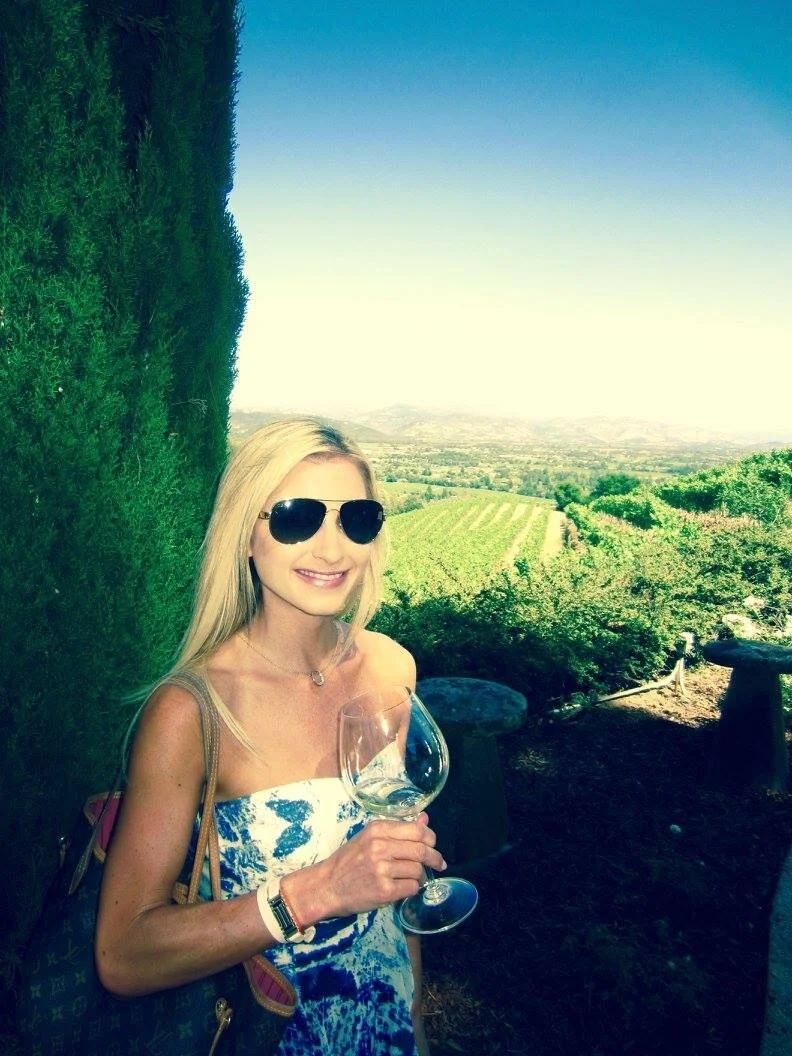
How to Host a Great Virtual Wine Tasting Event
I formerly moonlit as “Decantress”, a wine-blogger and certified sommelier who spent my weekends galavanting around Napa wine country visiting new wineries and restaurants and sharing my tips with oenophiles around the world. After becoming pregnant and then giving birth to my son, Giacomo, I had less time and desire to focus on wine in my spare time, though it’s still my adult beverage of choice to enjoy socially on the weekends. I’m not sure if you’ve noticed the same, but from a poll I’ve taken among my friends and colleagues, if you’ve been drinking more wine during COVID-19 social distancing, you’re not alone! In an effort to recreate former evening event plans, virtual happy hours have quickly become a global trend, and I’ve personally noticed I’m drinking more wine these days than when I was previously allowed to go out and socialize. It makes sense, because I don’t have to worry about childcare for my son, or driving to/from a social event with time leftover to pick him up from preschool. This new trend got me thinking...with companies struggling to rethink events in a safe, virtual medium, why not capitalize on this “social trend” to serve a business purpose?
Here’s how to turn COVID 19’s “virtual happy hours” into an elevated brand building event while supporting local wineries and restaurants!
What would Decantress do?
I formerly moonlit as “Decantress”, a wine-blogger and certified sommelier who spent my weekends galavanting around Napa wine country visiting new wineries and restaurants and sharing my tips with oenophiles around the world. After becoming pregnant and then giving birth to my son, Giacomo, I had less time and desire to focus on wine in my spare time, though it’s still my adult beverage of choice to enjoy socially on the weekends. I’m not sure if you’ve noticed the same, but from a poll I’ve taken among my friends and colleagues, if you’ve been drinking more wine during COVID-19 social distancing, you’re not alone! In an effort to recreate former evening event plans, virtual happy hours have quickly become a global trend, and I’ve personally noticed I’m drinking more wine these days than when I was previously allowed to go out and socialize. It makes sense, because I don’t have to worry about childcare for my son, or driving to/from a social event with time leftover to pick him up from preschool. This new trend got me thinking...with companies struggling to rethink events in a safe, virtual medium, why not capitalize on this “social trend” to serve a business purpose?
I’ve always found people enjoy a wine-tasting experience. In fact, Napa California is the second most visited locale in California by tourists second only to DisneyLand! There’s something about the experience of swirling, sniffing, tasting, and sharing your uniquely subjective experience of the wine “earthy, ripe peaches, black cherry, rosemary!” that creates an enjoyable bonding experience. And wine has brought people together since the most ancient times. It appeals to those who are highly educated aficionados, and even those who would like to know more about it, making wine-tasting a great universal experience and opportunity for companies to stay connected with their clients. If you’re looking for a way to bring your clients or potential customers together, build brand love, and offer a learning experience, hosting a virtual tasting is a virtual event I’d highly recommend trying.
I actually have hosted virtual wine tastings in the past, but the reason was not due to a quarantine, but rather as a creative way to introduce a Google product. I’ve always loved coming up with creative ways to introduce a product and make it more relatable or social because it helps people remember it while providing context. When Google Hangouts had just reached the market, I came up with the idea to hold virtual wine tastings at our Google Think event evening receptions. This translated into a recurring theme of proving social utility for the product, by way of demonstration. In order to best convey Google Hangout’s ability to connect people from all over, my catering team set up a conference room with pre-poured glasses of wine, a sheet with tasting notes, and snacks for pairing. Members from my team and I would log into a live Hangout with an engaging sommelier based somewhere across the country (for effect), and the entire room would join in a tasting demonstration, carried out by the sommelier hundreds of miles away. Occasionally, the sommelier would call out to a member in the conference room for their opinion on a particular wine, surprising and delighting the guests who weren’t expecting such a successful two-way dialogue from the product. Everyone had a great time while experiencing a new product in a fun context. The tastings were so successful because the sommeliers would make sure there was a two-way interaction between them and the guests partaking in the experience. We also curated specially themed flights that would appeal to the audience at our event. Below I’ll share my recommendations for how to host a brilliant virtual wine tasting.
Select a Theme:
Rather than just select random wines to taste with your virtual guests, come up with a theme that will hopefully lure them in. Here are some thought starters:
Pinots from around the world (I like to include French pinot (Burgundy), a Sonoma or Monterey pinot Noir, an Oregon pinot noir and an Australian Pinot Noir, which offers a nice variety of styles.
Old World vs New World wines: Old world wines come from European regions like France, Italy, Spain, Portugal and Germany, while New World wines include the United States, South America, South Africa, and Australia. Old World wines have a distinctly different style and taste than new world which makes them fun to taste and compare side by side, especially if tasting the same varietal.
Bubbles from around the world (this can include prosecco from Italy, sparkling wine from Napa, cava from Spain, and Champagne from France). Also try different styles like rose, cremant, ulta-sec, etc.
Different varietals from a certain region or vineyard: Here, you can highlight wines from a region, such as: the Bordeaux Region of France, or you can highlight a special wine portfolio from a wine producer, such as Hamel Family Wines based in Sonoma.
Select a great sommelier:
An engaging sommelier is also a nice draw to make sure you have a good turn-out. Think about what will appeal to the guests you’re trying to attract.
Perhaps you can highlight a female sommelier, a sommelier from a famous winery or restaurant, or a sommelier who has their Court of Master Sommeliers Master certification.
Make sure that the somm you select is engaging and prepared to ask and answer questions in addition to just leading a formal wine tasting. This will make for a more fun and engaging experience.
Ship the goods & resources to your guests
As a really nice touch, print up tasting note menus that you can mail or email your guests in advance, that they can use to guide their tasting. As a really nice touch (and budget permitting), send your guests a bottle (or small vial) of each of the wines you will be tasting that evening. Make sure you specify that the wines should be “unboxed” only during the live tasting because there’s something really exciting about unboxing a product live.
Select and Practice your platform
Select a live-streaming platform (I like Google Hangouts or Zoom), to generate a code that you can then provide to your users. Encourage them to add it to their calendars, and to download the software in advance if need be. Schedule a “test run” with your sommelier to make sure they look and sound good on the virtual platform and have them log in fifteen minutes before the session is set to go live. That way, if there are any connectivity issues, you still have time to troubleshoot before guests log in for the experience.
Overall, the experience should last no longer than an hour to hold the attention of your guests, and allow time for Q&A. Encourage guests to share their feedback of the wines and somm either during the live event, or via a post-event survey, so you can ascertain your ROI and feedback for future virtual tastings. You can also consider supporting local wineries or restaurants to purchase the wine, and offer coupons for guests to use afterwards - a win/win for everyone! If you have hosted a live tasting, and want to share what has worked well for you, I love hearing from you. Cheers!

How to navigate your venue contracts during the COVID-19 pandemic
Legal savvy to help navigate through COVID-19 pandemic uncertainty
My program canceled…now what?!
With worldwide event cancellations in an effort to contain the COVID-19 pandemic, planners not only have to worry about how to re-think their events to ensure attendee health and safety, but they’re also left questioning what legal recourse they have when it comes to their hotel and venue contracts in the face of event cancellations. I’ve always had a passion for navigating venue contract negotiation for just this reason, and even included some of my contract negotiation pro tips in my book, The Art of Event Planning. For this blog specifically, I’ve outlined a few key clauses to help you navigate the unpredictable event environment so that you can minimize the impact that the COVID-19 pandemic has on your bottom line and responsibly move forward with any contracts that are pending. Please note that these recommendations are based on my own personal experience and do not reflect the recommendations of my company, SoftBank Vision Fund, and should also be reviewed with your own legal counsel.
Force Majeure
If government bans travel or declares a state of emergency, then Force Majeure clause can be invoked, meaning neither a venue or contracting party can be held liable for nonperformance. Examples of this as it pertains to coronavirus include the US travel department banning travel into/out of China, which would make it impossible to host an event there for international attendees. Other instances of this are declarations of national emergencies, as in the city of Austin and its cancellation of SXSW. Always include a force majeure clause in your contracts so that instances like this will release you from losing additional money on an event that cannot happen. A sample clause I always use is pasted below:
The performance of this agreement is subject to any circumstances making it illegal, impossible or inadvisable to provide, use, or travel to or from the Hotel facilities, including, but not limited to, Acts of God, war, government regulations or intervention, disaster, strikes (except strikes by hotel employees), civil disorder, epidemic, or curtailment of transportation facilities. This agreement may be terminated without any liability of any nature for any one of the above reasons, or based on any act of, or risk of, terrorism or other unsafe conditions, which cause travel to be impossible or inadvisable. Termination must be by written notice from Hotel or client. Following termination based on any of these circumstances, the Hotel will refund to client any deposits or other monies previously paid with regard to the terminated agreement.
Rebooking Clause
Hopefully, you’ve never dealt with a major event of yours canceling, but at some point in your career (and maybe soon), you will likely face this situation. I absolutely always make sure I ask for a rebooking clause in my hotel or venue agreement in case I do need to move the date of a program. Typically, a rebooking clause will allow you to rebook your event within 1 year of the program date making use of the deposits or a percentage of the deposits you’ve already paid and/or owe the venue. A sample rebooking clause you is as simple as the below:
If the program cancels, 100% of the cancellation deposit and penalties will apply to a future program that operates within one year from date of cancellation.
Moving forward with booking contracts during an epidemic
To protect your event against any concerns that might make attendees reluctant to travel, such as a pandemic, it’s helpful to include a clause that allows you to reduce your guest count if you have attrition due to a perceived threat. An example of a clause like this that I use is:
Should the organization wish to continue with the event, but because of travel advisories as to health, security or terrorism, which might cause a reduction in attendance, the organization shall be able to reduce its guest count accordingly, without liability and without a reduction in amenities that are contingent on room block and pickup.
In closing, every planner right know is dealing with uncertainty and my heart goes out to every planner and attendee who has been impacted by the coronavirus. Though our health is the most important and must be protected first and foremost, we can still be smart about how we proceed and modify our event strategies given the current situation. If you have any additional suggestions for helping planners mitigate cancellations and protect themselves as they look to move or rebook their events, I welcome your feedback here!
Letting Go of Sleep Shame
Why we should all start getting more sleep and bragging about it
Let’s change the narrative
As a wine enthusiast, my motto is “squeeze the juice out of every day.” This was intended to be a personal reminder to live life to the fullest, but most days it just means crossing as many things as possible off my ever-growing to-do list. While I try to optimize every minute of each day, I’ve come to learn that the active part of the day is no more than 16 hours. This is immutable — there’s no cutting corners when it comes to getting enough sleep. Every time I try, the bill eventually comes due in the form of injury, illness, or feeling like my brain is clocking at half speed. I believe so highly in the correlation between sleep and a healthy, successful life that I addressed it comprehensively in the opening chapter of my recently published book, The Art of Event Planning: Pro Tips From an Industry Insider. There’s no “efficient sleeping” model that I know of, so for seven to eight hours every day, I accept the fact that I will not be active, but I’ll be preparing myself up to be my most productive and creative version of myself the next morning.
This did not happen overnight. It took years for me to realize the importance of sleep and how important it is to staying healthy and being a successful mother, wife, and professional. And while I now make sleep a priority, I still admit to feeling sleep-shamed by those who brag about functioning on little sleep as though it’s a badge of honor to be paraded around. I’d like to share my story with the hope that together, we can stop feeling guilty about getting the sleep our bodies need and encourage others to do the same.
I’ve built a career in event planning, which is inherently stressful and consistently ranks as one of the top five most stressful careers. Due to the highly public nature of events, and the ever-ticking countdown to an event date, there’s constant pressure to deliver on time, on schedule, on brand and on budget — then rinse, repeat, start again. Before joining the SoftBank Vision Fund as Global Head of Events, I spent nearly a decade running Google’s highest profile events. I was passionate about the work, but there was so much to do that I often worked into the night, then would wake before dawn to tackle the day yet again. I was averaging five hours of sleep a night, some nights just three hours. Meanwhile, I was juggling a heavy project load: authoring my wine and lifestyle blog, “Decantress,” volunteering time on the board of a nonprofit organization, and training for marathons. Eventually my body started showing physical signs that this lifestyle was unsustainable. I’ll never forget being onsite running a very high profile CEO event, just weeks before producing our company’s largest global conference for 19,000 employees. I awoke in the middle of the night to find my lips swollen shut and puffy red hives covering my body. I couldn’t hide the intense stress and pressure I was under, it was literally written on my face! There was no time to see a doctor so I took some Benadryl, put on a long-sleeved dress, and soldiered on producing a successful event. Though the event went well, I was haunted by the fear that my body was failing me and I couldn’t push these limits without consequence.
Shortly thereafter, my husband and I decided to start a family. After six months of trying to conceive without success, I finally sought the advice of my OB/GYN. After undergoing rounds of testing, poking, and prodding, his conclusion was that my body was extremely stressed and exhausted. My lifestyle was essentially triggering my flight-or-fight system, and in order to conceive I needed my body to feel calm and balanced. So I grudgingly agreed to add some weight to my small frame (treating myself to nightly gelato and pasta in Italy, this was easy!), cut back on marathon training, and began sleeping more. For once in my life, I simply couldn’t achieve something by pushing myself harder, working longer, and doing more. I had to signal to my body that I was not in a stressful environment and could store enough in reserves to support a growing child. However, despite my best efforts at reducing stress and getting more sleep, I could still not conceive and had to turn to IVF. I thought this would be a surefire solution, but after hundreds of shots, four failed cycles, two miscarriages, and money down the drain, I was nowhere closer to my goal. I had to make even more drastic changes in order to become a mother. And for me this meant taking a break from work, where I could never really let my guard down enough to rest and destress. I instinctively knew my new job needed to be focusing on healing my body with rest, practicing restorative yoga, acupuncture, a minimum of eight hours sleep, and then attempt to conceive one more time.
I was fortunate to have stockpiled enough vacation time saved and a supportive leadership team at Google, and could take off a month — others I know aren’t this lucky and I feel grateful every day that I was able to make this work. In the end, this worked, my instincts were right, and by taking this time to let my body rest, I was able to get pregnant. Seeing my son’s little heart beat for the first time, I burst into tears, and vowed my child would always be my priority moving forward. Through my pregnancy, I made sure I got enough sleep, hitting the pillow each night around 9:30 p.m., since I knew how important it was for the health of my baby. It occurred to me how strange it was that the only time we are not made to feel guilty about getting enough sleep is when pregnant, and that is because we’re bearing another life, so it goes back to the woman as giver first and foremost.
After giving birth to my son, I experienced the tortuous and unavoidable sleep deprivation experienced by all new moms who breastfeed. Since newborns need to eat frequently and throughout the night, and I provided my baby’s only food source, I was never able to sleep for more than two hours at a time. My early weeks of motherhood brought on the brutal effects of sleep deprivation and this was entirely out of my control. I was emotionally drained, constantly hungry, stressed, and the smallest problem could bring me to tears. In my journey towards giving my body the sleep it needs — this was my low point. This all changed when my son was three months old and we hired a wonderful sleep consultant and soon trained him to sleep through the night. Amazing! I could now sleep around seven hours a night and ever since then I’ve fiercely protected my sleep like it is sacred. I am that person who schedules dinners for 6 p.m. so I can be home and in bed before 10 p.m. I awake every day at 4:30 a.m., so it’s imperative I get to bed at a reasonable hour if I plan to get enough sleep.
So where am I today? Running a high-octane events team in an industry that has endless deadlines and inherent pressure to perform, I feel waves of guilt when I sign off work to go to sleep. I know quite well that the mind is not as sharp late into the night and each later hour of work has diminishing marginal returns. And that I’ll be up before dawn the next morning, refreshed and ready and a better manager, leader, and creative thinker after a night of restful sleep. However, I somehow feel some pangs of guilt and shame around getting this rest. I have a feeling I am not alone in feeling guilt for taking care of myself.
So how can we collectively change our mindset and mantra around protecting this basic human need? Sleeping is not only the smartest thing we can do to sharpen our minds and heal our bodies, but getting adequate sleep prevents accidents in the workplace, leads to increased productivity, less sick-leave, and higher work output. My wish and goal for myself and fellow high-performers is that we change the narrative and start promoting and encouraging sleep hygiene. My hope is that someday soon, “Insta-bragging” will include photos of pillows and eye masks next to the ubiquitous photos of green juices and fit bodies. It’s up to us to not only change our sleep behavior, but to be champions of it, proudly evangelizing the importance of taking care and resting our bodies. It’s my personal goal and challenge to us all to stop feeling guilty about sleeping and keep spreading the word so that our children will grow up with positive role models and a new mindset around sleep.
Moving forward after losing a loved one
A guide to bereavement and reintegrating into work and daily life after the loss of a loved one.
The morning I returned from holiday vacation, my father texted me to let me know he wanted to come by to deliver something to me. Nothing could have prepared me for the news he delivered: The day before, my only sister and aunt to my son, had lost her battle with depression and taken her own life. I have never in my life experienced emotions this violent all at once - pain, shock, desperation, disbelief, grief. I couldn’t control my body from violently shaking and screaming out in anguish, and kept thinking I would suddenly wake up from this nightmare. The following days were consumed with sharing the tragic news with friends, family, and work, grieving and feeling waves of regret and “what could I have done…”, paying tribute to my sister by preserving every memory I had of her, and nights laying awake thinking about her final days, weeks, year, reliving every last encounter, text, and instagram post as though they would bring her back.
While nothing will every bring my sister back, I have made it my mission to be more empathetic, aware and understanding and to educate others to do the same. Mental illness causes 90% of all suicides and it’s helpful to learn more about it and be empathetic of those who have experienced it themselves or through loved ones. I have also realized that if there’s an opportunity to be kind to someone, to take a minute and help someone out or just listen, I will always take that opportunity. We need more of that in the world and I encourage you do join me in this mission. It's so important to make the time to spend time with those you care about, and to share the things you love about them openly. It can make a difference in their life and certainly theirs, and maybe some day save one.
Slowly, I’ve started re-entering the routines of everyday life: grocery shopping, swim class with my toddler, and returning to work. I am so grateful to my incredibly supportive network of friends and family and to my job for allowing me the bereavement time I needed. Below I share my experience and advice with others who may be going through a similar experience in hopes of raising awareness and understanding.
Taking time off to grieve and process your loss
When processing grief like that of a suicide survivor, it’s important to give yourself ample time and space, maybe even more time than you think you may need to return to work. Ideally, you should return to work only when you feel able to cope, and you may also want to consider the possibility of working part-time for a period. Having experienced an intense state of shock and grief, you may initially have trouble with with sleeping, concentration, or even holding a conversation. I found that the first week after my sister’s death, I could hardly communicate in coherent sentences, and could barely bring myself to do the things that I was accustomed to doing so effortlessly. If you experience a short-term loss of efficiency and performance, be kind to yourself, and take things at your own pace. Just like you wouldn’t expect someone to come back from maternity leave at 100% capacity, a suicide survivor may also need weeks to return to their former state of functioning. Employers and colleagues should be aware and mindful of setting realistic expectations so as not to create extra stress, and understand that grief is unpredictable and can reappear erratically from time to time for months following the incident.
While you’re on bereavement leave
When processing grief like that of a suicide survivor, it’s important to give yourself ample time and space, maybe even more time than you think you may need to return to work. Ideally, you should return to work only when you feel able to cope, and you may also want to consider the possibility of working part-time for a period. Having experienced an intense state of shock and grief, you may initially have trouble with with sleeping, concentration, or even holding a conversation. I found that the first week after my sister’s death, I could hardly communicate in coherent sentences, and could barely bring myself to do the things that I was accustomed to doing so effortlessly. If you experience a short-term loss of efficiency and performance, be kind to yourself, and take things at your own pace. Just like you wouldn’t expect someone to come back from maternity leave at 100% capacity, a suicide survivor may also need weeks to return to their former state of functioning. Employers and colleagues should be aware and mindful of setting realistic expectations so as not to create extra stress, and understand that grief is unpredictable and can reappear erratically from time to time for months following the incident.
How to support a suicide survivor
Each person grieves at their own pace and isn’t always confined to non-working hours, so compassion, encouragement and understanding are key during the reintegration phase. If you manage a person dealing with bereavement loss, try asking how their grief is affecting them, what they would like their colleagues to be told in relation to the death, and how they feel they could best be supported at this time. You could also check in via an in-person lunch or coffee a couple of days before they return to work to allow them to share the details in private and discuss concerns about not knowing what to do or say when their colleagues inquire once back at work.
Mental health, suicide and bereavement are all good topics for employers to discuss with employees in addition to counseling options, especially if offered through employment. If an employee needs to leave work to attend a counseling sessions, this should be supported.
How to approach “I’m so sorry” comments
Seeing co-workers for the first time exposes you comments like "I'm so sorry" which can open up the healing wound. As difficult as these expressions of sympathy may be to hear, they can be better than no acknowledgement at all. There is no need to discuss anything you aren’t comfortable sharing, and a simple "thank you" is a perfectly fine response. While you may worry about getting emotional or breaking down in front of colleagues, rest assured that many people will understand if they know what has occurred in your life and excusing yourself it totally acceptable. It might be helpful to share as much information as you are comfortable sharing with your work colleagues before you return to work and if you find people ask too many questions, you can share that you aren’t ready to go into it right now. You might find it helpful as well to keep your manager or one trusted colleague informed of key details and they can help message your boundaries to others.
I'm finding that recovering from the suicide of a loved one is an ongoing process that is likely unique for each individual survivor. Getting back into a routine and finding purpose through work, hobbies, giving back and social engagements can be an important step in the journey towards healing.

Keys to Planning a Great Company Holiday Party
It’s that time of year - lots of shining lights, champagne, goodwill, and office parties! I’ve been asked by many friends to help review and consult on their company holiday party plans and even though it’s getting late in the season, here are my tips and recommendations for planning a party that’s fun, on-brand, relevant to your attendees, and budget-friendly.
Know Your Demographic
Before you even start looking for a venue and brainstorming ideas, make sure you have a solid grasp on the demographic that’ll be attending your event. For instance, if you’re working for a tech startup where the majority of attendees will be trend-conscious millennials, you’re going to want to think of a very different experience than if you’re working for an established bank where the typical demographic is conservative and middle-aged. The demographic of your event will influence everything from the venue you select to the timing of the party, any activities, music and the food served. My husband works for a food delivery tech start-up, and their holiday parties are notorious for starting late and going late into the night and utilizing locally trending food trucks for late night eats rather than traditional caterers.
Plan with Diversity and Inclusion in Mind
Along the lines of knowing your demographic, make sure you’re planning inclusively. I always advocate giving people a “plus one” to these events, but always advise against planning a seated dinner because that can make people who don’t bring a +1 feel self-conscious seated without a partner. It also makes it harder to plan for flexibility, which also takes into consideration people who may not be able to afford child care for a long period of time and can arrive and depart the party at the time that works for their family. You can also consider giving ride-share and childcare vouchers to make getting to and from the event more affordable to your employees. Make sure that your entertainment is not offensive to any of your attendees, and that you’re considering all dietary needs when menu planning. When hiring vendors, consider diversity. For example, hire both male and female bartenders, and consider a mix of ethnicities, ages and races when hiring your photographer, DJ, and catering team. Having diversity baked into the fabric of your event will help make all demographics feel represented. Also be mindful to not make anyone uncomfortable. While having Santa Claus come to the holiday party may sound like a fun idea, it can make some with different religious practices feel uncomfortable, so err on the side of neutral when it comes to religious holiday connotations and references.
Consider Theme and Venue
Choosing a theme for the event can also help unite people and make standard holiday parties more creative and engaging. Stuck on a theme that applies to all? Try a decade in history. Asking everyone to dress up in 80’s or roaring 20’s attire can make a boring holiday party a little more interesting and also more inclusive. You can also look for an out-of-the-box venue to match the theme. Try a jazz club, speakeasy or a roller-rink to make the party unique!
Think About What Your Giving Back
Holidays are all about giving, so I always encourage building in a give-back activity or initiative into holiday parties. It can be as easy as having everyone bring a book, toy, or warm coat to donate, or can be an activity that everyone does together, like building bikes, teddy bears, wrapping gifts, or “health kits” to donate to local shelters. One year, for my team’s small holiday offsite, we decided to adopt several families that had lost everything in the Napa fires and fulfil their holiday wishes. We divided our team into smaller groups, gave each the wish list and a budget, and let everyone spend three hours shopping in downtown San Francisco for gifts for their family. We then enjoyed cocktails and appetizers while wrapping the gifts. It was a great way to give back and also a great teambuilding activity. When planning a corporate event, also consider the vendors you hire. At my company holiday party this year, I specifically selected a caterer that uses only organic and sustainably sourced products. The food was beautiful and delicious, and also had a minimal negatiec impact on the environment.
Focus on Just Three Things:
There’s limited time at holiday parties, and people generally want the opportunity to socialize with as many people as possible. Limit the time you spend on over-thinking the activities, and focus on the top three things that you think are important to people at yoru company. For instance, if they really care about great food, make sure you hire an excellent caterer or have an out of the box creative culinary experience (live action, food trucks, make-your-own treats, etc.) If alcohol is particularly important, consider pouring more budget into that area and bringing in an interactive component (champagne tasting and pairing is fun and festive). Music can be a great way to add a memorable aspect to the event. Consider a surprise solo performance, live jazz band to kick off the night, or even a comedian if the atmosphere is right. If activities are important, plan one or two fun experiences to entertan guests. Photobooths or photo-ops are a great idea because they offer a way for guests to interact at the event, and also provide a memento of the event, especially since people tend to dress-up for holiday parties. Remember, at the end of the day, geusts tend to remember just three things at any given event, so pick your three areas of focus and prioritize your budget and time!
Budget Saving Ideas:
The end of the year is often a time that companies want to give back, but are also mindful of cost-saving strategies as budgets are max’d out. If budget is particularly tight, consider a day-time event and position it as “family friendly”. You’ll save considerably on food, booze, and venue rental and also win many people by giving them an evening back! You can also consider post-poning your holiday party until January. Venue rental rates drop considerably after the holidays and it also gives people something to look forward to in the new year. Consider limiting options for food and beverage, but make them higher quality options. For instance, I had a budget for my wines but really wanted to make sure we had a good sparkling option. So I convinced the caterer to give us a great sparkling option, and just remove on of the white wines that was going to be offered. You can also cut back on expensive florals (nobody remembers these anyways) with fun, edible centerpieces like candy and confections that double as desserts.
In short, employing some strategy to your office holiday party planning can make the difference between a success or a flop. I’d love to hear about your successes (or areas for improvement) - send me your best holiday party stories!

Creating Memories Around the Holidays
One of the reasons I embarked on a career in event planning is my love of the memories I remember experiencing as a child around events. Events children attend often revolve around the holidays (what five year old goes to a movie premiere or sales kickoff?) so my earliest memories of events were the ones my Mom hosted regularly at our home around every holiday: Thanksgiving, Christmas, Halloween, Easter, the Fourth of July and birthdays. Now that my own son is a toddler and starting to engage in the holidays, I’m really enjoying starting traditions and creating experiences with him that I hope he carries into adulthood that way I have. Here are a few of my tips for creating lasting memories around the holidays, using Christmas as an example given the season.
Start Traditions
Holidays are a great time to start cherished traditions that you’ll look forward to all year. Consider a festive pre-Christmas event. For example, as a child, my family would always drive an hour away up to San Francisco to see a performance of The Nutcracker Ballet, then stay overnight and enjoy the lights and Christmas shopping of the City the next day. My husband and I now have a tradition of doing “caviar and gift-opening” then date night dinner the Saturday night before Christmas to give us a breather from holiday parties and the perfect opportunity to celebrate our love which is one of the greatest gifts.
Every Christmas Eve, my Mom had the tradition of letting my sister and I open one present, and it was always new pajamas! There was actually strategy to her gift because it guaranteed we would look cute for the Christmas photos and videos the next morning.
One of my own traditions is giving my husband and son a new glass-blown ornament each year that is related to something meaningful to them that year. This has helped grow our collection of tree decorations and is also so sentimental to unwrap each ornament and remember the years through the themes represented. For instance, the year I got pregnant with my son, I told my husband I had a bun in the oven, so he received a cinnamon bun ornament that year. I still smile with joy when I see that shiny glazed ornament remembering that happy time!
Make it Interactive
Come December, we find ourselves inundated with so many holiday party invitations. If you’re planning on hosting one, I recommend giving it a unique twist to help it stand out as more memorable than the rest. Consider how to you will entice people to attend your event, and once they’re there, hot you will engage your guests with more than just food and drinks.
One idea is to host a “tree decorating party”, inviting each guest to bring an ornament to add to your tree. Not only will it save you the time and money to decorate it, but it will give guests a meaningful way to contribute and engage with others, and share the reason why they brought a specific ornament to share.
Another friend of mine always hosts a Champagne party and encourages everyone to bring two bottles of (real) champagne to the party: One for everyone to open and drink there, and one to give as a gift to someone at the party.
My Mom would also always host a gingerbread house-making party for the neighborhood kids. Introducing nostalgia into adult-events is a great way to break down barriers, and encourage people to embrace their inner creative child. I’ll often leave crayons and paper, playdoh, silly putty, or other toys as place settings because it encourages people to figure out what to do with it and think outside the box while making conversation.
Anticipation and Sensory Cues:
Just like with corporate events, I like to encourage planners to focus not just on an event (or holiday) itself, but on the experience leading up to and following an event. Studies have shown that people tend to enjoy the build up leading up to a vacation more than the vacation itself because of anticipation. Similarly, you can use fun, memorable tactics to generate anticipation and excitement around your holiday event well in advance of the actual event.
As a child I loved the entire month of December, not just Christmas Day when we got to rip open our presents because my Mom built so many fun traditions into the preparation of the holiday. We would start by getting out all of the Christmas music CD’s (remember those?) and my father would always let us buy a new Christmas CD or two each year to add to the collection. This set the scene for us to then start decorating the inside of the home, baking cookies, setting up the tree, all with the cheery atmosphere created.
My Mom would always get us an advent calendar so we could count down the days until Christmas. There are so many creative advent calendars out there now - featuring gifts, chocolate, charms...you can go above and beyond for a loved one by making a custom advent calendar. Each window represents something meaningful to that person (can be photos, words, or even small trinkets). Etsy is filled with ideas for how to execute!
Even simple sensory cues can really ignite people’s memories. I like to brew a pot of mulled cider while people are in my home for a party or while decorating the tree to put everyone in a festive spirit.
Since reminiscing is such a fun part of making and reliving memories, ask your parents, grandparents ,and friends about their holiday customs growing up. Sharing stories, traditions, and values is the best gift to each other that doesn't cost a thing and might also inspire you.
I’d love to hear about your traditions - please drop me a line here!

How To Maximize Your Event Budget
If you find yourself over budget, you either need to find ways to supplement that budget (ticket sales, sponsorships, donations) or find ways to shave budget.
Can you imagine a world in which you didn’t have to take budget into consideration when planning events? It might seem like every planner’s heaven, but I truly feel it’s akin to giving creatives no direction.
People tend to work better when they have some constraints and budget is a great one!
I am a firm believer that everything’s negotiable. If you have a budget, state that budget to your vendor and see if they’re willing to work with you within your means.
Look For Economies Of Scale
When budgeting for corporate events, I try to look for economies of scale. This kind of bulk purchase greatly reduces cost, here are a few tactics I use often to shave costs off programs.
If you’re using a vendor like a caterer or production agency, see if they’ll cut 20% off their fees if you guarantee them multi-program or multi-year business.
If you need to order lanyards for badges, can you order a larger quantity that can be used for the entire year’s events rather than just ordering one at a time?
Can you see if your hotel or venue will do away with venue rental in exchange for a slightly higher F&B minimum?
Get Creative!
When planning my own events, I always keep budget in mind.
When hosting an open house type of party (holiday party, house warming, etc.), consider making a batch cocktail like sangria rather than purchasing cases of expensive wine. It’s festive, and will save you a ton of money!
Instead of hiring a florist, buy flowers from your local flower mart and arrange them yourself. I will often get as many flowers as I can in the same color and mix them in varying vases. It’s elegant, effective, and costs so much less than hiring a florist.
Rather than hiring an event photographer, see if you can get a Taskrabbit to come use your own camera and shoot photos at your party. It’ll not only keep you from having to stay on top of capturing pin-worthy moments, but it’ll only set you back a hundred bucks or so!
If There Is A Will, There Is A Way
I’ve worked with multimillion dollar budgets where I still have to trim and shave every last bit of fat off the project to come in within my allocation.
In general, if you find yourself over budget, you either need to find ways to supplement that budget (ticket sales, sponsorships, donations) or find ways to shave budget.
Know Your Audience
By putting yourself in your attendee’s shoes, you’ll not only be able to anticipate their needs, you’ll be able to strategically plan their journey through your event so they see / do and feel the things you want them to.
Would you ever plan a seated dinner for a 2 year old birthday party? What about a tea party for IT executives?
Sure, these are extreme examples that planners like you obviously would never consider, but I’m surprised at how often we forget to pause and get into the minds and hearts of the people who we’re planning for.
This makes the difference between connecting with your audience and missing the mark, wasting your precious planning time and budget.
What is a Target Audience?
A target audience is the demographic of people most likely to be interested in a your product, service, content, or event. If you work for a wedding planner and are hosting a promotional event to make your company’s flair known to the surrounding area, your target audience will likely be as simple as men and women in their late twenties and early thirties.
Below are some questions if you’re struggling to determine your target audience, or helping a client identify them:
What age is your target demographic?
What region are they from?
What are they passionate about?
There are many more questions, but these three apply to any demographic.
Plan their journey
When thinking through how you’re going to allocate space planning for your event, many of us immediately think tactics rather than strategy. We slot programming in where it fits our diagrams best, without pausing to consider the flow of how an attendee will move through the day.
When you begin by thinking through the attendee journey, you may do a bit more legwork upfront, but ultimately it will pay off because they will be drawn to the things you want them to see and do rather than passively navigating through the space and potentially missing specific areas you’ve planned.
Plan meals strategically so attendees have to walk through a demo or sponsor area you want them to see in order to get food
Consider lines - what spaces will end up having the most traffic - if there will be people waiting in line, what can you offer to capture their attention or offer them some delight while they’re captive?
Consider the arrival - how are attendees arriving at your event? Think through navigation issues that could occur if, say, there’ snot a clear ride-share drop off location, or if guests tend to get dropped off at the wrong entrance to your event.
Attendees show up when they want to show up:
One thing that always fascinates me is how different types of attendees tend to have specific qualities including how early or late they arrive at an event.
Our developer audiences tend to arrive hours before a keynote and will line up outside the venue waiting to get a prime seat. However, our corporate audiences tend to show up just 5 minutes before keynote starts. And I’ll never forget, when I used to plan EDU events, our teachers would arrive even before the published time on the agenda!
For the early birds who will line up outside your conference in droves, consider thinking ahead and investing in coffee and donut carts! Not only will you please these devoted fans of your brand, but it’s probably cheaper than serving the venue’s food and this will help your buffets from getting hit hard all at once when doors open.
When you know attendees tend to show up late, plan buffer time into your agenda, so you can let keynote start late and run a bit long without throwing off the rest of your day’s schedule. Also message that reserved seats will be released 15 minutes prior to the event to make sure people get there in time for you to fill your room or backfill any reserved sections.
If you know you’ll have guests who arrive before doors open, tell your caterer they need to be set a full hour early and/or have a clear location at your venue or off property to usher these early guests to wait until the appropriate time.
The Power Of Knowing Your Audience
By putting yourself in your attendee’s shoes, you’ll not only be able to anticipate their needs, you’ll be able to strategically plan their journey through your event so they see / do and feel the things you want them to.
It’s a win/win!

Expect The Unexpected.
If there’s one thing I’ve learned as both an executive event producer and a mother of a toddler, it’s that you should learn to accept that the unexpected is likely to occur, and often at the worst possible time.
If there’s one thing I’ve learned as both an executive event producer and a mother of a toddler, it’s that you should learn to accept that the unexpected is likely to occur, and often at the worst possible time.
For all of us who are running around trying to make everything work, here are a few tricks I’ve learned to be always be prepared for anything that comes my way!.
Take A Deep Breath And Change Your Attitude
I always dread waking up to a text from my nanny saying she’s been up all night with the flu and can’t come in that day. It means instead of my stress-busting morning run, I spend my first waking hours trying to cobble together a care plan between my Dad, sister, Mom, husband and me, shifting meetings and sending a team email that I’ll be working from home to “manage” the child care parade that day.
I used to fear this like nothing else, until I learned to reframe my mindset…now instead of stressing over missed meetings, I take it as a rare opportunity to get to spend a weekday with Jack, out and about at the park, away from my desk!
By reframing our attitude when disaster strikes, we are not only better equipped to process and handle the situation at hand, but people around us also respond in a more calm manner.
Pay Attention To The Words You Use
When producing events, I often swap out the word “challenge” for “opportunities for success” and find that it not only makes people smile, but also manifests the concept of a great solution even before one’s been found.
I’ll never forget one very high profile event - it was a high end reception to kick off the White House Correspondent’s Dinner weekend, and not only were many VIP guests and policy makers going to be in attendance, we also were partnering with HBO on the event bringing added pressure (and A list celebrities!)
My team, production agency and I were working around the clock and every weekend to pull off the event and two weeks before the event, I had a strange feeling that something was awry as I hadn’t received a single email from my agency. And then it hit…
Monday morning, I received an email that the production agency had been dissolved over the weekend, emails were deactivated, documents gone, budget vanished!
Nobody on my team had ever had this happen - who could have predicted this from one of our preferred agencies?
Be Proactive … There Is Always Something You Can Do
Rather than lose my cool, and before sharing anything with my stakeholders, I worked on a solution. I called the VP of another one of our most trusted production agencies and asked if her team could take on the other agency’s team as freelancers for the completion of the event so we wouldn’t lose all the work and knowledge the team had built.
After a really long day of negotiating, they agreed, and while we lost a day ramping the new team up in their new setting, we also gained additional resources from the new agency which helped make our event even better!
What more, some of those team members went on to be full time employees for the new agency, so I was able to continue partnering with them in the future. They were not only grateful, they went above and beyond to make sure the event was flawless.
So I challenge you…
The next time you arrive at the airport at 9am when your flight is actually 9pm (yes, this has happened to my husband and I once), will you complain, or make the most of an extra 12 hours you have free?
Expect the unexpected and you’ll live a less stressful life!

Planning a theme
Themes aren’t always needed for events. But if your event does warrant a theme, it’s important that it resonates with the kind folks you’re catering to.
Themes aren’t always needed for events. But if your event does warrant a theme, it’s important that it resonates with the kind folks you’re catering to.
Some events don’t require a theme, but have an inherent one.
For example, I’ve planned cybersecurity summits and political events that in and of themselves are the theme. Try to be clever about a theme without over-doing it. Here area few examples:
When you think cybersecurity, the last thing you want to do is instill fear in attendees.
They’re already terrified about hackers, so steer clear from icons like locks, bars, and other things that will make attendees want to close down
Instead, consider the opposite: what things instill comfort and security?
I selected a clear, open venue with lots of light rather than a dark conference center so attendees would feel different at my conference than standard dark security summits.
I’ve planned political debates, conventions and galas.
One thing that brings people together more than overt political themes, red/white/blue stripes and stars, is the people and place themselves.
If I had a debate in Philadelphia, Pennsylvania, I focused on the local flavors, bringing in elements of the city to my event and featuring local specialties and vendors.
When you have to come up with a theme
Other times, a theme isn’t as obvious and you as a planner are tasked with developing a theme. How do you create one that won’t feel cheesy or outdated? Here are a few ideas.
Consider seasons
They aren’t offensive, and you can use local, seasonal ingredients, florals and materials that will inspire memories in people.
Everyone can relate to a season, so if you’re hosting an event in the spring, play up the theme of rebirth and greenery. In the winter, focus on things that make people feel cozy and grateful since it’s a season of giving.
Go Retro
Similar to seasons, people love nostalgia. I find retro themes are often popular ways to get people to naturally reminisce and bond with each other.
Plus, it’s really fun to plan everything from the fonts on your signage to the food and beverages you’re serving around a certain era, be it the Gatsby 20’s, Madmen 50’s or hippie 60s. And there’s nothing like an 80’s cover band to get your guests on the dance floor!
Look At Current Events
Another great theme for an event, especially if you need to theme the content, is around whatever’s in the zeitgeist. Take cybersecurity, or women’s initiatives, or sustainability.
Execution:
Here are a few additional tips to execute on the above themes
If focusing on an important theme that’s in the zeitgeist like sustainability, make sure you talk the talk.
Source local, sustainably farmed foods and use local brewers and wineries for your catering.
Use compostables and even consider partnering with an eco-friendly or LEEd certified venue.
Take inspiration from the seasons when hosting a dinner party.
For fall dinners, I love using leaves, buckeyes, and other found organics like persimmons, squash and gourds to decorate.
I also use organics as place settings - etching people’s names into pumpkins or persimmons.
You can also serve your first course in a hollowed out pumpkin shell to make a beautiful, festive presentation on your table.
I once hosted a retro pool party-themed reception that was hugely popular.
We hired synchronized swimmers, planted pink flamingos around the pool, and left 60’s style sunglasses on the high boy tables for guests to wear.
No matter what you do, make sure your theme is on-point.
You’d never want a theme that could offend any of your attendees or one that promotes stereotypes. Have any great theme ideas you’ve used recently? I’d love to hear!

The Effect Of Food On Your Events
People can’t focus on anything else if their basis needs aren’t being met, which means the food at your event has a direct effect on people’s experience.
Food is part of mazlov’s basic needs. What does a the hierarchy of people’s needs have to do with your event? Everything!
People can’t focus on any of the other important details or content you’ve planned if their basis needs aren’t being met, which means the food at your event has a direct effect on people’s experience and ultimately your ROI!
What is the secret to great food for events?
When planning events, think carefully about what you want people feel. Is this event during a major meal time? Will people be walking around? Is there content while people are eating, or is the meal the main event?
Before you can start thinking about the actual food you will serve you need to think about the experience you want people to have.
Here are 3 questions I always ask before planning the food for an event:
Who are the people that will be at the event and what do they value in food?
What is the dining experience I want people to have?
What fun or surprising details can I add to the food to support theme of the event or inspire an emotion?
Real Life Examples
As a professional event planner for Google the types of events I plan can vary from a 30,000 person conference to an intimate dinner for high level executives.
Each event has to be tailored to the audience. Here are some examples of how I’ve used food to create a memorable event.
Press Event
Who are the people that will be at the event and do they value in food?
Journalists who possibly had a long commute early in the morning. They may have not had time for a healthy breakfast. I want them to have super healthy, high fiber energy food so they can get through the long day.
What is the experience I want people to have?
I want people to feel taken care of, and I want them to feel the way we cater to their basic needs is an extension of how our brand meets the needs of our customers.
It will be a busy day with journalists trying to eat between submitting their stories and interviewing people, so food and snacks should be available at all times, easy to eat while typing or talking, and high quality.
What fun or surprising details can I add to the food to support theme of the event?
A barista bar with steel cut oats and portable containers so guests can eat while they file their stories.
Bullet-proof coffee made to order offers up a high octane, sustainable and trendy beverage.
If the event is in a particular region (i.e. for a political debate), can you infuse the snacks with local specialties to give the press a sense of place and celebrate the local culture?
High End Dinner
Who are the people that will be at the event and do they value in food?
CEOs and high level executives value healthy ingredients but want a high end experience that they can’t get every day.
They care more about well-known chefs, and the presentation and service of the food in addition to the food itself.
What is the experience I want people to have?
An event that builds community and deepens relationships might warrant family-style service
A formal dinner before an awards ceremony might be best served plated on a very fixed time schedule.
Maybe part of the dinner is served seated and dessert is moved to another location (i.e. out on a terrace) where guests can network with other people since networking is an important aspect of these events.
What fun or surprising details can I add to the food to support theme of the event?
A special wine pairing in the theme of the event (i.e. for a movie premiere based in Australia I offered Australian wine tasting paired with regional cuisine).
Perhaps invite different celebrity chefs to prepare a different course of a 5 course meal. This worked well when I attended an event hosted by Nespresso for their top clients. each celebrity chef had to work a Nespresso flavor into a dish (Thomas Keller incorporated it into a lobster dish - who would guess to do that?!
Use high end ingredients and beautiful presentation to make sure the event is the luxury experience this audience is used to.
Personalization - the details that matter
How do you personalize the experience of your event? Get into the mind of your guests and what they want. Once you identify the experience you want to create you can use food and wine to create a memorable event!
When you think about an event, what are the details you usually remember? For most people it is the food and wine, or the relevant details because that is what makes people feel seen and taken care of .
So how do you personalize the experience of your event? Get into the mind of your guests and what they want. Once you identify the experience you want to create you can use food and wine to create a memorable event!
Never accept a Menu at Face Value
When you start your food planning for an event, never take a catering company or venue’s menu at face value. It’s easy to think you’re are stuck with what they’re offering but instead go to your vendor with the ideas you have in mind and lead with your vision for what the menu should be. In my experience, they are usually very happy to work with you to execute an idea that will turn your event from cookie cutter to a memorable, personalized event. I’ve had many a caterer end up adding things we ideated up together to their menu after our event because it was so innovative and successful!
Think Like Your Attendees
When planning an event, it’s easy to think about what you would want instead of getting into the minds of your demographic. My mom, an interior designer, taught me early on that she had to adjust her style and recommendations based on a particular client and I apply the same ethos to event planning.
If you associate comfort and pleasure with sweet baked goods and sugary beverages, you may be inclined to set up breaks for people that are sweet laden. Is that what your audience wants? For example is you’re hosting an event for tech execs from Facebook or Google, these executives care about local, sustainable foods and often have dietary restrictions. Instead of junk food, a a super foods bar is more likely to put them in their comfort zone and in the optimal mindset to take in the content and details you’re sharing with them at your event.
Ask questions!
Don’t know what your audience likes? Just ask. When I’m planning executive events I go to the assistants and ask what foods and wines each person likes and anything that absolutely dislike.
Offer Options
If you have audience segmentation, you may have groups who want different things; personalize the experience by providing options for everyone.
Examples Of Personalized Events
Google Capital Security Summit
Event Overview: As part of the event, we provided a high end c lunch for professionals and executives while presenting thought leadership cyber security.
Obstacle: Want a themed event but how do you do that with a dry topic like cyber security?
Personalized Experience: when thinking of cyber security, executives want to feel safe, so we created a beautiful lunch with greenery, outdoor, table settings and a healthy take on comfort foods like cauliflower mac and cheese.
A Real Life Example
Event Overview: At Google Cloud Next, we plan a cloud event industry for 30,000 attendees who attend keynote sessions where they hear from Google leadership about new products and roadmap, attend technical breakouts, trainings, and certifications, and have opportunities for demos, meetings, networking and social events.
Obstacle: we had 30,000 attendees who needed to eat lunch while trying to make it between breakout sessions, training, certification and meetings.
Personalized Experience: We provided over a dozen different lunch options for attendees in different styles, cuisines and locations. Yerba Buena Gardens had live music, with picnic blankets and comfy seating out in the lawn so attendees who wanted a break from the content could enjoy a festival-like atmosphere. We bought out the entire food court at the Metreon Theaters so attendees had access to eat at any of the restaurants ranging from Mexican to Thai to American Grill. We also provided pop-up hot dog and ice cream carts, food trucks, and grab and go lunch bags at all the hotel venues for folks in a rush on their way to a breakout session.
Setting A Goal For Your Social Event
Whether you are planning a major corporate event or a social dinner party, there is one question you need to ask yourself before you start planning: How do you want people to feel?
Whether you are planning a major corporate event or a social dinner party, there are three questions you need to ask yourself before you start planning:
What do you want people to Think? How do you want people to Feel? What do you want people to Do?
Set A Specific Goal
Even in social settings you have to get clear with yourself about what the goals are when you’re thinking about what to serve
Is your goal to show off new dishes because you’re a budding chef?
If so, put thought into the complexity of the dish. I once set a goal that I wanted to learn how to braise shortribs in wine. Once I perfected this skill, it was a perfect opportunity to prepare them for a New Years dinner party!Maybe your goal is you want to engage with people you haven’t seen in a while?
Come up with a menu you can put in the oven while guests arrive or make in advance then spend just 10 minutes to finish up. This way, you won’t be stuck behind a stove and can offer each guest a glass of wine and catch up with them. #superhost!
Prioritize Your Goals
Before planning an event, I always lead a prioritization exercise to get clear on the experience we want to create.
People usually want an event to accomplish a lot, but guests have so much competition for their attention and mind space, you can really only take away three things from an event. I know, I know, you want them to remember so much more, but trust me on this one!
Think about the last time someone asked you about an event. How did you describe it? How much detail? Most people are never going to say more than three things, so when I work with people or even when I’m planning my own events I list all the things I want people to think or feel.
After all those ideas are down on a list I can start to prioritize each one. Once I know the three most important things, I can start to put attention on those.
Questions To Ask Before Your dinner party
1. What do you want attendees to feel while here?
This helps you get into the mindset of your guests and reminds you of the reason why you’re hosting the dinner party! If you want them to feel loved, what are you doing to show them this while at your dinner?
2. What are two things you must have and two things you would like to have if time and budget permit?
This helps you prioritize where your focus should be before you allocate time and budget to all the ideas you have.
3. What is the most important part of the environment?
If it’s mood, think through your lighting, scent, music. If you want people to connect, think of your seating plan strategy.
4. How much effort, time, and money do you want to spend?
Paying a venue but means you don’t have to clean your house and they’ll handle the food so you can focus on other details like gift bags, music, speeches, etc.
5. What can you outsource?
Figure out how you can get help, because no matter how awesome you are - no one can do it all.
Want to capture photos at your social event? I started hiring task rabbit photographers to come to my events and take photos with my phone that way I make sure I capture everything without burdening your guests.
My mom has her housekeepers come to dinner parties so they can do the dishes and she can spend time socializing with her guests without worrying about the clean up between courses.

Pro Tips for Planning Women's Events
Women need events where they can access role models, support one another, and hear success stories specific to women.
"We are linked not ranked." - Gloria Steinem
Hosting women’s events helps companies retain female employees, acquire new talent, make new business connections, and increase female employee morale and career development.
Making Equality The New Normal
Women need events where they can access role models, support one another, and hear success stories specific to women. There are many things we can do to make events more women-friendly in addition to hosting women-focused conferences:
Consider setting a goal to have 50% speakers and 50% of your attendees be female
Consider the marketing and graphics you’re using on your event site. Is there good diversity and inclusion represented?
Consider offering travel grants or subsidized tickets to under-represented groups like women to encourage them to attend.
A great way to create a baseline of diversity within your event is by adding questions to your event registration form. Take into account cultural sensitives and labor law based on your the location of your event. Doing so will help you capture needed information.
How do you plan a women’s only event properly?
There is a lot of debate around whether women-only events perpetuate segregation or benefit females. Personally, I feel the offer a valuable experience for attendees to safely share and connect with others like them, make career connections, get inspired, and speak openly.
When planning women’s only events, you should consider whether you are making the event exclusive to women, or women-centric, allowing males allies to attend (and hopefully learn how to support women).
Ask yourself questions around what the goals of your event are which will help guide you to a decision. Some other best practices around hosting women’s events are listed below:
Add a mother’s room so that nursing mother’s can attend your conference.
Consider the hours of your conference and adjust them to accommodate pick up / drop off times for parents and/or offer childcare or a childcare stipend.
Offer pronoun stickers she/her, he/him, they/them, ze/hir, and blank field for people to self-identify.
Choose your colors and vendors mindfully
For a women leadership summit I planned, we were careful to select all women-owned businesses as our vendors and were also mindful not to lean into gendered stereotypes (like focusing on shopping, manicures, and pink/purple).
We featured women-owned businesses in a market place where we served up confections, coffee and healthy treats throughout the day.
Our production agency, videographer and photographer were all female and our female musicians even complimented us that we’d hired female sound technicians!
Without leaning into stereotypes, we featured content relevant to women like a VR experience that featured women in different industries including America Ferrera and other inspiring and diverse females.
We created networking activities like postcards featuring work by female artists that attendees could post around the room with inspiring messages, or mail to someone (postage and adorable mailbox provided by us)
Making Room At The Table For Everyone
In industries that skew heavily male, the male to female participant ratio is often unbalanced and the topics addressed can make women feel excluded from the conversation.
By tailoring an event to a group with shared experiences, attendees can discuss and gain advice without judgement – addressing challenges women face in their respective industries.

The Importance of Family Dinner
As a working mom, I am constantly thinking about the never ending to-do list of things that need to get done. When we think of planning events, it is easy to think about the big things but what about the daily events?
As a working mom, I am constantly thinking about the never ending to-do list of things that need to get done. Call the client back, do the laundry, get to the gym, quality time with my family … and the list goes on.
It’s easy to forget that our lives are a series of small events that happen every day. What is your daily non-negotiable routine? What about family dinner?
You’re Making Memories Every Day
When we think of planning events, it is easy to think about the big things - weddings, anniversaries, holidays, graduations - but what about the daily events?
When I look back on my childhood, my memories as a kid are of my mom or dad’s night routine. They would cook dinner every night and we all came together as a family.
Before you go thinking life was easier in the olden days, let me be clear that my mom ran her own interior design business and my dad was an executive at a tech startup - they were just as pressed for time as we are in this always connected age. The reason we were able to do this nightly ritual was because we chose to make that time together sacred.
Rituals And Routines
My parents instilled in us the value of home cooked meals with fresh ingredients, never served straight out of a box or a can. It wasn’t just the food I remember, it is the ritual. My parents would open a bottle of wine and play jazz while they were cooking; it became Pavlovian to me!
Nightly dinner was an experience of our life together, not just another chore to be done.
To this day when I get home that same ritual is sacred to me. As a busy mom with a corporate event planning job, my book writing business, and a toddler, I hope I am instilling in my son the same memories and lessons.
As soon as I walk in the door our wonderful nanny switched the music to the jazz and so the nightly routine begins as I begin chopping veggies and connecting with her about the day!
My Challenge To You
Make a list of your daily habits. Which ones spark excitement and which ones elicit dread? How could you make a routine to make that experience one you enjoy? What can you outsource to make more room for routines you love?
This is your life, let’s make it a memorable one!
The First Impression Matters
When you’re planning an event, it is often times the little details that set the stage for what is coming next.
When you’re planning an event, it is often times the little details that set the stage for what is coming next.
Yes things like the food and venue impact the experience, but so do smaller details like the first impression upon arrival, the music, the service experience, and so much more!
Hallowed First Ground
Hallowed First Ground is something I learned in a class about influence through storytelling that is 100% applicable in the event planning world. It is the first impression you get of something or someone that really sticks with you no matter what comes after.
When planning an event that first moment is often what shapes the experience your attendees are going to have. And often times it starts before the person even steps food in the venue.
How was the invite? Did it clearly set the tone for the type of experience you want to create?
What happens when guests first get to the event? Do you have a way to greet your guests in a fun and welcoming way?
Did you think about signage? Staff?
What about music? Is it silent and awkward when people walk in?
The first touch points of an event tell people what to expect and can either cause them to shut off or re-engage with the experience. What is the best way to do that? Do something creative to welcome your guests to the event!
We pay so much attention it whats inside, it’s easy to miss things like is there a welcome experience and even simply a person or sign to greet guests so they aren’t lost. It doesn’t matter how amazing your keynote speaker is if none of the guests can find their way to the keynote room and thus miss the session!
Setting Expectations
When you arrive at a five star hotel you expect to be greeted with a glass of champagne. When you go to an airbnb (for instance), that same level of services isn’t expected but imagine it as an opportunity to surprise and delight each guest if there’s a bottle of champagne waiting on arrival?
A Real Life Example
I planned a day event for a corporate offsite - for this event it was important to set the stage for what to expect from the day. The first thing to decide was the venue and initial touch points for the entrance.
We took over the beautiful Cavallo Point resort in Sausalito, California, to create an elevated experience for CXO’s that was grounded in the natural surroundings.
Upon entrance there was a bright, playful lemonade bar with all the fixings to make people feel refreshed and delighted when they arrived at the registration desk.
Nearby was also a cart of Champagne with butler service to create a high level, luxury experience for those guests more accustomed to that elevated experience (personalize by creating preferences for various attendee types!).
To create a fun, playful tone, a donut tree displaying freshly made donuts and cronuts gave guests a smile and a chance to taste the new hybrid pasty that was going viral at the time.
While these may seem like small details, most of these CEOs and CTOs are used to arriving at registration where they’re greeted with simply a name badge and maybe a bottle of water. By creating a thoughtful first impression for something as basic as badge pick-up, we were sending the message to attendees that they could relax, all their needs would be taken care of, and they were in for an experience like no other.